Up@dawn 2.0

Monday, February 17, 2025

Questions FEB 18

Presentation: Danny


Premonition

1. What was sometimes as persuasive to Charity as data? Do you share her attitude, have you had a similar experience? Do you think health care providers and public health officers should?

2. Who sent Charity to the border, and why? Should the administration have been held accountable for its immigration policy?

3. What was "the money question"? 

4. Why wasn't Charity promoted to top CA public health officer? Is it unethical for politicians to appoint important officials on the basis of considerations other than credentials and competence? How can they be prevented from doing so?

5. What was Charity really doing at her whiteboard?

6. Why did her boss ban her from using the word pandemic

7. Why did Charity think she'd end up in the White House?

8. What did she like to say about leadership?

Beyond 2-3

1. What kind of "motherhood" did Indiana officially promote in the '20s and '30s?

2. What was every child's right, in Indiana?

3. What dismaying transfer of power did Ada Schweitzer inadvertently facilitate?

4. What led to the "exponential" expansion of the Infant and Child Hygiene division?

5. What did Schweitzer call the Better Baby Contest at the fair?

6. Half of what occurred in California before WWII?

7. What role was played by corporate philanthropies and academics in the promotion of eugenics?

8. What happened in Lincoln, IL?

9. What was Hitler's "bible"?

10. How did California eugenicists re-brand themselves after the war?

DQs


  • Is there an appropriate role for the state in promoting or mandating particular approaches to parenting?
  • How would you articulate children's rights? Would you, for instance, include a right "to be brought up in the fear and admonition of the Lord"? (compare: Indiana child creed, Geneva Declaration of the Rights of the ChildTimeline of young people's rights...)
  • Were the Suffragists wrong to "link the language of biology and bacteriology"? 35
  • Are there enough female pediatricians? What difference does a physician's gender make?
  • Is there still a marked division in this country between the "male medical establishment" and women in healthcare? (40)
  • Is there any inoffensive way of expressing and defending the impulse to "raise better babies"?
  • What do you think of Schweitzer's statement to "a Muncie reformer" (43)?
  • How would you caption the photo in Figure 2.1 (46)?
  • Was Francis Galton wrong about "talented people" (54)?
  • Are you shocked to learn of the "lethal chamber"?
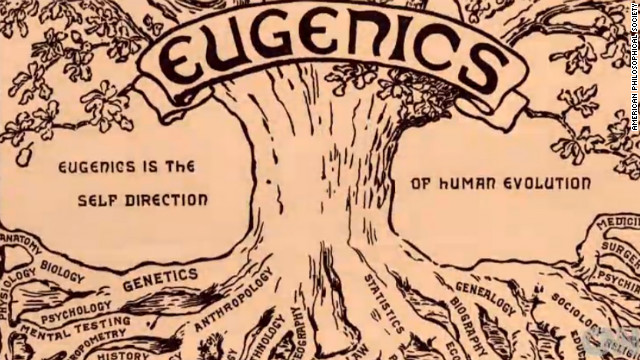


Image result for california eugenics 1930s
California's dark legacy of sterilization... Eugenics and the Nazis-the California Connection

Nov 8, 2013 - Uploaded by The Young Turks
Nor did I know that Nazi Germany consulted with California's eugenics leaders in the 1930s. I also was ...
Mar 10, 2003
"California was the second state to pass eugenics laws in 1909," two .... Record Office, in turn, had links to ...

 Fast-spreading measles outbreak infects dozens


A fast-growing measles outbreak has infected dozens in Texas and New Mexico as officials suspect the highly contagious disease continues to spread.

In just two weeks, an outbreak in northwest Texas jumped from two cases among unvaccinated children in Gaines County to 48 people across four counties, according to the Texas Department of State Health Services. All cases are among people, mostly children, who weren’t vaccinated or had unknown vaccination status. More than a dozen people have been hospitalized for measles as of Friday.

Texas officials warned cases are likely to increase.

Sunday, February 16, 2025

“Disaster” close to home

"…the shutdown of the U.S. Agency for International Development (USAID) is a blow to the agricultural sector: USAID buys about $2 billion in agricultural products from U.S. farmers every year. It has also supported funding for research at state universities like the University of Tennessee, the University of Missouri, and the University of Louisiana.

Cuts to indirect spending in grants from the National Institutes of Health will also hit hard across the country, and states where Trump won more than 55% of the 2024 vote are no exception. Former college president Michael Nietzel noted in Forbes that Texas stands to lose more than $300 million; Ohio, more than $170 million; and Tennessee, Missouri, and Florida, more than $130 million apiece. These losses will cause thousands of layoffs and, as the Association of American Medical Colleges said, "diminish the nation's research capacity, slow scientific progress and deprive patients, families and communities across the country of new treatments, diagnostics and preventive interventions."

Trump said Wednesday he wanted to shutter the Department of Education immediately, calling it "a big con job." That Department provides grants for schools in low-income communities as well as money for educating students with special needs: eight of the ten states receiving the most federal money for their K–12 schools are dominated by Republicans.

Trump has called the Federal Emergency Management Agency a "disaster" and said states should handle natural disasters like hurricanes, wildfires, floods, and tornadoes on their own. But states do not have the resilience they need for such short-term emergencies. Once again, while all states receive FEMA money, Republican-dominated states get slightly more of that money than Democratic-dominated states do..."

HCR
https://open.substack.com/pub/heathercoxrichardson/p/february-15-2025?r=35ogp&utm_medium=ios

Phil.Oliver@mtsu.edu
👣Solvitur ambulando
💭Sapere aude

 Why the COVID Deniers Won

Lessons from the pandemic and its aftermath

By David Frum


February 12, 2025  March issue of The Atlantic titled “Dispathces”

Five years ago, the coronavirus pandemic struck a bitterly divided society.

Americans first diverged over how dangerous the disease was: just a flu (as President Donald Trump repeatedly insisted) or something much deadlier.

Then they disputed public-health measures such as lockdowns and masking; a majority complied while a passionate minority fiercely resisted.

Finally, they split—and have remained split—over the value and safety of COVID‑19 vaccines. Anti-vaccine beliefs started on the fringe, but they spread to the point where Ron DeSantis, the governor of the country’s third-most-populous state, launched a campaign for president on an appeal to anti-vaccine ideology.

Five years later, one side has seemingly triumphed. The winner is not the side that initially prevailed, the side of public safety. The winner is the side that minimized the disease, then rejected public-health measures to prevent its spread, and finally refused the vaccines designed to protect against its worst effects.

Ahead of COVID’s fifth anniversary, Trump, as president-elect, nominated the country’s most outspoken vaccination opponent to head the Department of Health and Human Services. He chose a proponent of the debunked and discredited vaccines-cause-autism claim to lead the CDC. He named a strident critic of COVID‑vaccine mandates to lead the FDA. For surgeon general, he picked a believer in hydroxychloroquine, the disproven COVID‑19 remedy. His pick for director of the National Institutes of Health had advocated for letting COVID spread unchecked to encourage herd immunity. Despite having fast-tracked the development of the vaccines as president, Trump has himself trafficked in many forms of COVID‑19 denial, and has expressed his own suspicions that childhood vaccination against measles and mumps is a cause of autism.

The ascendancy of the anti-vaxxers may ultimately prove fleeting. But if the forces of science and health are to stage a comeback, it’s important to understand why those forces have gone into eclipse.

Continues here:  https://www.theatlantic.com/magazine/archive/2025/03/covid-deniers-anti-vax-public-health-politics-polarization/681435/

Saturday, February 15, 2025

Human Genome Project

On this date in 2001, a working draft of the human genome was published in the journal Nature. This draft covered about 83 percent of the genome. The entire Human Genome Project was completed in April 2003 — two years ahead of schedule.

In 1953, James Watson and Francis Crick had published a paper that first described the structure of DNA, and they hypothesized that this structure "suggests a possible copying mechanism for the genetic material." DNA is the blueprint that develops and directs the function of an organism. Its molecules take the form of a double helix: two twisting strands that are linked together like the sides of a ladder. They're made up of four different chemical units, called nucleotide bases, which match up, forming the base pairs that make up the rungs of the ladder. The goal of the Human Genome Project was to sequence and map all the genes in the blueprint that makes up a human being, using the resources and brainpower of scientists all over the world; it's the largest single biological investigation in modern science.

Funding for the project originally came from the United States Department of Energy's Office of Health and Environmental Research; they had been supporting research into understanding the human genome for several years. Once the Human Genome Project was ready to get underway in 1990, the DOE coordinated its efforts with the National Institutes of Health. James Watson — who had first described DNA's structure in 1953 — was heading up the NIH's National Center for Genome Research at that time. There was a similar project in the private sector, run by a company called Celera Genomics. Celera planned to patent as many as 300 genes, but President Clinton declared in 2000 that the genome sequences could not be patented, and said that the results should be made available to the public. As a result, the human gene sequence is freely available on the Internet, but Clinton's announcement sent Celera's stock plummeting and cost the biotech sector about $50 billion in market capitalization.

Scientists expected to find that humans had more than 100,000 genes; it turns out we have only about 20,000 to 30,000 — about the same as mice. The genes themselves are mostly similar to mice and other mammals too, with only a few exceptions. The Human Genome Project is the highest profile DNA sequencing project, but there are others that map the genomes of other organisms, like fruit flies, yeast, plants, and microbes.

The next phase of the research, the International HapMap Project, aims to establish a list of common genetic variants, since an individual's genome — with the exception of identical twins and clones — is unique to them. Researchers hope to identify the variants that cause higher risk of diseases like cancer and diabetes, and they also hope to develop more accurate and effective treatments tailored to these genetic variants. Biotech companies have developed tests to show whether a person has a genetic predisposition to develop things like cystic fibrosis, liver disease, and breast cancer. But there are also ethical concerns, like whether the information contained in a genome is likely to be used to discriminate against an individual when it comes to insurance or employment. The Human Genome Project formed and funded the Ethical, Legal, and Social Implications program to consider such questions. GK

Friday, February 14, 2025

"muzzling of the C.D.C. endangers Americans"

Former health officials object to restrictions on the agency.

To the Editor:

As former Centers for Disease Control and Prevention public health professionals, we are alarmed by the Trump administration's recent actions, which severely restrict the agency's communications and have compromised its ability to protect the health of the American people.

Late last month, the C.D.C. was ordered to cease communications with the World Health Organization and other agencies to comply with an executive order from President Trump. The C.D.C. and the W.H.O. have worked closely together since they were created in the 1940s to improve the health of Americans and save lives.

That work has included eliminating smallpox, nearly eliminating polio, stopping the first SARS epidemic, containing Ebola, mitigating the Covid-19 pandemic and protecting people from bird flu — to name only a few accomplishments. But now, for example, the C.D.C. will not have input into the W.H.O.'s meeting deciding which influenza strains should be targeted by next year's flu shot.

Domestically, C.D.C. employees are now severely restricted from communicating with anyone outside the government and from publishing anything that includes words like "gender, L.G.B.T.Q., biologically male and biologically female," and have been ordered to retract and revise existing publications using those words.

Certain C.D.C. websites with medical recommendations for practitioners and health officials have gone dark. Witness the C.D.C.'s recent posting and immediate deleting of data about bird flu spread from cats to people (news article, Feb. 8).

Many people are not aware of the work the C.D.C. does because it focuses on prevention, and it usually works: We don't see diseases and injuries that did not occur as a result of those interventions.

From tracking disease and containing outbreaks, to promoting evidence-based disease prevention programs, to cutting-edge research and laboratory testing available nowhere else, the C.D.C. works tirelessly to protect and promote the health of America's people.

The administration's muzzling of the C.D.C. endangers Americans.

Peter Cegielski
Barbara Marston
Atlanta
The letter was also signed by 36 other former C.D.C. health professionals.

https://www.nytimes.com/2025/02/13/opinion/trump-cdc.html?smid=em-share

Mindless confirmation

"…Of Kennedy's confirmation, Senator Jon Ossoff (D-GA) said to his colleagues: "It's truly astounding that the Senate stands on the brink of confirming Mr. Kennedy to lead America's public health agencies. And if the Senate weren't gripped in this soon-to-be infamous period of total capitulation, I don't think this nominee would have made it as far as a hearing…. If I'd told you a couple of years ago, 'There's a guy who's been nominated to run public health nationwide. His job will be to protect American families from death and disease. He's going to run the whole public health system: Medicare, Medicaid, the C[enters] for D[isease] C[ontrol and Prevention], the N[ational] I[nstitutes of] H[ealth]—all of it. He'll decide how we protect the country from infectious disease, he'll set the rules for every hospital in the country, he'll decide what healthcare and medicines get covered by Medicare, he'll manage our response in the event of a pandemic.' And then I told you,… 'Well,... there are a few concerns about this nominee. First of all, zero relevant experience. He's a trial lawyer, a politician from a famous family. No medical or scientific background, he's never run a hospital or a health system or anything like that. Second of all… he's said some pretty wild stuff about public health, over and over and over again, like: he proposed that Covid-19 might be 'ethnically targeted' to spare Jews. Ethnically targeted to spare Jews. He said Lyme disease was a military bioweapon. For years he's been persuading American families against routine childhood immunizations. He's compared the work of the CDC to 'Nazi death camps.'... If a couple of years ago I told you all that, and I told you that the Senate was about to put America's health in this man's hands, you'd probably tell me the Senate has lost its mind."
All the Senate Republicans but McConnell voted to confirm Kennedy..."

https://open.substack.com/pub/heathercoxrichardson/p/february-13-2025?r=35ogp&utm_medium=ios

Thursday, February 13, 2025

Movie & pizza-courtesy Middle East Center

 Dr. Kari Neely of the World Languages and Literatures Department will give a ten-minute introduction to the film before screening the movie. 

Wednesday, February 12, 2025

Our most noble attribute

#DarwinDay salutations! Today is a fantastic day to contemplate the profound effect that Charles Darwin has had on the entire world. It's astonishingly to think that so few people have so radically changed how we view humanity, and for the better, too.
Image-1.jpg
(Not just dogs)

Phil.Oliver@mtsu.edu
👣Solvitur ambulando
💭Sapere aude

Tuesday, February 11, 2025

Questions FEB 13

Happy (almost) Valentines Day (and Darwin Day, and Lincoln/Presidents Day). Bring health-impairing goodies if you wish. 


A brief word on decorum. We're having GOOD conversations, but let's all remember that when we see classmates' hands in the air we should stop talking as soon as we've concluded the thought we're expressing and LISTEN... And generally it's more conducive to good conversation to respond not with a blunt "I don't agree!" but rather with a receptive "I don't understand" or "tell me more about what you mean" etc.  It's just basic civility, and humility. Thanks for listening.

[Finish Basics and Premonition chapters 6 first] 
Beyond Bioethics Foreword, Introduction, 1; Premonition 7

1. Concern for individual autonomy and personal sovereignty can obscure what other issue?

2. Why should we expand our notion of bioethics to biopolitics?

3. What popular sentiment on human reproductive cloning did Planned Parenthood not adopt, "fortunately"?

4. As the field of Bioethics evolved, to what approach did it stake a claim?

5. Name two of the distinctive concerns of the "new biopolitics" marking its difference from mainstream bioethics.

6. What "strand in the identification of the undeserving poor" is enjoying a revival?

7. Who was the Social Darwinists' leading spokesperson, and what did conservatives oppose in his name?

8. To whom did German eugenicists say they owed a debt?

9. Who said "low intelligence is a stronger precursor of poverty than low socioeconomic background"?

10. What assumption, according to a cited philosopher, encourages people to treat differences as pathologies?


Premonition

1. What's CEPI, who ran it, and who funded it?

2. What tacit rule did the Trump White House inherit from the Reagan administration?

3. What large gathering did the Chinese government allow in January 2020, after what WHO announcement?

4. Redneck epidemiology is academically ____.

5. What was shocking about the rate of viral reproduction of the novel coronavirus, compared to 1918?

6. What was Carter's favorite metaphor to convey people's inability to conceive exponential growth?

7. What could James Lawler not quite believe about the repatriation of Americans from Wuhan?

8. What was Carter's idea for a fishing expedition?

9. Who did Duane Caneva tell the Wolverines about on Feb 6, 2020?


Discussion Questions:

  • Why is disproportionately white and middle-class patronage of 23andMe a problem?

  • Is it inherently and unexceptionally wrong to prescribe dosages based on the patient's race and ethnicity?

  • Should the role of medical professionals in the Nuremberg (etc.) atrocities have surprised us?
  • Can any form of public/government-sponsored eugenic screening or counseling ever be seriously and cautiously entertained in a free society? Can "university presidents, MDs, judges, scholars" et al ever again advocate respectably for any form of eugenics? (xxi)
  • What do you imagine would be the negative consequences, should human reproductive cloning ever be left to "individual choice"?
  • How would you respond to any of the "thorny ethical questions" arising from germline engineering, CRISPR, etc.? (3)
  • Is our social obligation to ameliorate poverty altered in any way by considerations of poverty's source, particularly in the case of the children of poverty? 
  • Is the promise of epigenetics to account for the so-called achievement gap, and in support of various interventions in the lives of poor children, scientifically sound? Is there a danger that its misuse will actually set back the cause of effective social reform?


Monday, February 10, 2025

Midterm report presentations

Here's the sign-up sheet. We're scheduled to begin presentations on Feb. 13. 

Indicate your date/topic preference(s) in the comments' space below. First come, first served. Select a topic related to something in the day's assigned reading, and not already selected by a classmate. If it is similarly related to a classmate's topic, please co-ordinate with them to make sure you don't duplicate one another's content.

Your presentation should be at least ten minutes, plus discussion. Give us a discussion question or two, and lead the discussion. We'll schedule one or two presentations per class.

You can record your presentation in the library's MakerSpace if you wish, and show us the recording... but you will still need to be present to answer questions and lead discussion on your assigned presentation day. 

It's also an option to incorporate a podcast into your presentation, if you can find a creative way to do it. And you can use the MakerSpace practice booth to prepare, as well. Also: consider making an appointment with the Writing Center for help in smoothing your presentation.

"Rubric"--give us ten good minutes of relevant talk about your subject, beginning from the premise that your audience knows only what we've been assigned to read about it in our required texts. Do a bit of additional research to tell us something we wouldn't have read there. If you do that, and get us talking, you'll get all 25 available points.

This should be a fun assignment. Learning in general should be fun. If it's not, you're doing it wrong.

FEB

13 Beyond Bioethics Foreword, Introduction, 1; Premonition 7. Midterm report presentations begin.


18 Beyond 2-3 - Danny; Premonition 8 Midterm report presentations begin.


20  Beyond 4-6; Premonition 9 - Vuk


25 Beyond 7-8; Premonition 10 - Jaxon 


27 Beyond 9-12; Premonition 11/epilogue - David


MAR

Beyond 13-15; Codebreaker Intro & Part One-The Origins of Life - Martha Z.


6 EXAM 1


SPRING BREAK


18 Beyond 16-17 - Tara. Codebreaker Part Two-CRISPR - Devin


20 Beyond 18-20 - Sawyer C. Codebreaker Part Three-Gene Editing - Jaylin, Codebreaker part 3


25 Beyond 21-22; Codebreaker Parts Four and Five-CRISPR in Action, Public Scientist - Madi W.


27 Michael  Codebreaker part 6

Friday, February 7, 2025

Questions FEB 11

  [Catch up first on 4-5] Justice (Basics 6); Premonition 6

Please request your presentation date/topic in the Midterm report presentations comments space. A bonus base on the scorecard for whoever volunteers to present first on Thursday.


    We wrap up our reading and discussion of Bioethics: The Basics with ch.6 on justice. The vaccination/immunization issue is raised here. Also see Eula Biss's On Immunity, below.*
    But first, on "enhancement": awhile back I saw a chilling fictional representation of how future mental/cognitive enhancements might lead to dystopia. It was episode three of the British series "Black Mirror," in which everyone is equipped with an implant called a "grain" - it's kind of a subcutaneous Google Glass, with instant access to one's entire archival memory (and with f/forward and rewind). The late David Carr on Black Mirror, MicroSoft's HoloLens, and our dwindling experience of "actual unencumbered reality"...
    And if that's not chilling enough, check out "The World of Tomorrow"...
    1. What are the two major spheres of justice discussed by Campbell? 
    2. (T/F) Vaccination/immunization and restricted mobility are two of the measures used by preventive medicine to counter the spread of disease. 
    3. Another name for the micro-allocation of health care, concerned with prioritizing access to given treatments, is what? (HINT: This was hotly debated and widely misrepresented ("death panels" etc.) in the early months of the Obama administration.)   
    4. What "perverse incentive" to health care practitioners and institutions do reimbursement systems foster, as illustrated by excessive use of MRIs?
    5. What is the inverse care law?   
    6. What is meant by the term "heartsink patients"?
    7. How are Quality Adjusted Life Years (QALYs) supposed to address and solve the problem of who should receive (for instance) a transplant?   
    8. Who propounded a theory of justice that invokes a "veil of ignorance," and what are its two fundamental principles?   
      9. Under what accounts of health might we describe a sick or dying person as healthy?
    10. Name two of the "capabilities" Martha Nussbaum proposes as necessary to ensure respect for human dignity?

    ==

    Premonition

    1. What grant to Joe DeRisi led to his "Red Phone"?

    2. The new coronavirus Joe's lab identified in 2003 caused what syndrome?

    3. Joe went "down the rabbit hole" to talk to who?

    4. Joe said analyzing genetic sequences with the Virochip was like trying to find what?

    5. What is the dark matter of genomic sequencing?

    6. How does Joe think science is misunderstood?

    7. How was the DeRisi lab like Willy Wonka?

    8. What's an example of "screwed up incentives" inside the medical-industrial complex?

    9. What is the Chan Zuckerberg Biohub's "preposterous goal"?

    1.  
      Journalist Seth Mnookin discusses the controversy around childhood vaccines in his book "The Panic Virus: A True Story of Medicine, Science, and Fear."

    1. Do you agree that health care providers are ethically obliged to promote a fair balance between the rights of the individual and the welfare of society as a whole, and a fair distribution of benefits and burdens in society? Would you say that ethos is widely shared among physicians?

    2. Reflecting on the present measles outbreak and the ebola quarantines of last summer, how would you rate the current strength and effectiveness of vaccination and restricted mobility as tools of preventive medicine? How might they be improved? Do you agree that most anti-vaccers lack a degree of social conscience?

    3. Are you aware of examples of unjust "queue jumping"? 150 (Does the name Mickey Mantle ring a bell?) 
    4. Are there better alternative payment systems than reimbursement? Is it possible to reign in excessive tests and costs while retaining a reimbursement system? 
    5. How would you resolve the Lifeboat Scenario? 153f.

    6. Do you agree that justice requires us to remove the social disadvantages caused by ill health and disability, and support a universal right to those health care interventions that will allow everyone to pursue their "normal opportunity range"? Would you be more or less likely to agree, if you found yourself behind the "veil"? 159

    7. Are there any "attainable human capabilities" on Martha Nussbaum's normative list you'd not include on yours? 163

    8. Elaborate on how bioethics overlaps with environmental ethics. 165
==
Eula Biss, On Immunity: An Innoculation


==
==
Dr. Victor Sidel, Public Health Champion, Is Dead at 86
Dr. Victor Sidel, a leading public health specialist whose concerns ranged from alleviating the effects of poverty in the Bronx, where he worked for many years, to raising alarms about the potential impact of nuclear war, died on Jan. 30 in Greenwood Village, Colo. He was 86.His son Mark confirmed the death.

As a founding member of Physicians for Social Responsibility and International Physicians for the Prevention of Nuclear War, which won the Nobel Peace Prize in 1985, Dr. Sidel voiced his apprehensions about nuclear proliferation as a public health issue for more than 50 years. He served as president of the former organization and co-president of the latter.

In a paper in The New England Journal of Medicine in 1962, Dr. Sidel, Dr. H. Jack Geiger and Dr. Bernard Lown painted a grim picture of fatalities and injuries in the Boston area from a nuclear attack and posed ethical questions for surviving doctors.

“Does the physician seek shelter?” they asked, adding, “If the physician finds himself in an area high in radiation, does he leave the injured to secure his own safety?”

And in speeches beginning in the mid-1980s, Dr. Sidel (pronounced sy-DELL) used a metronome to stress what he described as the imbalance between worldwide spending on arms and health care. With the metronome set at one beat a second, Dr. Sidel explained that with every beat, a child died or was permanently disabled by a preventable illness, while $25,000 was spent on weaponry... (continues)
==

==
    Mother Jones (@MotherJones)
    We are this close to "designer babies" mojo.ly/1W5QtTe pic.twitter.com/KTO0VDpNHl

    New Republic (@NewRepublic)
    What’s wrong with Craig Venter? bit.ly/1UWRU65 pic.twitter.com/F3b8scr06N

    The USDA abruptly removes animal welfare information from its website
    http://wapo.st/2kBZkTy

    Measuring the wonders of an empathetic ear in the doctor’s office
    http://wapo.st/2k4JHTO

Thursday, February 6, 2025

Coming this summer: MALA 6050-Philosophy in Recent American Fiction

 In case any of you will be graduated by summer (but already missing the classroom experience), or know someone else who might be interested...

Coming to MTSU, Summer ‘25–

MALA (Master of Liberal Arts) 6050-Philosophy in Recent American Fiction

(For more info: phil.oliver@mtsu.edu)

We'll all read three novels* together, and each of us will additionally read and report on either a fourth novel or on a specific author's life and works.**

"Philosophy" = searching for wisdom, clarity, enlightenment, meaning, perspective, purpose, reality, truth, understanding, ... especially with regard to the human impact on nature, the environment, other species, & other humans.

    ("Recent" = 21st century)

*The three novels:
  • Richard Ford, Be Mine
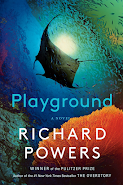
  • Richard Powers, Playground (see below #)
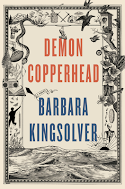
  • Barbara Kingsolver, Demon Copperhead


**Some possible fourth choices, for individual reports:

  • The Sellout by Paul Beatty (2015) - A satirical look at race and identity that won the Man Booker Prize.
  • The Candy House by Jennifer Egan (2022) - Explores themes of memory, connection, and digital surveillance.
  • Creation Lake by Rachel Kushner (2024) - Considers whether the path to emancipation from what ails modern life is not revolt, but a return to the ancient past.
  • Any of the earlier Frank Bascombe novels by Richard Ford...
  • Homegoing by Yaa Gyasi (2016) - Explores the lasting impacts of slavery and the search for identity across generations.
  • Flight Behavior by Barbara Kingsolver (2012) - Explores climate change, ecological disruption, and human responsibility.
  • The Road by Cormac McCarthy (2006) - A harrowing journey through a post-apocalyptic landscape, meditating on survival, love, and morality.
  • A Children's Bible by Lydia Millet (2020) - Set in a near-apocalyptic world, it examines generational responsibility and environmental collapse.
  • Our Missing Hearts by Celeste Ng (2022) - Dystopian fiction about cultural repression and familial bonds.
  • The Overstory by Richard Powers (2018) - A Pulitzer Prize-winning novel weaving interrelated stories about trees, nature, and activism.
  • Bewilderment by Richard Powers (2021) - This novel delves deeply into themes of ecological awareness and the human condition through the story of a father and his neurodivergent son.
  • Such a Fun Age by Kiley Reid (2019) - Investigates issues of race, privilege, and morality in contemporary America.
  • Tomorrow, and Tomorrow, and Tomorrow by Gabrielle Zevin (2022) - This narrative explores human creativity and relationships within the context of gaming and artificial intelligence.
  • Gilead by Marilynne Robinson (2004) - A profound exploration of faith, mortality, and legacy in small-town America.

**Some possible authors, for individual reports:

  • Michael Chabon

  • Jennifer Egan

  • Richard Ford

  • Jonathan Franzen

  • Barbara Kingsolver

  • Rachel Kushner

  • Ann Patchett

  • Richard Powers

  • Marilyn Robinson

  • Philip Roth

Wednesday, February 5, 2025

Questions FEB 6

 Research (Basics 5); Premonition 5


Today in Bioethics (well, soon as we finish chapters 4)...

we'll talk "research." Things like clinical trials and research involving animals and their rights, and genetics, and epidemiology. We'll look at the funding gap between what we need to cure and where our research dollars are actually going, and at the moral imperative of genuine and informed consent. We'll look at disturbing instances of fraudulent and dishonest research. And we'll consider Peter Singer's claims about "speciesism."

The future of research is a daunting source of apprehension and speculation. Michael Sandel and Bill McKibben have aired serious concerns about genetic and other "enhancement" research as potentially catastrophic for our capacity to achieve or even recognize "meaningful" lives. Enhanced may not mean improved.

1. Name one of the basic requirements agreed upon by all codes devised to protect individuals from malicious research.

2. What decree states that consent must be gained in all experimentation with human beings?

3. Name one of four areas of research discussed in the book.

4. Which famous contemporary ethicist is a sharp critic of speciesism?

5. Name one of four R's used in international legislation pertaining to animal rights in research?

6. Dilemmas in epidemiological research illiustrate what general point?

7. What did Hwang Woo-suk do?

8. What is the term for altering the numbers in a calculation to make the hypothesis more convincing, with no justification form the research findings for such members?

9. What categories of human enhancement does Campbell enumerate, and what does he identify as its "extreme end"?

10. What is the "10/90 Gap"?

Premonition
1. Watching "smart" people leave the White House, what did Carter learn about governmental inefficiency?

2. What happened when President Obama visited Mexico, prompting his meeting with Carter?

3. Why did Richard keep a detailed journal in the White House?

4. What was this book's eponymous "premonition"?

5. What Presidential decision "worked out" but was nonetheless wrong, in Richard's view?

6. What strange childhood experience altered Carter's thinking about pandemic preparednes?

7. Despite her academic adviser's suggestion that she drop science, Charity Dean fell in love with microbiology and learned what?

8. The U.S really doesn't have what, according to Charity?


DQ:

  • Can there really ever be "fully informed" voluntary consent, given the many unknown variables and unpredicted consequences involved in most research?
  • Discuss: "Trials of pharmaceuticals may be driven as much by commercial considerations as by the likelihood of real therapeutic gain." 122
  • What concerns do you have about the use of animals in medical research? Is speciesism one of them? 10 medical breakthroughs due to animal testing... PETA... Touring an animal research facility
  • What limits, if any, would you like to see imposed on genetic research and the uses to which it may be put?
  • Were ethical improprieties committed in the case of Henrietta Lacks, whose cells (HELA cells) were harvested without her consent? (Rebecca Skloot... BBC...CBS...)
  • If "dreams of perfect health by the better-off will determine the research agenda" in the future, resulting in soaring health care costs and greater health "enhancement" opportunities for the wealthy, what should be done to insure adequate attention to "the health problems of most of the world's population"? 129
  • Should we be worried about a "Prozac revolution" and a "brave new world" of somatically-induced apathetic bliss? 130
  • Would you give special priority to any of Campbell's five enhancement categories (130)? Is "Transcendence"-style enhancement beyond the realm of reasonable concern (given the considerable monied interest of people like Larry Page)? 
  • Comment: "Why would we want such a 'posthuman' future? Are our lives better if we become physically stronger or more agile, or have an increased intelligence, or live for centuries?" 131
  • Is the outsourcing of clinical drug trials to developing countries ethically defensible? 132
  • How would you propose making research priorities "aligned to the needs of the majority"? 133
  • Is it likely that biobanks and other communitarian initiatives will in the future "prioritize health research according to need rather than profit," particularly in the U.S.? Would you support such a reprioritizing? How?
  • Have you seen Sicko? Care to share a review? Or of Michael Moore's latest doc'y?