Thursday, March 23, 2017
Final Report Project
Hey guys just wanted to give everyone a heads up that I will be doing my final report on the book Oryx and Crake. That's all I needed have a blessed day:)

Wednesday, March 22, 2017
Wendell Berry discovers aging
VII.
What a wonder I was
when I was young, as I learn
by the stern privilege
of being old: how regardlessly
I stepped the rough pathways
of the hillside woods,
treaded hardly thinking
the tumbled stairways
of the steep streams, and worked
unaching hard days
thoughtful only of the work,
the passing light, the heat, the cool
water I gladly drank.
“VII.” by Wendell Berry from A Small Porch. © Counterpoint, 2016. Reprinted with permission.
Writers Almanac
Tuesday, March 21, 2017
Rights Are For Healthy Folk
In the United States of
America, when our ancestors declared our independence from Great Britain, they
said that all citizens of this land have the rights to “life, liberty, and the
pursuit of happiness.” However, I believe that without government-guaranteed
healthcare, these “rights” become empty promises to a vast (and growing)
majority of our nation.
When someone is stricken
with a debilitating disease such as cancer or Alzheimer’s, and they do not
receive the proper treatment, these illnesses can quite literally strip away
this individual’s life and their liberty to pursue happiness. If these are genuine rights of the land, then how can
we, as a society, look at someone battling any of these illnesses and tell them
“Sorry, you can’t afford the proper treatment. You can’t afford that right.” It
is absolutely deplorable that we are telling sick people that they cannot
afford to live, or to at least be comfortable in their final months of life, in
the case of terminal illnesses.
So why are we still
allowing this to happen? Many people in positions of power who may be able to do
something about it simply “Who’s going to pay for it then?” That same question was
asked before we fought a war to win our independence. Some others say “It’s
just not feasible; society isn’t ready to make the changes necessary to accommodate
this.” That argument was made during the Civil Rights movement, and yet we have
made leaps and bounds in that area (though there is still much work to be done).
And continuing the parallel of Civil Rights, it is important to understand that
this work will not be done overnight, and more importantly, it takes the voices
of thousands of individuals to stand up and demand the rights that they are
promised in this land.
Monday, March 20, 2017
Biss On Immunity (pg 3 to 39)
In the very first short chapters of Eula Biss's On Immunity, Biss lays out the argument for across the board vaccination of young infants, adults, and the elderly. She begins by drawing on Greek myths to illustrate humanity’s concern with immunity and vulnerability, presenting the story of Achilles who was impervious to harm except for his ankles. After the birth of her first child, Biss is confronted with a dilemma: to vaccinate the newborn, or not. Biss, professing her own ignorance of the vaccination debate, dives into an investigation of our complicated history with vaccines, inoculation, and their affect on public health.
Biss’s use of Dracula, from the Bram Stoker novel, as a metaphor for disease was truly insightful for me and presented the vampire novel in a different light. Victorian-era concern with immunization and the suspicion of doctors and medical workers echoes our modern qualm with the anti-vaccinators who believe immunization can cause autism and other illness, and the paranoia and lack of trust in medical and governmental agencies who advise public health policy. Biss’s use of herd immunity strongly presents the case for mass vaccination as it protects the most vulnerable of individuals: those are are unvaccinated and have little to no immunity. The person who lacks inoculation is protected by those who are and do not have that virus flowing through their bodies. Biss recommends to change the herd metaphor for that of hive, as honeybees are associated with environmental benefits and the healthy of the hive strongly depends on the individuals. I strongly agree; I believe rebranding is necessary to help encourage vaccination.
Biss’s use of Dracula, from the Bram Stoker novel, as a metaphor for disease was truly insightful for me and presented the vampire novel in a different light. Victorian-era concern with immunization and the suspicion of doctors and medical workers echoes our modern qualm with the anti-vaccinators who believe immunization can cause autism and other illness, and the paranoia and lack of trust in medical and governmental agencies who advise public health policy. Biss’s use of herd immunity strongly presents the case for mass vaccination as it protects the most vulnerable of individuals: those are are unvaccinated and have little to no immunity. The person who lacks inoculation is protected by those who are and do not have that virus flowing through their bodies. Biss recommends to change the herd metaphor for that of hive, as honeybees are associated with environmental benefits and the healthy of the hive strongly depends on the individuals. I strongly agree; I believe rebranding is necessary to help encourage vaccination.
Sunday, March 19, 2017
Aversion to the Unnatural
Eula Biss does a phenomenal job of presenting the sides of the vaccination debate. I have some VERY strong feelings about the subject, so it's cool that she's able to show how the anti-vaccination rhetoric can appeal while not demonizing anti-vaxers. I may not agree with them, but we gain nothing when we fail to see the opposing side as people, complete with relatable concerns and realistic motivations.
And the motivation that strikes me as most convincing of all the arguments you could give to choose not to vaccinate your child, is the appeal to a "natural immune development". Now look, I'm all about technological assistance. Medicine and engineering can do wonders to help humans survive in a hostile world. Do you know what I don't like? Contaminants. That's all you have to do. A one-word relabel is all it takes to give me an icky feeling about the whole business. Connotations have power. So if clever language is all it takes to play on emotions, I can see how people can get swept up. That someone would rather risk fatal illness than potential autism is still hideously offensive, but not wanting to have mysterious chemicals affecting your body seems . . . well, sensible. More sensible, anyway. When you put it like that. We're thankfully more aware of what we're doing to nature now, as well as what increasing industrialization can do to harm us, but that awareness can also bite us by leaving us open to these knee-jerk reactions.
I guess what I'm coming away with, at least here at the beginning, is more willingness to engage in polite discourse with those on the other side of the debate, but also a heightened awareness of just how easy it is to spin things. Even when you have all the information, how it's said is just as important as the content itself. We can all afford to hear each other out, especially when it comes to such a stressful, pressure-ful topic.
Friday, March 17, 2017
To Vaccinate or Not: The Struggle of Endeavoring to be Informed in an Age of Misinformation
Posted for Roderick Moore-
We live in a time where attempts at misinformation, either intentional or un intentional, is as common occurrences that often happens more times a day than we eat. This is partially due to the increase in social media use, where people can be exposed to a plethora others opinions and ideas regardless of the individual’s background. This can lead to individuals either drawing the wrong conclusions, or being misled by another individual’s opinion. Fortunately, Eula Bliss is aware of this phenomenon of misinformation, and has decided to conduct her own research into her deriving of her opinion on whether she should vaccinate her first child or not. Even within the first ten pages of her book On Immunity it is apparent that the different opinions of the other mothers around her illustrate the conflict that she herself is having on weighing the possible pros and cons of vaccinating her child where it is stated on page eight “One mother told us that she miscarried while she was sick with the seasonal flu…and planned to vaccinate…Another mother said that her child had screamed frighteningly all night following her first vaccination and she would not risk another vaccination of any kind…” (Bliss, 8). However, faced with this conflict of information, Mrs. Bliss proceeds to research the risk and rewards herself and ultimately goes into excruciating detail into the research, and the self-evaluation of her own upbringing, that leads to her ultimate decision, which is to vaccinate her child. Mrs. Bliss is a stunning example of how an informed individual can draw conclusions not blindly, like a sheep following the heard, but as an independent individual who is capable of rational thought and can cut through the fog of misinformation, and draw her own conclusions on the subject at hand.ReferencesBiss, Eula. On immunity: an inoculation. London: Fitzcarraldo Ed., 2015. Print.
Thursday, March 16, 2017
On Immunity (Pages 3-39)
So
far, Eula Bliss’s book On Immunity
has been an excellent read. She hits on many mind-bogging topics that really
made me consider my viewpoints and think about the overall health of a community.
I have never really pondered upon the meaning of the word immunity. I have
never thought of it as being a myth, regardless of me already realizing that no
one can be invulnerable to disease. At the end of the day, we will all end up
in the dirt.
One
of the topics that Eula Bliss discusses is the concept of herd immunity. I easily
agree with the idea and see it in play in my life. I live on a cattle farm and we
rely heavily on the herd immunity concept, and it works. There is no way that
we can inoculate every single one of our livestock; we simply vaccinate the
majority hoping that they will pass the resistance on to the minority that did
not vaccinated.
This
book also made me start to think of my children that I will have one day and
how I will go about their health options. My overall belief is to vaccinate
them completely. I believe there is much more risk by not vaccinating my
children. I do believe though that a few germs are good for the overall development
and resistance of my child’s health. I believe that a complete avoidance of
germs will ultimately hinder my child’s health in the end.
Overall,
I am thoroughly enjoying this book and I look forward to reading what Eula
Bliss hits on next later on in the chapters.
On Herd Immunity
Eula Biss elaborates on
the concept of a “herd immunity” which is the idea of making vaccination and
disease prevention more effective by inoculation of the majority to disturb the
transfer of a virus. She notes that donation of blood and organs to the “bank”
is much like that of vaccination being seen as an “immunity bank”. This idea in
particular, or rather, the attitude “for the good of the community” really
stands out in that it is not the common way that vaccines are promoted. Working
in the pharmacy has given me this idea that vaccination is an
every-man-for-themselves type of ordeal where it is up to the patient to risk
getting the vaccine for their own benefit. People do not understand that subconsciously
they are contributing to the “herd” idea and benefitting the community. I
believe if vaccinations were seen more as a donation type ordeal like blood
donation, there would be more of a compassionate and generous view that went
along with it.
“The
boundaries between our bodies begin to dissolve here. Donations of blood and
organs move between us, exiting one body and entering another, and so too with
immunity, which is a common trust as much as it is a private account. Those of
us who draw on a collective immunity owe our health to our neighbors” ( Biss 20).
The quote again
restates the idea of the “herd” and what is good for the society as a whole by
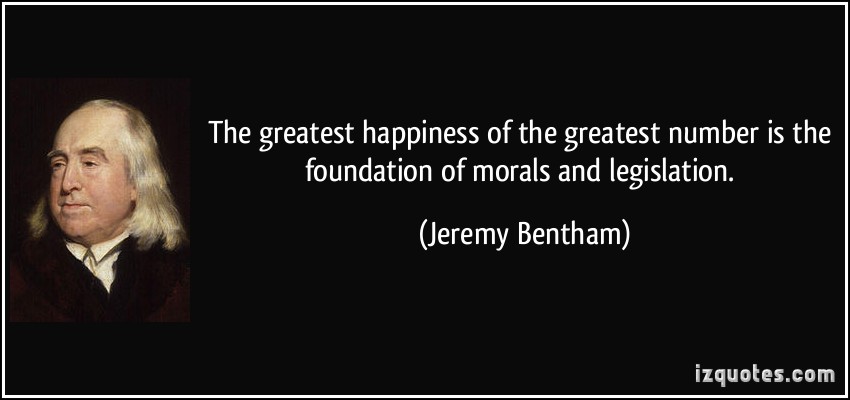
helping neighbors. We learned in the last book about Jeremy Bentham’s Greatest
Happiness Principle. I believe this relates in that by vaccination we can
obtain a healthier, happier, and pain free (or rather… painless) environment
for us to live in. Of course, this is why most doctors follow the idea of
utilitarianism an offshoot of consequentialism, and definitely why they promote
getting vaccinated. I understand the concerns people have about injecting
themselves with foreign substances, but I think there has to be a point where
we need to put faith and trust into our healthcare professionals and take the
risk. Life is about taking risks, and if we let fear (whether it be of foreign
substances or the thought of becoming impure) rule our lives, then we should
just give up now. We got this far in life as a species by experimenting and
discovering, so why should we surrender now to the diseases that surround us.
Wednesday, March 15, 2017
The Body as Our Natural Home
In the first few chapters of On Immunity, Eula Biss points out a
motif in language: often, "our language reflects our bodies" (pg.
12). When we help someone, we lend them a hand. When we support them, we back
them. It makes sense that many of our metaphors relate to our bodies, as our
bodies are the shells through which we experience life.
The metaphors we use "prime how we think and act" (pg. 12). If many of our metaphors involve the body, then it seems that our bodily existence guides much of our thoughts and actions. Of course, then, we tend to associate "natural" with what is good for us and "unnatural" with what is bad for us. The body is the home we are born with, so even as our lives become more technologically advanced and separated from nature, we still consider the body an aspect of nature. Moreover, many of the "unnatural" components of our modern world, engineered by humans, are in some way harmful. Take pesticides, bombs, and the diseases spread through colonization, for example.
Modern medicine too can be understood as being in opposition to nature: we strive to prolong our lives and perfect our bodies. Though we seek health, it makes sense that, if we associate the natural with the good, we would be suspicious of some aspects of modern medicine. The most notable example of this paranoia involves vaccines. Vaccines, made of live, captured viruses, enter our bodies through needles, violating our natural barrier to the outside world. Perhaps more unnaturally, the viruses in vaccines do not, if successful, "introduce disease or produce illness" (pg. 41). Hence, our fear of vaccinations is... natural. However, we must, like Biss, overcome this fear through thorough research of the benefits of vaccination, which may outweigh the monstrosity of disease.
Word Count: 303
Monday, March 13, 2017
"What the Doctor Ordered"
Nashville Scene, March 9-15
Hohenwald Republican is alleged to have had an affair with his nurse and prescribed her opioids
The details sound straight out of a soap opera.
A doctor and his younger nurse fall in love. They continue their torrid affair even after his ex-wife tips off the nurse’s husband, a local politician, to the salacious goings-on. As the divorce moves forward, discovery turns up that the nurse is not just the doctor’s employee and his lover, but his patient, with a predilection for pain pills. And, oh, she’s his second cousin, too.
But this is not General Hospital, not Grey’s Anatomy. This is the town of Hohenwald (pop. 3,703) in Lewis County, where bitter divorce proceedings have brought to light possibly unethical behavior by Dr. Joey Hensley, a Republican state senator who also happens to be a family physician — and one who has run for office since 2002 on a platform of conservative Christian values.
Hensley, 61, was subpoenaed to appear last week in Williamson County Circuit Court to testify in the divorce proceedings of Hohenwald Vice Mayor Don Barber and his wife Lori. He refused to show up, citing legislative and medical privilege.
“I didn’t have time to do it,” Hensley said when contacted on Friday afternoon. “I had nothing to do with the court case, and any testimony I would have given wouldn’t have made any difference.”
But according to the sworn testimony of both Barbers, Hensley has been having an affair with Lori since 2014. Lori, 48, is a part-time nurse in Hensley’s medical practice in Lewis County; she is also his second cousin.
Hensley gained national notoriety in 2012 as a sponsor of the “Don’t Say Gay” bill, which would have banned public school teachers from even mentioning that homosexuality exists. During one hearing that year, Hensley commented, “I don’t think Modern Family is appropriate for children to watch” — because it features a married gay couple raising children. This session, Hensley is sponsoring a bill from the Tennessee Family Action Council that would make children created using donor sperm illegitimate — an attempt to make it harder for gay and lesbian parents to establish paternity. He is also a sponsor of the so-called “Milo Bill,” aimed at liberal practices on college campuses.
The subpoena ordered Hensley to bring evidence of any gifts or monies spent by him on Lori Barber or by her on him. Hensley declined to testify under a statute of Tennessee law that exempts “a member of the general assembly while in session” and also “a practicing physician” from subpoena to trial. But he will still be deposed about the affair, and that deposition will then be entered into the court record. The deposition has not been scheduled but is expected to occur in the next week or two.
According to testimony during the trial, Lori Barber started working for Hensley in 2013 part time as a licensed practical nurse in his practice, at a salary of $15 an hour. She still makes that same salary and currently works one day a week in his office. She had previously worked for Hensley from 1987 to 1988, prior to both her marriage and the completion of her nursing degree.
Barber testified she and Hensley began confiding in each other about problems in their marriages shortly after she took the job, but she said the relationship did not become sexual until December 2014, after the divorce became final between Hensley and his fourth wife, Gina, who is also a nurse. Their first sexual encounter was at Hensley’s practice, and soon, Barber said, the pair were discussing marriage.
This timeline is disputed by Don Barber. He found out about the affair in the spring of 2015, when Gina Hensley gave him a flash drive with evidence of her ex-husband’s affair, including recordings of phone calls and screenshots of sexually explicit text messages between Gina and Lori discussing Hensley’s sexual proclivities and detailing instances when he and Lori had sex. Court documents claim the files show that the affair began much earlier in 2014; proof of this was not shown in open court.
Around the same time that spring, Gina Hensley took out an order of protection from the senator, alleging he hit her with his car, twice. He denied it, and she eventually withdrew the claim. Sen. Hensley told Columbia’s Daily Herald at the time that Gina left him for another man, and he had “tried with all my heart to keep our family together.” He told the Scene something similar this week, saying, “I was devastated by my divorce.”
Lori Barber moved out in August 2015 and filed for divorce later that fall. She testified that she ended her affair with Hensley in April 2016, but that things started up again in June. She said the couple continue to discuss marriage as a future possibility. (It is legal in Tennessee for second cousins of any age to marry.)
Barber also testified that she spent the nights of Feb. 8 and and Feb. 14 this year with Hensley at a hotel in downtown Nashville while he was in town for legislative duties. Although those nights were presumably paid with a legislative per diem — i.e., state dollars — Legislative Administration director Connie Ridley said whether or not someone else stays with a legislator if he or she is in town on legitimate business “is not pertinent to the payment,” per state law.
Hensley denied that he is still romantically involved with Barber.
“No, I’m divorced, I don’t know what she’s talking about,” Hensley said when asked if they were still discussing marriage. He also denied that Barber had spent either night in February in his hotel room. When asked if this is what he would testify to under oath during his deposition, Hensley said he had no further comment.
In a second conversation three days later, Hensley said the affair lasted only “a few months.”
“It’s not still ongoing,” Hensley said Monday night. “That was several months ago, years ago. I didn’t break any laws. I’m not married, I’m divorced. … And nothing happened while I was married. … She didn’t leave because of me, it wasn’t because of me. We’ve been friends for 30 years or more. She’s related to me, but she’s been a friend too.”
But Lori Barber is not just a friend or a cousin or a lover — she is also Hensley’s patient. Barber testified in court that Hensley is her only doctor other than a cardiologist, and that she relies on him for recurrent Botox injections. She also said he has regularly prescribed her the hydrocodone-acetaminophen pill Lortab — a Schedule II controlled substance — for “chronic back pain,” which she said Hensley first diagnosed after she hurt her neck.
Court testimony and documents filed imply that Barber has possibly abused both alcohol and opioids; she testified that she has no problem with either and any uptick in consumption was due to the stress of the divorce. But in her deposition, Barber was asked by her husband’s lawyer, Rose Palermo, “And didn’t your parents come to you and say that this situation with the Lortab had to be reined in, because you were taking too many Lortabs?” Barber replied, “I was taking too many according to them, but I was taking exactly what I was prescribed.” Palermo followed up, “By Dr. Hensley?” Barber answered, “Yes.”
When asked last week if he often provides his nurses with opioid prescriptions, Hensley said he treats all his patients “the same” and declined further comment. On Monday, when asked if it concerned him that a nurse in his employ had been somewhat frequently taking hydrocodone, Hensley replied, “She’s a patient of mine, and anything I treat a patient with is [protected by] HIPAA.” She’s a patient, but she’s also an employee, the Scene said. “Well, it’s a small town. People don’t have an option for some things,” Hensley said.
It is a clear violation of the American Medical Association’s code of ethics — to which the Tennessee Board of Medical Examiners subscribes — for a doctor to become romantically involved with a patient. It is also in violation of the state board’s guidelines to regularly treat immediate family members or prescribe them drugs. The policy states, in part, “Treatment of immediate family members should be reserved only for minor illnesses or emergency situations. … No schedule II, III or IV controlled substances should be dispensed or prescribed except in emergency situations.” But there are no AMA or state guidelines that specifically prohibit doctors from treating employees.
Yet an examination of recent disciplinary actions by the Board of Medical Examiners suggests Hensley’s actions with Barber could certainly border on the unethical. In the past year, from January 2016 to January 2017 (the latest month for which data was available), the board has taken action against at least 13 doctors for, in part, prescribing controlled substances to an employee, a family member or a patient with whom the doctor was in a romantic relationship. The actions ranged from a reprimand to license revocation or forced retirement, with an additional wide range of fines.
It’s important to note that no action was taken solely based on one instance of prescribing drugs to a family member or employee alone — all of the instances above include multiple and varied violations of state rules and regulations. And Hensley said his treatment of Barber is in no way a violation of the code of ethics, because he regularly treats a lot of family members.
“I’ve been practicing 30 years,” says Hensley. “I have thousands of patients. It’s a small town, and I have a lot of family. A lot of family. Cousins, uncles, aunts. … And I don’t treat anyone any different.”
Lt. Gov. Randy McNally says it is unlikely the state Senate will address the situation unless the Board of Medical Examiners does go forward with an investigation.
“If it were a violation of the Board of Medical Examiners’ ethics, and certainly if it rose to the level of anything more serious, then I think the Senate Ethics Committee could look at it,” McNally says. “But if it’s just a simple disciplinary-type issue that is not serious, then I don’t think the Ethics Committee … they probably wouldn’t take it up.”
==
State Legislators to Regular Tennesseans: Family Values for Thee, but Not for MeJoey Hensley pushes anti-LGBT legislation by day, sleeps with his married patient (who is also his employee and second cousin) by night
The details sound straight out of a soap opera.
A doctor and his younger nurse fall in love. They continue their torrid affair even after his ex-wife tips off the nurse’s husband, a local politician, to the salacious goings-on. As the divorce moves forward, discovery turns up that the nurse is not just the doctor’s employee and his lover, but his patient, with a predilection for pain pills. And, oh, she’s his second cousin, too.
Joey Hensley has been married and divorced four times. He has the gall to be offended by gay people and to champion conservative laws designed to screw them over. And here he is, fooling around with his employee, prescribing her drugs, helping her cheat on her spouse and going through wives like some folks go through toilet paper. The audacity of it is breathtaking... (continues)
==
Hensley's Alleged Mistress Working on an Expired License
"Why does that matter?" Hensley says
Mar 10, 2017 11 AM
Earlier this week, the Scene reported on messy love life of state Sen. Joey Hensley, a longtime Republican legislator and doctor from Hohenwald who has had or is having (depending on whom you ask) an affair with his nurse, who is also his second cousin.
Of more concern, however, than a pro-life, anti-gay "family values' politician having an affair was that Hensley had been prescribing his lover hydrocodone for "back pain" in doses that concerned her parents. It's murky as to whether this is a direct violation of the state Board of Medical Examiners' policies, but it's certainly not best practice, even if he had not been having a romantic relationship with his nurse.
But that's not the only questionably ethical thing happening in Hensley's office. (And no, we're not talking about him having sex on the premises either.) Hensley's cousin/nurse/girlfriend, Lori Barber, has been working in his office with an Licensed Practical Nurse state license that expired last October. Yet Hensley says the expired license isn’t an issue.
“That doesn’t matter. Why does that matter?” Hensley said, when asked about it earlier this week. “She doesn’t work as an LPN, she does vaccines for children. … You don’t have to be an LPN to work in a doctor’s office. You don’t have to be anything to work in a doctor’s office.”
Tennessee Department of Health spokesperson Shelley Walker notes in an email, “There is no requirement that vaccines can only be administered by particular health professionals.” But she points out that state law “permits a physician to delegate tasks,” saying specifically that, “LPNs are qualified and licensed to administer vaccines and injections to a patient safely with a valid order from a licensed physician or other provider authorized to prescribe.”
So, maybe, if all Barber really was doing in the office since October is administering vaccines and nothing else, she might not be facing a fine as she tries to get her license renewed (a process it seems she has just recently started in the past week or two). However, her husband testified in his deposition prior to the divorce trial that Barber has been providing some of his medical care for the past year — as his former primary care physician was Hensley, whom he understandably did not want to see after finding out about the affair. Again, this is possibly a breach of state guidelines in regards to treating immediate family members.
Of course, it is completely possible that neither Hensley nor Barber have done anything seriously wrong, besides the brief lapse in licensure. Neither party has ever had formal action taken against them, according to state records — although as Walker points out, the Board of Medical Examiners or Board of Nursing cannot take action on its own.
"It is important to note that the process for investigating and disciplining licensed health professionals is a complaint-driven process; the filing of a complaint is what triggers an investigation. We can only investigate situations of which we are made aware," Walker emails, adding people can easily file a complaint about any practitioner with whom they have concern's on the state's website.
Drugs are killing so many people in West Virginia that the state can’t keep up with the funerals
Source here
West Virginia, unlike most other states, has a program that
provides burial assistance for poor families. The total assistance averages $1,250
per burial. For the past two years, the allotted annual budget of roughly two
million dollars has been exhausted in March.
The state’s Department of Health and Human Resources
spokesperson didn’t comment or speculate as to the cause of the deficit, but
West Virginian funeral home directors have no quarrels with blaming the growing
problem on drug overdoses. The same people would also tell you that, contrasting with other low-income deaths, nearly all
of these drug overdose incidents rely upon the burial assistance program. “In
2015, according to the Centers for Disease Control and Prevention, West
Virginia's drug overdose death rate stood at 41.5 cases per 100,000 residents,
the highest rate in the country and nearly three times the national average. In
1999, the state's overdose fatality rate was below average.”
The cause of this exponential increase? Between 2007 and
2012, the same years that the drug overdose statistics began their
uncontrollable climb, drug wholesalers trafficked 780 million doses of
hydrocodone and oxycodone to West Virginia. That amount is enough to give every
man, woman, and child in West Virginia 433 pain pills. The Charleston Gazette-Mail
investigation that provided those statistics also claimed that those pills took
1,700 lives during that period of time.
So, it’s easy to see that there are plenty of bioethical
concerns intertwined in this story. The most glaringly obvious ethical concern
would be the shipment of 780 million doses of opiate pain-killers to a single
state. I’m not sure how comfortable I am with the statement of “those specific
drugs killed X amount of people,” but I’m not ready to write it off as
coincidence, either.
It’s a little scary to think that various companies involved
in the process of producing and transporting these pharmaceuticals may have
sniffed out an opportunity for profit and completely ignored the ethical
ramifications of their actions. It also makes one wonder why these enormous
shipments of potentially harmful drugs can be concentrated and transferred
unnoticed (at least until years later and after the deaths of thousands).
Whether the drugs were shipped to a storage facility with no
malicious intent or to street vendors to distribute and make an unethical
profit, there’s a level of accountability that has yet to be attained and is
necessary to avoid tragedies like this.
Word count: 404
Saturday, March 11, 2017
Squalene C30H50 & Vaccination
What, I wondered, is squalene? Biss asked. This was Biss question about what squalene is. Squalene is a natural 30-carbon organic compound originally obtained for commercial purposes primarily from shark liver oil, although plant sources are now used as well, including amaranth seed, rice bran, wheat germ, and olives. Yeast cells have been genetically engineered to produce commercially useful quantities of "synthetic" squalene. Some search assumed that it was touted as the reason sharks don't get cancer, until it was found that sharks can get cancer. Squalene however, remains an anti-cancer compound, is fairly healthy, and benefits cholesterol levels.
Some European flu vaccines do indeed contain squalene from shark liver oil. However, squalene has never been added to US licensed vaccines.

Now, this is the concern and the question that Biss raised, why are vaccinations dangerous?
The presumed intent of a vaccination is to help you build immunity to potentially harmful organisms that cause illness and disease. However, your body's immune system is already designed to do this in response to organisms which invade your body naturally. Most disease-causing organisms enter your body through the mucous membranes of your nose, mouth, pulmonary system or your digestive tract not through an injection. These mucous membranes have their own immune system, called the IgA immune system. It is a different system from the one activated when a vaccine is injected into your body. Y our IgA immune system is your body's first line of defense. Its job is to fight off invading organisms at their entry points, reducing or even eliminating the need for activation of your body's immune system. When a virus is injected into your body in a vaccine, and especially when combined with an immune adjuvant like squalene, your IgA immune system is bypassed and your body's immune system kicks into high gear in response to the vaccination.
What squalene does to humans: The Department of Defense made every attempt to deny that squalene was indeed an added contaminant in the anthrax vaccine administered to Persian Gulf war military personnel – deployed and non-deployed – as well as participants in the more recent Anthrax Vaccine Immunization Program (AVIP).
Some European flu vaccines do indeed contain squalene from shark liver oil. However, squalene has never been added to US licensed vaccines.
Now, this is the concern and the question that Biss raised, why are vaccinations dangerous?
The presumed intent of a vaccination is to help you build immunity to potentially harmful organisms that cause illness and disease. However, your body's immune system is already designed to do this in response to organisms which invade your body naturally. Most disease-causing organisms enter your body through the mucous membranes of your nose, mouth, pulmonary system or your digestive tract not through an injection. These mucous membranes have their own immune system, called the IgA immune system. It is a different system from the one activated when a vaccine is injected into your body. Y our IgA immune system is your body's first line of defense. Its job is to fight off invading organisms at their entry points, reducing or even eliminating the need for activation of your body's immune system. When a virus is injected into your body in a vaccine, and especially when combined with an immune adjuvant like squalene, your IgA immune system is bypassed and your body's immune system kicks into high gear in response to the vaccination.
What squalene does to humans: The Department of Defense made every attempt to deny that squalene was indeed an added contaminant in the anthrax vaccine administered to Persian Gulf war military personnel – deployed and non-deployed – as well as participants in the more recent Anthrax Vaccine Immunization Program (AVIP).
According to Dr. Viera Scheibner, Ph.D., a former principle research scientist for the government of Australia:
Squalene: The Swine Flu Vaccine’s Dirty Little Secret Exposed http://articles.mercola.com/sites/articles/archive/2009/08/04/squalene-the-swine-flu-vaccines-dirty-little-secret-exposed.aspx#!
"… this adjuvant [squalene] contributed to the cascade of reactions called "Gulf War Syndrome," documented in the soldiers involved in the Gulf War.References:
Squalene: The Swine Flu Vaccine’s Dirty Little Secret Exposed http://articles.mercola.com/sites/articles/archive/2009/08/04/squalene-the-swine-flu-vaccines-dirty-little-secret-exposed.aspx#!
Autoimmune Technologies, News Release: SQUALENE FOUND IN ANTHRAX VACCINE
Wednesday, March 8, 2017


Tuesday, March 7, 2017
Questions from On Immunity (P 3-39).
Questions:
1.What type of virus was spreading from Mexico
to the US to the rest of the world? P 6
2.What the reason behind the footage people
wearing white surgical masks in airport? P 7
3-Biss wondered for how pillows and blanket
have the power to do what? P 7
4-When Eula researched for a synonym for
protect, what she fined finally?
5-What made this particular strain of flu
dangerous? P 8
6-How many millions of people died at the
Spanish flu epidemic of 1918?
7-Who noted that influenza is regularly among
the top ten causes of death in this country?
8-What term that Biss disliked? P 11
9-When finally, her son got his flu
vaccination?
10-What Emerson means by “Fossil poetry”? P 12
11-Who warned of the ravages of the vaccine
against human? P 13
12-The combination of several vaccines at once
will tax the immune system. T/F
13-Who count Dracula is of the bloodthirsty
bourgeois? P 15
14-Who is one’s neighbor? P 17
15-Who is the universal donor? P 18
16-Who said “It’s a product of the herd”? P 22
17-Who is the science writer observes, “There is
no us and them”? P 32
Spring Lyceum: Social Hope in the Time of Drumpf
Friday, April 21 at 5 PM, COE (College of Education Bldg) 164. The MTSU Department of Philosophy is pleased to host Ronald Aronson (Distinguished Professor Emeritus of the History of Ideas, Wayne State University) for a Spring Semester lecture and discussion.
In his MTSU lecture, he will examine the current social/political moment, viewing the election of Donald Trump against the background of a generation of shrinking hope—deindustrialization, rising inequality, attacks on public education, and shredding of the social safety net. For Aronson, Trump’s tumultuous first months as president have set the stage for a stunning insurgency of resistance. Drawing on generations of political struggle as well as philosophy, especially the work of Jean-Paul Sartre, Aronson will argue for a unique conception of social hope. Hope, for Aronson, is not a religious attitude but a secular one, and it is far more than a mood or feeling. The very basis of social will and political action, it entails acting collectively to make the world more equal, more democratic, more peaceful, and more just. Even at a time when false hopes are rife, Aronson argues social hope still persists. Always underlying our experience—even if we completely ignore it—is the fact of our social belonging, which can be reactivated into a powerful collective force, an active WE which can still create a better future for everyone.
Ronald Aronson grew up in Detroit and earned a Ph.D. in the History of Ideas at Brandeis University where he studied with William Barrett, Page Smith, and Herbert Marcuse. A long time professor at Wayne State, he has also been a guest lecturer at several South African universities.
The story of his first experience in South Africa, at the height of the struggle to end apartheid, is told in STAY OUT OF POLITICS: A PHILOSOPHER VIEWS SOUTH AFRICA. In recognition of his scholarly career and political contributions to South Africa, the University of Natal, Durban, South Africa awarded him the honorary degree of Doctor of Laws.
Aronson is an internationally recognized authority on Jean-Paul Sartre. He has focused on Sartre’s transformation to a political thinker and activist. A past Chair of the Sartre Society of North America and founding editor of the journal SARTRE STUDIES INTERNATIONAL, he is the author of JEAN-PAUL SARTRE-PHILOSOPHY IN THE WORLD (Verso), SARTRE'S SECOND CRITIQUE (University of Chicago Press), and CAMUS AND SARTRE: THE STORY OF A FRIENDSHIP AND THE QUARREL THAT ENDED IT (University of Chicago Press) which has been translated into eight languages.
In addition, he is the author of LIVING WITHOUT GOD: NEW DIRECTIONS FOR ATHEISTS, AGNOSTICS, SECULARISTS, AND THE UNDECIDED as well as AFTER MARXISM. He has published articles in such academic and popular journals as THE NATION, THE CHRONICLE OF HIGHER EDUCATION, THE WASHINGTON POST, DISSENT, NEW POLITICS, SCIENCE AND SOCIETY and YALE FRENCH STUDIES.
Professor Aronson is also co-producer of the feature-length documentary film PROFESSIONAL REVOLUTIONARY about legendary Detroit social and political activist Saul Wellman and, most recently, 1ST AMENDMENT ON TRIAL: THE CASE OF THE DETROIT SIX, focused on the Federal government's trial of Michigan Communist Party leaders in the '50s.
His newest book, WE: REVIVING SOCIAL HOPE (University of Chicago Press) is scheduled for publication the week of his MTSU lecture.
An informal reception will follow the lecture at the home of Professor Michael Principe.
Wednesday, March 1, 2017
Bioethics, Genetic, Education & Discovery
Bioethics is the study of ethical, legal, and social issues raised by advances in biology and medicine. Bioethicsaddresses a range of controversial topics, including privacy and fairness in the use of genetic information, integration of new technologies, such as genetic testing, into medical practice, and the design and conduct of research studies and clinical.
trials.https://geneed.nlm.nih.gov/topic_subtopic.php?tid=52&sid=59
Genetics, Behavior & Identity
trials.https://geneed.nlm.nih.gov/topic_subtopic.php?tid=52&sid=59
Genetics, Behavior & Identity
Tuesday, February 28, 2017
The Case Against Perfection (Excerpts, quiz, and discussion questions)
The Case Against Perfection by Michael Sandel
QUIZ QUESTIONS:
Chapter 1: The Ethics of Enhancement
1. What was attempting to conceive a deaf child compared to? (pg. 3)
2. What does Julie receive a clone of? (pg. 4)
3. What do breakthroughs in genetics promise will soon be treatable and preventable? (pg. 5)


Chapter 3: Designer Children, Designing Parents
4. In the words of the theologian William May, parenthood teaches _____________. (pg. 45)
5. The deepest moral objection to enhancement lies in _____________________. (pg. 46)
6. The drive to master genetics disfigures the parent-child relationship and deprives the parent
of what? (pg. 46)
7. Health is not the kind of good that can be _______. (pg. 48)


Chapter 4: The Old Eugenics and the New
8. Who coined the term eugenics and called for it to be "introduced into the national
conscience, like a new religion"? (pg. 63)
9. What was the "chief issue of birth control" according to the feminist Margaret Sanger?
(pg. 65)
10. Which state adopted the first law providing for the forced sterilization of certain groups of
people? (pg. 65)


DISCUSSION QUESTIONS:
1. If you could design your child to have every advantage, would you? Why or why not?
2. Is it morally wrong to design a child to be deaf?
3. Do you think being deaf could be considered a culture or a disability?
4. How do you think genetically enhancing one's children influences the parent-child
relationship?
5. How should parents balance accepting love and transforming love?
6. Do you think that the American eugenic movement would still exist if Hitler hadn't taken it to
such a violent extreme? What differences do you think we would see in America if eugenics
had continued with the momentum it had before the Nazis brought it into an unfavorable
light?
Subscribe to:
Posts (Atom)