Up@dawn 2.0

Thursday, February 3, 2022

Questions FEB 8

 Justice (Basics 6); Premonition 6

    We wrap up our reading and discussion of Bioethics: The Basics with ch.6 on justice. The vaccination/immunization issue is raised here. Also see Eula Biss's On Immunity, below.*
  1. But first, on "enhancement": awhile back I saw a chilling fictional representation of how future mental/cognitive enhancements might lead to dystopia. It was episode three of the British series "Black Mirror," in which everyone is equipped with an implant called a "grain" - it's kind of a subcutaneous Google Glass, with instant access to one's entire archival memory (and with f/forward and rewind). The late David Carr on Black Mirror, MicroSoft's HoloLens, and our dwindling experience of "actual unencumbered reality"...
    And if that's not chilling enough, check out "The World of Tomorrow"...
    1. What are the two major spheres of justice discussed by Campbell? 
    2. (T/F) Vaccination/immunization and restricted mobility are two of the measures used by preventive medicine to counter the spread of disease. 
    3. Another name for the micro-allocation of health care, concerned with prioritizing access to given treatments, is what? (HINT: This was hotly debated and widely misrepresented ("death panels" etc.) in the early months of the Obama administration.)   
    4. What "perverse incentive" to health care practitioners and institutions do reimbursement systems foster, as illustrated by excessive use of MRIs?
    5. What is the inverse care law?   
    6. What is meant by the term "heartsink patients"?
    7. How are Quality Adjusted Life Years (QALYs) supposed to address and solve the problem of who should receive (for instance) a transplant?   
    8. Who propounded a theory of justice that invokes a "veil of ignorance," and what are its two fundamental principles?   
      9. Under what accounts of health might we describe a sick or dying person as healthy?
    10. Name two of the "capabilities" Martha Nussbaum proposes as necessary to ensure respect for human dignity?

    ==

    Premonition

    1. What grant to Joe DeRisi led to his "Red Phone"?

    2. The new coronavirus Joe's lab identified in 2003 caused what syndrome?

    3. Joe went "down the rabbit hole" to talk to who?

    4. Joe said analyzing genetic sequences with the Virochip was like trying to find what?

    5. What is the dark matter of genomic sequencing?

    6. How does Joe think science is misunderstood?

    7. How was the DeRisi lab like Willy Wonka?

    8. What's an example of "screwed up incentives" inside the medical-industrial complex?

    9. What is the Chan Zuckerberg Biohub's "preposterous goal"?


    DQ:
    1. Do you agree that health care providers are ethically obliged to promote a fair balance between the rights of the individual and the welfare of society as a whole, and a fair distribution of benefits and burdens in society? Would you say that ethos is widely shared among physicians?

    2. Reflecting on the present measles outbreak and the ebola quarantines of last summer, how would you rate the current strength and effectiveness of vaccination and restricted mobility as tools of preventive medicine? How might they be improved? Do you agree that most anti-vaccers lack a degree of social conscience?

    3. Are you aware of examples of unjust "queue jumping"? 150 (Does the name Mickey Mantle ring a bell?) 
    4. Are there better alternative payment systems than reimbursement? Is it possible to reign in excessive tests and costs while retaining a reimbursement system? 
    5. How would you resolve the Lifeboat Scenario? 153f.

    6. Do you agree that justice requires us to remove the social disadvantages caused by ill health and disability, and support a universal right to those health care interventions that will allow everyone to pursue their "normal opportunity range"? Would you be more or less likely to agree, if you found yourself behind the "veil"? 159

    7. Are there any "attainable human capabilities" on Martha Nussbaum's normative list you'd not include on yours? 163

    8. Elaborate on how bioethics overlaps with environmental ethics. 165
==
Eula Biss, On Immunity: An Innoculation


==
==
Dr. Victor Sidel, Public Health Champion, Is Dead at 86
Dr. Victor Sidel, a leading public health specialist whose concerns ranged from alleviating the effects of poverty in the Bronx, where he worked for many years, to raising alarms about the potential impact of nuclear war, died on Jan. 30 in Greenwood Village, Colo. He was 86.His son Mark confirmed the death.

As a founding member of Physicians for Social Responsibility and International Physicians for the Prevention of Nuclear War, which won the Nobel Peace Prize in 1985, Dr. Sidel voiced his apprehensions about nuclear proliferation as a public health issue for more than 50 years. He served as president of the former organization and co-president of the latter.

In a paper in The New England Journal of Medicine in 1962, Dr. Sidel, Dr. H. Jack Geiger and Dr. Bernard Lown painted a grim picture of fatalities and injuries in the Boston area from a nuclear attack and posed ethical questions for surviving doctors.

“Does the physician seek shelter?” they asked, adding, “If the physician finds himself in an area high in radiation, does he leave the injured to secure his own safety?”

And in speeches beginning in the mid-1980s, Dr. Sidel (pronounced sy-DELL) used a metronome to stress what he described as the imbalance between worldwide spending on arms and health care. With the metronome set at one beat a second, Dr. Sidel explained that with every beat, a child died or was permanently disabled by a preventable illness, while $25,000 was spent on weaponry... (continues)
==

==
    Mother Jones (@MotherJones)
    We are this close to "designer babies" mojo.ly/1W5QtTe pic.twitter.com/KTO0VDpNHl

    New Republic (@NewRepublic)
    What’s wrong with Craig Venter? bit.ly/1UWRU65 pic.twitter.com/F3b8scr06N

    The USDA abruptly removes animal welfare information from its website
    http://wapo.st/2kBZkTy

    Measuring the wonders of an empathetic ear in the doctor’s office
    http://wapo.st/2k4JHTO

Netherlands Fertility Doctor Used Own Sperm to Father 21 Children

A gynecologist in the Netherlands conceived 21 children and potentially dozens more using his own sperm after prospective parents turned to him for fertility treatment, an investigation has discovered. Jos Beek worked at Elisabeth hospital in Leiderdorp, now part of Alrijne hospital, between 1973 and 1998. He died in 2019. The couples being treated by Beek had expected to be the beneficiaries of samples from anonymous sperm donors. Alrijne hospital said it did not believe Beek had told anyone the truth.


Article continued at https://www.theguardian.com/world/2022/feb/02/netherlands-fertility-doctor-jos-beek-father-21-children

Brain Organoids?

An abstract posted by Kyoto University explores the progressions being made in artificial organ transplant. 

The discussion starts by investigating the ethics of creating an artificial brain and transplanting it into animals to test success of the "organoid" in order to one day potentially place it in humans that are in need of a healthy brain. Is this kind of animal testing ethical? 

The abstract explains how consciousness is an issue here in that it cannot truly be measured or defined:

"Brain organoids have led to deep questions about consciousness. With some people imagining a future where our brains are uploaded and kept on the cloud well after our bodies die, organoids bring an opportunity to test consciousness and morality in artificial environments."

The statement regarding that brains could one day be uploaded and kept on the cloud reminded me of the scene from Harry Potter when Harry sticks his head into the pit of water (I am not sure what the actual name of the pit is) and he is able to see Professor Snape's memories. Will people one day be able to relive and experience the memories of past loved ones, friends, or in Harry's case, enemies? What are your thoughts on this? And is this ethical? 

Wednesday, February 2, 2022

How does Biomedicine Transform Human Reproduction?

According to Henry Greely, genetic testing has played a role in pregnancy for over 50 years.

The article continues with the following: 

"Today, bad news from prenatal testing leaves would-be parents with two options: terminate the pregnancy or prepare for the birth of an ill or at-risk child. For over 30 years, parents have been able to avoid this dilemma by turning to pre-implantation genetic diagnosis (PGD). This procedure starts with in vitro fertilization (IVF), but then tests embryos before they are transferred into the uterus. For many people, choosing not to transfer an embryo destined to have a genetic disease raises less concern than aborting an already implanted embryo or growing fetus."

I am curious to know everyone's thoughts on this. I know this topic is one that some would not poke with a 15 foot pole; however, I am curious. Is genetic testing on the unborn ethical? And if yes, how far is too far? 

After reading this article, I was reminded of the book Brave New World (1932). The book is set in year 2540 and describes a world in which embryos are given differing intelligence levels based on chemical treatment. While this is not happening today, I feel that with the speed that biomedical technology is advancing, this could be closer than year 2540. Thoughts? 

I understand that this is sort of an extreme when it comes to genetic testing and that this is not the current state of the world. I also understand that genetic testing does have benefits. However, it does make me think, if the technology is available one day, what will happen? 


Covid Fatigue? 70% of Americans Say ‘We Just Need to Get on With Our Lives,’ According to New Poll

 As the United States enters year three of the Covid-19 pandemic, a large share of Americans are ready to “get on” with their lives.

Seventy percent of respondents agreed with the statement, “It’s time we accept that Covid is here to stay and we just need to get on with our lives,” when asked in a Monmouth University poll.

The survey shows that 78% of people who reported having had Covid believe it’s time to move on. Not surprisingly, responses indicate a clear partisan divide with 89% of Republicans agreeing with the statement, versus just 47% of Democrats. Among independents, 71% said it’s time to move on.

continues


How do you feel about lockdowns being a thing of the past? The CDC admitted cloth masks are ineffective, how does this influence Americans' thoughts on controlling covid in the past and future?


"A thousand lifetimes"

 Happy Groundhog Day! It's not so "cold out there,"* here--47 in middle Tennessee (Alexa says it's 30 in Punxsutawney), but it's wet and fecund. Spring is in the air. Respect must be paid. (U@d)


On this day in 1887, a groundhog named Phil first emerged from his burrow at Gobbler’s Knob — a small hill in Punxsutawney, Pennsylvania — and the tradition of Groundhog’s Day was born. According to legend, if a groundhog sees his shadow today there will be six more weeks of winter. In Phil’s case, whether or not he will see his shadow is actually decided several days in advance by his top-hat-and-tuxedo-donning handlers, the members of the Groundhog Club’s Inner Circle. Despite their trade secret methods for prediction, Phil’s accuracy rate as of last year was only 39 percent. WA


Phil: "Well maybe the real God uses tricks, you know? Maybe he's not omnipotent. He's just been around so long he knows everything."

Rita: "Sometimes I wish I had a thousand lifetimes. I don't know, Phil. Maybe it's not a curse. Just depends on how you look at it."

* Phil: "OK, campers, rise and shine, and don't forget your booties cause it's cold out there. It's cold out there every day."

Tuesday, February 1, 2022

Questions FEB 3

Research (Basics 5); Premonition 5

Today in Bioethics we'll talk "research." Things like clinical trials and research involving animals and their rights, and genetics, and epidemiology. We'll look at the funding gap between what we need to cure and where our research dollars are actually going, and at the moral imperative of genuine and informed consent. We'll look at disturbing instances of fraudulent and dishonest research. And we'll consider Peter Singer's claims about "speciesism."

The future of research is a daunting source of apprehension and speculation. Michael Sandel and Bill McKibben have aired serious concerns about genetic and other "enhancement" research as potentially catastrophic for our capacity to achieve or even recognize "meaningful" lives. Enhanced may not mean improved.

1. Name one of the basic requirements agreed upon by all codes devised to protect individuals from malicious research.

2. What decree states that consent must be gained in all experimentation with human beings?

3. Name one of four areas of research discussed in the book.

4. Which famous contemporary ethicist is a sharp critic of speciesism?

5. Name one of four R's used in international legislation pertaining to animal rights in research?

6. Dilemmas in epidemiological research illiustrate what general point?

7. What did Hwang Woo-suk do?

8. What is the term for altering the numbers in a calculation to make the hypothesis more convincing, with no justification form the research findings for such members?

9. What categories of human enhancement does Campbell enumerate, and what does he identify as its "extreme end"?

10. What is the "10/90 Gap"?

Premonition
1. Watching "smart" people leave the White House, what did Carter learn about governmental inefficiency?

2. What happened when President Obama visited Mexico, prompting his meeting with Carter?

3. Why did Richard keep a detailed journal in the White House?

4. What was this book's eponymous "premonition"?

5. What Presidential decision "worked out" but was nonetheless wrong, in Richard's view?

6. What strange childhood experience altered Carter's thinking about pandemic preparednes?

7. Despite her academic adviser's suggestion that she drop science, Charity Dean fell in love with microbiology and learned what?

8. The U.S really doesn't have what, according to Charity?


DQ:

  • Can there really ever be "fully informed" voluntary consent, given the many unknown variables and unpredicted consequences involved in most research?
  • Discuss: "Trials of pharmaceuticals may be driven as much by commercial considerations as by the likelihood of real therapeutic gain." 122
  • What concerns do you have about the use of animals in medical research? Is speciesism one of them? 10 medical breakthroughs due to animal testing... PETA... Touring an animal research facility
  • What limits, if any, would you like to see imposed on genetic research and the uses to which it may be put?
  • Were ethical improprieties committed in the case of Henrietta Lacks, whose cells (HELA cells) were harvested without her consent? (Rebecca Skloot... BBC...CBS...)
  • If "dreams of perfect health by the better-off will determine the research agenda" in the future, resulting in soaring health care costs and greater health "enhancement" opportunities for the wealthy, what should be done to insure adequate attention to "the health problems of most of the world's population"? 129
  • Should we be worried about a "Prozac revolution" and a "brave new world" of somatically-induced apathetic bliss? 130
  • Would you give special priority to any of Campbell's five enhancement categories (130)? Is "Transcendence"-style enhancement beyond the realm of reasonable concern (given the considerable monied interest of people like Larry Page)? 
  • Comment: "Why would we want such a 'posthuman' future? Are our lives better if we become physically stronger or more agile, or have an increased intelligence, or live for centuries?" 131
  • Is the outsourcing of clinical drug trials to developing countries ethically defensible? 132
  • How would you propose making research priorities "aligned to the needs of the majority"? 133
  • Is it likely that biobanks and other communitarian initiatives will in the future "prioritize health research according to need rather than profit," particularly in the U.S.? Would you support such a reprioritizing? How?
  • Have you seen Sicko? Care to share a review? Or of Michael Moore's latest doc'y?

5 musicians boycotting Spotify over Joe Rogan controversy


Article by Ivana Saric

Article link: https://www.axios.com/spotify-boycott-list-joe-rogan-neil-young-4c83f90a-0ce9-49b9-8abb-e8d040ac85c8.html


A growing number of musicians have recently announced they are removing their music from

Spotify over COVID-19 misinformation on Joe Rogan's podcast.


Driving the news: They join Neil Young, who last week became the first high-profile artist to

boycott Spotify because of content moderation issues.

The artists boycotting Spotify include:


1. Neil Young

-“I am doing this because Spotify is spreading fake information about vaccines –

potentially causing death to those who believe the disinformation being spread by them,"

Young wrote in a letter last week asking for Spotify to remove his music.


At the time, a Spotify spokesperson said in a statement that the platform regrets Young's decision, but it hopes "to welcome him back soon."

2. Joni Mitchell


Joni Mitchell last Friday said that she would also remove her music from Spotify "in solidarity with Neil Young and the global scientific and medical communities on this issue."

3. Nils Lofgren


Bruce Springsteen's E Street Band guitarist Nils Lofgren announced in a letter on Young's website Saturday that he was also joining the boycott over vaccine misinformation.


Lofgren said he stood with health care professionals, scientists and others in calling out Spotify for promoting vaccine misinformation.


"When these heroic women and men, who’ve spent their lives healing and saving ours, cry out for help you don’t turn your back on them for money and power. You listen and stand with them," he wrote.

4. India Arie


Singer India Arie announced on Instagram Monday that she too is having her music and podcast removed from the platform, citing concerns about Rogan's past comments about race as well as COVID-19.


“Neil Young opened a door that I must walk through,” she wrote.


"I believe in freedom of speech. However, I find Joe Rogan problematic for reasons other than his Covid interviews. For me, it’s also his language around race."

5. Graham Nash


Singer-songwriter Graham Nash announced via instagram on Tuesday that "having heard the Covid disinformation spread by Joe Rogan on Spotify, I completely agree with and support my friend, Neil Young."


"I am requesting that my solo recordings be removed from the service," he added in a statement, per Variety.

The big picture: Responding to the controversy on Sunday, Spotify CEO Daniel Ek doubled down on the platform's commitment to "creator expression" and vowed to be more transparent about its rules, Axios' Sara Fischer writes.


Spotify did not immediately respond to Axios' request for comment on Tuesday.

In a video posted to Instagram Sunday night, Rogan denied that he promoted misinformation and said he would "try harder to get people with differing opinions on" his show and "do my best to make sure I’ve researched these topics."

For anti-natalists

Reality+

Reality+ by David Chalmers book review

In 1912, Bertrand Russell published what he called his "shilling shocker": brief, lucid, affordable, The Problems of Philosophy remains a go-to introduction to the discipline, routinely recommended to the curious. Allowing for inflation – it costs more than a shilling, but it's longer and more shocking – David Chalmers's new book, Reality+, could play a similar role. Like Russell, Chalmers is an influential philosopher, known for ambitious, technically proficient work. Like Russell, he writes with plausible fluency, drawing the reader effortlessly with him. And like Russell, he enjoys a good surprise. "The point of philosophy is to start with something so simple as not to seem worth stating", Russell wrote, "and to end with something so paradoxical that no one will believe it." That would be a decent motto for this book.

Chalmers is most famous for naming, and formulating, the "hard problem" of consciousness. Why do certain physical structures in human beings and other animals, interacting with physical environments, turn the lights of consciousness on? It's one thing to account for intelligent behaviour in purely physical terms – quite another to make sense of conscious experience. For Chalmers, it can't be done. There's more in heaven and Earth than is dreamt of in our physics.

In Reality+, he turns from mind to matter, asking how we know what's real. In 1641, René Descartes imagined himself deceived by an evil demon, the whole course of his experience a fraud. And then he tried to prove it wasn't so. Chalmers gives Descartes's predicament a technological spin. According to the "simulation hypothesis", we are the inhabitants of an immersive, interactive, computer-generated space – a virtual or simulated world, not unlike the one depicted in The Matrix (1999). Chalmers makes three radical claims about such worlds. First: it's impossible for us to know that we're not in one; we could be living in a simulation now. Second: this wouldn't stop the objects we encounter from being real. Even if our world is simulated, that simulation may contain real rocks, real trees and real people. Third: life in a simulation may be just as meaningful as life in a non-virtual world...(Kieran Setiya, continues)

How Do You Respond When an Anti-Vaxxer Dies of Covid?

Don't give in to schadenfreude. It warps the soul.

..."Come on!" some might say. "It's a natural emotion." That's true — and emotions are usually beyond our control. If someone coughs intentionally (or thoughtlessly) in your face on the subway, it's natural to get angry. At least for a few seconds.

But what you do with those emotions — give in to them, prolong them or intensify them — is a moral decision. After your fellow subway rider coughs in your face, you don't need to express your anger by punching him. Simply letting your emotions take you wherever they please is what a baby does, not an adult... nyt

Monday, January 31, 2022

Parties Split, in the Same House

The conservative majority on the U.S. Supreme Court is ushering in a new era of judicial activism. But if it overturns the 1973 abortion-rights precedent Roe v. Wade, as it seems poised to do, the same majority is walking into a conceptual trap.

The case against Roe rests on nearly 50 years of conservative argument that the landmark decision was the culmination of a liberal generational failure to exercise judicial restraint, of creating constitutional rights unsupported by constitutional principles. Hence the contradiction: Today’s conservative majority appears ready to issue an epoch-making decision endorsing restraint as it enters a period of aggressive activism.

Five justices can do whatever they think is right. Yet the history of Supreme Court activism indicates that today’s conservative majority will have to labor mightily to explain away the contradiction and ward off the taint of being unprincipled and outcome-oriented... continues here


!This discussion is not a matter of your opinion of abortion! It is to focus on opposing political party's backing. Republicans and the right have appealed to pro-life individuals and argue they are protecting the right of the fetus/embryo. Democrats and the left have adopted the pro-choice approach and argue they are honoring the right of the woman to choose. How much of an influence does this controversial topic have on voters? Would Libertarians (who hold freedom above all) side in protecting the freedom of a woman to choose, or protecting an embryo/fetus right to life? why?

A Polish woman, Agnieszka T., dies after, according to family, doctors refuse to abort fetuses.


"The 37-year-old woman identified only as Agnieszka T. is the latest pregnant woman to die in Poland just one year after the country passed some of the most restrictive abortion laws in Europe. Women's human rights groups and her family blame the strict law, alleging doctors refused to carry out an abortion right away following the death of the fetus, a decision that they say cost Agnieszka her life, the Associated Press reported.

Agnieszka was pregnant with twins during her first trimester when she was admitted to the Blessed Virgin Mary Hospital in Częstochowa on December 21, 2021, with abdominal pain and vomiting, the AP said.

According to her family, she arrived at the hospital in "good physical and mental shape," according to The Guardian. After two days in the hospital, one of the heartbeats of the twins stopped.
...
According to her family, she arrived at the hospital in "good physical and mental shape," according to The Guardian. After two days in the hospital, one of the heartbeats of the twins stopped.
...
Following the terminated pregnancy, the woman remained in the hospital for weeks with deteriorating health. She ultimately died on January 25 from what her family suspects was septic shock. The Guardian reported that the cause of death was not released in a statement by the hospital on Wednesday."

Read more: Newsweek Article ; Information regarding 2020 abortion laws in Poland ; The Guardian article, on the topic

The autopsy has not been publicized regarding this woman's death, so discussion surrounding it is potentially speculation. There is a precedent however, as this is the third death (that I, a foreigner, knows of) that has resulted from the stringent abortion laws of Poland. These laws state abortion is only permitted in cases of sexual assault resulting in pregnancy or risk of fatality on the part of the mother, if pregnancy continues. The latter is left to the discretion of the doctors, and it's simple to point fingers at the doctors who make the wrong call in the situation. While malpractice or moral standing of the doctor may influence the wrong call (terminating a pregnancy to save the mother's life is inarguably the right call, as no government openly refuses this caveat), it may potentially also be caused by the fear of defending oneself against the strict abortion laws. These laws incentivize not aborting a fetus, which may result in waiting until it's too late to terminate for the mother's safety, as has been shown repeatedly in Poland. How long are we going to ignore a woman's autonomy, sometimes at risk of her mental or physical health? And how long are we going to selectively place greater value on the potentiality of life than on the actuality of it, and it's quality? 

Humans and the Cell: are we Sharing the Room with Microscopic Colleagues?

    As a human, your most basic biological component is the eukaryotic cell. This remarkable microscopic building block contains proteins and mechanisms for degradation of unnecessary components, for synthesis of the necessary ones, and for replication of itself.  Your body has so many different organ systems, made up of varying organs with extremely complex tissues.  This cell is the basis for this variety in your body; the cell is the reason you can breathe in and out, it's the reason you can read these words on your screen right now.  
    The coordination between tissues to achieve some of our most basic functions is insanely complicated, but it can be summarized in one simple sentence: cells sense one another and can receive and give signals to other cells to elicit some effect.  This effect could be transmitting light waves into neuronal signals to confer an image; it can be sound waves hitting your eardrum, causing fluids in your inner ear to vibrate, move hair cells, and trigger more neuronal signals to confer a sound.  Your heart is (hopefully) beating in perfect rhythm right now, all because the cells in your cardiac tissue are responding to the electrical signals they receive in perfect sync.  
    Many of us take for granted that our cells work in such harmony, but when discussing bioethics, I think we should be especially aware of this most basic concept.  When discussing veganism, animal research, even bacterial research, the ethical person must question the pain they may be inflicting.  So if a cell can sense its surroundings, can sense food and move towards it, can sense poisons and move away from it, doesn't this mean that cells can, in some sense, feel things? Should an ethical person take this into account, or is there some line to draw between feeling pain in the sense that humans do and feeling aversive stimuli in the sense that all biological systems do? 
    Where does the ethicist draw the line? Do organisms with nervous systems qualify as the only lifeforms that feel "pain" as humans do? This definition denies some multicellular animals without nervous systems the ability to feel pain.  In fact, this concept has denied a place in animal cruelty legislation for invertebrates (animals without a spinal cord). Is it that the afflicted organism must make some facial expression to express pain that is recognizable by man? This leaves out any organism without a mechanism for making recognizable facial expression (which includes some humans).
    The implication that cells can feel something like pain opens a whole new can of worms in several ethical arguments, but as bioethicists it's our job to examine these possibilities.  As Campbell talks about in the first chapter of Bioethics: The Basics, to make the best judgment in bioethics, it takes a combined knowledge of philosophical truths and scientific facts.  Knowing that cells sense and respond to their environment is an important part of the scientific facts puzzle.
    The cell is a truly remarkable biological unit. It is efficient and self-sustaining to some extent, and it continues to astound me in its abilities to sense and respond to its environment.  Knowing the extent of this sensing ability is imperative to several bioethical arguments (such as animal research and cruelty, veganism, lab grown meat, stem cell research, etc.).  In a broad sense, the only distinction between a human and a cell could be just the size of the room it's in.
    

Saturday, January 29, 2022

Trucks roll into Ottawa for protest against Canada's vaccine mandates

'Trucks rolled into Canada’s capital Ottawa on Saturday to stage what police say will be a massive protest against Prime Minister Justin Trudeau’s COVID-19 vaccine mandates in front of parliament on a frigid winter day. The so-called "Freedom Convoy" - coming from east and west - started out as a rally against a vaccine requirement for cross-border truckers here, but has turned into a demonstration against government overreach during the pandemic with a strong anti-vaccination streak. “It’s not just about the vaccines. It’s about stopping the public health mandates altogether,”' article continues. 

At the end of the article, it states the Candian Trucking Alliance "opposes the demonstration and has said this is “not how disagreement with government policies should be expressed.”

Do you agree with this statement? why or why not? 

NYTimes.com: Weekly Health Quiz: Foods, Sleep and Brain Health

Friday, January 28, 2022


 Who is who in The School of Athens painting by Raphael

Thursday, January 27, 2022

Questions Feb 1

Clinical Ethics (Basics 4); Premonition 4

Basics

1. (T/F) Dignity, respect, and confidentiality are among the aspects of the clinical relationship which emphasize the importance of trust. 

2. What (according to most recognized oaths and conventions) must always be the deciding factor guiding professional decisions? 

3. The idea that the doctor always knows best is called what? 

4. Is a diagnosis of mental illness grounds for establishing a patient's lack of capacity to render competent consent to treatment? 

5. What general principle allows breach of confidentiality? 

6. What term expresses the central ethical concern about "designer babies"? What poet implicitly expressed it?

7. Why have organizations like the WHO opposed any form of organ trading?

8. Besides the Kantian objection, what other major ethical issue currently affects regenerative medicine?

9. What does palliative medicine help recover?

10. What would most of us consider an unwelcome consequence of not retaining the acts/omissions distinction with respect to our response to famine (for example)?

Premonition

1. What's the "real waste" in government?

2. What misdirected pandemic narrative did Bob Glass think Homeland Security got "wrapped up" in?

3. What hit Richard Hatchett light a lightning bolt or thunderclap?

4. What was the biggest difference between Expert and computer models of disease?

5. What in Rajeev's mind made Hatchett a "philosopher type"?

6. There's no better system for transmitting disease than what?

7. Who is least capable of original thought?

8. Why was the 1918 St. Louis death rate half of Philadelphia's?

9. What was the moment when the CDC accepted social distancing as a viable tool in a pandemic?


DQ


  • How do you generally go about establishing trust in a new relationship? Do such general considerations apply equally to the clinical relationship? How does "professionalism" relate to trust?
  • Considering the "demented professor" (81) and other instances of patients whose expressed "best interests" may conflict with a clinician's therapeutic impulses: how important is the patient's present happiness, in influencing your clinical evaluation?
  • What's wrong, if in fact the doctor does possess more accurate information and more relevant experience, with treating the patient after the analogy of parent and child?
  • What would Dr. House do about patients who make (in his opinion) foolish decisions regarding their care? Would you hire him to work in your hospital?
  • Under what circumstances would you NOT violate confidentiality and inform a patient's partner that they were HIV positive?
  • What concept is more relevant in evaluating the ethical status of abortion: viability, humanity, personhood, maternal rights, or... ?
  • What do you think of Thomson's violinist analogy (91-2)?
  • Can a baby really have five parents (as opposed to five co-progenitors)? How do you define parenthood?
  • Should surrogacy, organ trafficking, and transplant tourism be regulated? How, and by whom? 
  • Do you think our society has a healthy attitude towards mental illness? Is it possible to declare a politically and ideologically neutral standard of sanity?
  • How would you counsel patients who insist they no longer value their "quality of life" and refuse potentially effective treatment and medication?  
  • Can the medical profession ever fully embrace the concept of ars moriendi, the art of dying?
  • Can you imagine ever facilitating a suicide, professionaly or personally?
  • Is there anything wrong with displaying cadavers in a museum exhibit (as in "Bodies: The Exhibition")? What guidelines should be followed?


Golden Mean and Covid-19

        | Aristotle argues in Nicomachean Ethics that every ethical virtue is concerned with two conditions, one involving excess and the other deficiency. To Aristotle, finding a balance by “maintaining the Golden Mean” could seem appropriate, both at the micro (individual) and macro (societal) levels. A society should prioritize health, as well as employment since the lack of the second, might create problems in the first. The recent comment of the World Health Organization (2020) that in the post-Covid era, society will face a critical issue of psychosocial consequences clearly shows the imbalance of a choice between health and employment.

        Aristotle's concept of the “Golden Mean” seems relevant in today's hard decisions. There is a need to find a balance between protecting the health and respecting human rights. A quarantine is a legitimate state policy when the health systems are at emergency levels, but the state must also care for the well-being of individuals experiencing quarantine. This balancing of rights was foreseen in the UN Universal Declaration of Human Rights (2015), which speaks of limiting rights to respect the rights and freedoms of others while at the same time recognizing that each of us has “duties to the community.” Thus, co-responsibility further refers to a moral obligation to one another by being accountable for our own words and actions. |

Article continued at https://www.liebertpub.com/doi/full/10.1089/scc.2020.0075


We should all be feminists

In Chapter 3 of Basics, Campbell brings up feminist approaches to bioethics. These approaches give us additional ways of thinking through ethical issues and remind us that equality is not a given but something that we must actively work to achieve. I see feminism as a belief in the equal opportunities and rights of everyone regardless of gender or sex. In this way, shouldn't we all consider ourselves feminists? This connects with virtue ethics since it seems reasonable that a virtuous person would seek justice and equality. 

In this interesting TedTalk, Chimamanda Ngozi Adichie discusses her experiences and take on feminism:


What are your thoughts? How could this relate to bioethics? For me, I think about healthcare providers interactions with patients and unintended gender bias that could effect patient care. Campbell mentions that to make ethical decisions, we must have the facts. But if facts are too much distorted by our own biases, then how will we be able to make the right, or ethical, decision?

Neil Young pulls from Spotify to protest Rogan's vaccine misinformation.

    “I am doing this because Spotify is spreading fake information about vaccines potentially causing death to those who believe the disinformation being spread by them,” he [Neil Young] wrote. “Please act on this immediately today and keep me informed of the time schedule.”
     “I want you to let Spotify know immediately TODAY that I want all my music off their platform,” he  continued. “They can have [Joe] Rogan or Young. Not both.” Young is referencing the 
steady stream of misinformation about vaccines that Joe Rogan has peddled on The Joe Rogan Experience. Last month, 270 doctors, physicians, and science educators signed an open letter asking Spotify to stop spreading Rogan’s baseless claims.

The musician Neil Young has given the ultimatum to Spotify: Censor Rogan's misinformation or pull his music from Spotify. Spotify chose the former, likely due to the size discrepancy between Rogan's listeners and Young's. Me being a fan of Young aside, my opinion on these matters have been voiced slightly in class. I'm wholly in support of Young on these matters, Rogan has a responsibility as the largest podcaster (in the U.S. at least) to spread educated and beneficial information, considering the layout of the JRE is largely information/interview based. Spotify in turn has a responsibility to not support, financially or socially, dangerous misinformation. 

The conversation has roots in Bioethics, in regards to the handling of the pandemic, though matters such as this bleed into more cultural and social spheres of our world. Should we expect public figures and corporations to be held accountable or even forced to cease misinforming the population? Furthermore, should more artists and activists follow in Young's protests, or are they fruitless or, worse, detrimental in themselves somehow?


Wednesday, January 26, 2022

VOTE!

 Suggest questions you'd like to poll your classmates on, in the comments section below.

And if you have an opinion, vote in this poll too:

The strain of stress

 It's the birthday of Hans Selye, credited with discovering "stress"...

Selye chose the word “stress” to describe the general bodily responses to noxious agents. He was eventually fluent in eight languages and proficient in several more. But at the time he chose the word “stress” he wasn’t quite fluent in English. He didn’t understand the use of the word “stress” in physics where “stress” is the force on an object per unit area, whereas “strain” is the measurement of how an object responds to stress. For years afterward Selye said that if only he had understood the complexities of English better he would have chosen the word “strain” instead of “stress.” But by that time it was too late and the word “stress” was adopted not just in English but in many other languages as well; because there was no appropriate translation, other languages just used the English word “stress.” Selye devoted the rest of his life to studying stress and its effects on the human body. He usually worked 10 to 14 hours a day, every day, including weekends and holidays. He wrote several books, including The Stress of Life (1956) and Stress without Distress (1974).

Selye said, “The element of chance in basic research is overrated. Chance is a lady who smiles only upon those few who know how to make her smile,” and:

“Find your own stress level — the speed at which you can run toward your own goal. Make sure that both the stress level and the goal are really your own, and not imposed upon you by society, for only you yourself can know what you want and how fast you can accomplish it. There is no point in forcing a turtle to run like a racehorse or in preventing a racehorse from running faster than a turtle because of some ‘moral obligation.’ The same is true of people.” WA

Walking Just 10 Minutes a Day May Lead to a Longer Life (and better philosophizing!)

Ten minutes of moderate exercise daily would prevent more than 111,000 premature deaths a year, a new analysis found.

If almost all of us started walking for an extra 10 minutes a day, we could, collectively, prevent more than 111,000 deaths every year, according to an enlightening new study of movement and mortality. Published this week in JAMA Internal Medicine, the study used data about physical activity and death rates for thousands of American adults to estimate how many deaths every year might be averted if everyone exercised more. The results indicate that even a little extra physical activity by each of us could potentially stave off hundreds of thousands of premature deaths over the coming years... (continues)

Health Care Ethics: an overview

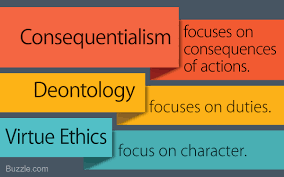
The major theoretical frameworks--consequentialism (utilitarianism, pragmatism etc.), deontology, Aristotetlian virtue ethics, the ethics of care (et al) surveyed:

Health care ethics is the field of applied ethics that is concerned with the vast array of moral decision-making situations that arise in the practice of medicine in addition to the procedures and the policies that are designed to guide such practice. Of all of the aspects of the human body, and of a human life, which are essential to one’s well-being, none is more important than one’s health. Advancements in medical knowledge and in medical technologies bring with them new and important moral issues. These issues often come about as a result of advancements in reproductive and genetic knowledge as well as innovations in reproductive and genetic technologies. Other areas of moral concern include the clinical relationship between the health care professional and the patient; biomedical and behavioral human subject research; the harvesting and transplantation of human organs; euthanasia; abortion; and the allocation of health care services. Essential to the comprehension of moral issues that arise in the context of the provision of health care is an understanding of the most important ethical principles and methods of moral decision-making that are applicable to such moral issues and that serve to guide our moral decision-making. To the degree to which moral issues concerning health care can be clarified, and thereby better understood, the quality of health care, as both practiced and received, should be qualitatively enhanced... (IEP, continues)


The unvaccinated owe a figurative debt to society that should be literal

BY LLOYD STEFFEN, OPINION CONTRIBUTOR — 01/25/22 

Employees at JBS Meat Processors receive a $100 bonus for getting a COVID-19 vaccination. The Lidl grocery chain offers $200 to employees who get vaccinated. Trader Joe’s offers employees two hours of pay per dose of vaccine. In the city of Acworth, Ga., $200 gift cards await city workers who can show that they have received the vaccination.

Providing financial incentives to the unvaccinated does provide a visibly dramatic demonstration of the importance of moving to that 90 percent vaccination rate where herd immunity stops the further spread of the COVID virus.  

But as Arthur Caplan, a preeminent American bioethicist said in a Today Show interview:  “If you pay people to get vaccinated, the strong implication is it’s not safe, there’s something wrong, you have to use money to persuade them.”

Resorting to paying people for vaccinations that are free and scientifically proven to protect against serious illness, hospitalization and death, is curious, if not stupefying, given that vaccination is in the vital interests of those who receive it — as well as everyone who encounters the vaccinated. And Caplan is right: Paying people to get vaccinated is a bad idea if it sends a misleading and false message about safety. 

But a more important issue is that money for vaccine participation obscures a moral obligation. In a time of pandemic, vaccination imposes a duty to take care of ourselves and not burden others with preventable sickness and death. When vaccination is framed as a way to promote the good of others, we are in Golden Rule territory — ethics 101.

Continues at:  HTTPS://THEHILL.COM/OPINION/HEALTHCARE/591257-THE-UNVACCINATED-OWE-A-FIGURATIVE-DEBT-TO-SOCIETY-THAT-SHOULD-BE-LITERAL

Tuesday, January 25, 2022

Questions JAN 27

Perspectives (Basics 3); Premonition 3. Share your thoughts, questions (etc.) in the comments section below.

1. Chapter 3 begins by asking if our bioethical perspective ("vision") is skewed by _____... (a) cultural assumptions, (b) gender bias, (c) religious faith, (d) all of the above

2. What's the leading global cause of death among women of reproductive age?

3. (T/F) The "feminist critique" says bioethics has been dominated by culturally masculine thinking.

4. What ethical perspective did Nel Noddings (supported by Carol Gilligan's research) describe as the "feminine approach"?

5. What's a furor therapeuticus?

6. Does Campbell consider the outlawing of female genital mutilation culturally insensitive?

7. What's allegedly distinctive about "Asian bioethics"?

8. What western ethical preconception is "somewhat alien" in the eastern dharmic traditions?

9. What gives Buddhists and Hindus a "whole new perspective" on bioethical issues?

10. What does Campbell identify as a "tension in the Christian perspectives" on bioethics?

Premonition

1. What book "more of less" led to the invention of U.S. pandemic planning? Have you read it? Will its lessons again be forgotten before the next pandemic?

2. Who is Richard Hatchett? Do you think many people in health care possess the souls of poets?

3. What did Hatchett not know about "social distance"? Is that the best term for what it purports to describe?

4. What did Carter Mecher "notice" about most medical students? Would you expect a higher percentage of those who choose a medical career to be calm and collected in a health emergency than the general population, or better at learning from their mistakes?

5. What did Mecher think was a good way to reduce medical error?

6. What was the gist of Mecher's Lessons Learned report to the VA?


DQs:

  • How do you think your own attitudes and assumptions about gender, religion, etc. influence your Bioethical perspective?
  • What do Plato's Euthyphro and the Biblical story of Abraham & Isaac suggest to you about the place of religion in addressing biotethical issues? (61-2)
  • What is Buddhism's bioethical relevance? (69)
  • How should medical professionals treat and care for children whose parents object to medical intervention on religious grounds?
  • Is it best for caregivers to try and limit their personal knowledge of patients' particular perspectives, beliefs, identities (religious, political, cultural etc.) so as to avoid conscious or unconscious bias in treatment, or does this unduly sacrifice the humane dimension of medical practice?
  • Post your DQs


Small Covid Meme for funsies


Similar to most of my generation, I result to memes in bad times.
I was curious to see what you guys would make of this one. Do you agree? Did you slightly chuckle and then cringe? Let me know. 

Am currently a little under the weather myself and will be watching on D2L.


What Does It Mean to Be ‘Done With Covid’?

While the pandemic rages, normality isn't an option.

...what's standing in the way of normal life is Covid, not Covid prevention. In most cases where schools are closing, it's because too many people are out sick to staff them. The same is true of stores that are cutting back their hours and airlines canceling flights. To have more normalcy, we need less illness. That means doing all the things public health people drone on about, especially getting more people vaccinated and boosted, which still — even with the high number of Omicron breakthrough cases — reduces the risk of infection as well as hospitalization... Michelle Goldberg