Michael Lewis on The Premonition—
https://www.c-span.org/video/?518489-2/authors-michael-lewis-malcolm-gladwell
Friday, June 3, 2022

Sunday, May 29, 2022
Australia’s solution
| ||||||||||||||||||||||||



Sandy Hook to Uvalde
| ||||||||||||||||||||||||
The Anti-Vaccine Movement’s New Frontier
A wave of parents has been radicalized by Covid-era misinformation to reject ordinary childhood immunizations — with potentially lethal consequences.
https://www.nytimes.com/2022/05/25/magazine/anti-vaccine-movement.html?referringSource=articleShare
Anti-vax, an old story
| ||||||||||||||||||||||||

Sunday, May 15, 2022
How
Public Health Failed America
The U.S. clearly failed to heed expert advice,
but there’s plenty of blame to go around.
By Jay
Varma
MAY 15, 2022, 7
AM ET
https://www.theatlantic.com/ideas/archive/2022/05/how-public-health-failed-america/629869/
About the
author: Jay Varma, a professor
at Weill Cornell Medical School, is a physician and epidemiologist who worked
for the CDC in New York, Bangkok, Beijing, and Addis Ababa.
Even
though anthony Fauci, the White
House’s chief medical adviser, backed off his statement that the United States
is “out of the pandemic phase,” elected officials and much of the public seem
to think that he had it right the first time. But if the end of the COVID-19
emergency is at hand, the United States is reaching it with lower vaccination
and higher per capita death rates than other wealthy nations. The conventional
wisdom is that the American political system failed at public health—by
prioritizing individual rights over collective safety; sowing doubt about the
benefits of vaccines, masks, and other protective measures; and most important,
failing to implement universal health care, paid sick leave, and other
safety-net programs.
I agree with the conventional wisdom. But
there’s plenty of blame to go around. Public health also failed America. The
two most important federal public-health agencies, the CDC and the FDA, have been uniformly criticized for muddled
messaging and guidance to the public on masks, vaccines, rapid tests, and other
matters; those arguments need no rehashing here. Less well understood is that
other sectors of our public-health system—including local agencies and
prominent public-health academics—were unprepared for a nationwide
infectious-disease emergency, particularly in a divided country with tight
limits on government power.
As federal, state, and local health officials
struggled in spring 2020 to obtain the basic funding, staff, lab supplies, and
data systems to test, trace, and isolate cases, academics on Twitter and cable
news became the face of public health—and they zeroed in on the many ways in
which the U.S. response to COVID-19 fell short of a textbook approach to
pandemic control. Public-health agencies were ill-prepared for this crisis, and
academics were ill-prepared to speak on their behalf.
The U.S. has a highly decentralized
public-health system that relies on thousands of state and local health
agencies operating with a wide degree of independence. The origin of these
agencies lies in combatting malaria, yellow fever, smallpox, syphilis, and
other infectious diseases; their standard activities historically included
controlling mosquitoes, improving water quality and sanitation, isolating and
quarantining people during disease outbreaks, and the direct provision of
prevention and treatment services.
By the mid-20th century, though, heart disease,
lung disease, cancer, and other chronic conditions replaced infectious diseases
as the leading causes of death. Over several decades, public-health agencies
reduced their focus on environmental dangers, infectious disease, and clinical
services. In the 2000s, these agencies dedicated more and more personnel and
public communications to tobacco control, promoting physical activity and
healthy diets, and screening for diabetes, heart disease, and cancer. The
consensus of government and academic public-health experts was that the most
effective way for these agencies to serve the public was to reduce illness and
death from chronic disease. The key metric for judging the effectiveness of
public-health agencies was life expectancy in the community they served, and—at
least in the immediate pre-COVID era—promoting healthy lifestyles for all was
more likely to avert premature deaths than infectious-disease control was.
In theory, public-health agencies could add
chronic-disease control activities without sacrificing their infectious-disease
expertise. In reality, however, public-health departments have experienced
a progressive decline in real spending power,
particularly since the Great Recession, and as a result, have chosen to cut
infectious-disease programs. More than 75 percent of the nation’s larger health
departments reported eliminating clinical services from 1997 to 2008.
I experienced this shift firsthand. When I began
overseeing infectious diseases at New York City’s health department in 2011, I
worked for one of the nation’s leading proponents of chronic-disease control:
Mayor Michael Bloomberg. Because of budget cuts, we had to shrink our infectious-diseases
programs; I had to close or reduce hours for our immunization,
sexually-transmitted disease, and tuberculosis clinics. I had to justify these
decisions to appropriately disgruntled community groups and
city council members by saying that the Affordable Care Act’s Medicaid
expansion would pay to ensure that these services could be provided by the
private sector—a claim that I based more on hope than evidence.
As local health agencies nationwide scaled back
their clinics, they also lost their presence in the community. Clinics are an
important way of building visibility and credibility, because most people do
not understand what a public-health agency is or does. Residents see the good
work you do, tell elected officials that your work matters, and then trust you
during emergencies. Running clinics also builds logistical expertise.
Unfortunately, when health agencies were called
on to run the largest, most rapid vaccination campaign in U.S. history, most
lacked personnel qualified to either run these clinics themselves or oversee
contractors effectively. This resulted in debacles like the one in Philadelphia, where the
health department let an untested start-up take on the job of running
mass-vaccination clinics in the city. Public-health agencies lost an
opportunity: One way to overcome vaccine hesitancy is to have trusted providers
deliver information and services. Without a strong public presence directly
administering vaccines before the pandemic, local health departments were
additionally unprepared to reach communities inherently distrustful of a
mass-vaccination campaign.
The U.S. is not as different from the rest of
the world as Americans frequently think. After the 2002–04 SARS epidemic and
the 2014–16 Ebola epidemic in West Africa, independent reviewers of the World Health
Organization concluded that the agency had become too
focused on providing high-level technical guidance and had failed to invest in
staff and systems to respond quickly during emergencies. During the COVID-19
crisis, the agency has been far more effective than during past crises in
mobilizing personnel and supplies in all regions of the world for border
screening, laboratory testing, and vaccination. The crucial lesson that WHO learned
from the earlier epidemics is that failure to rapidly and effectively solve
urgent problems, such as infectious-disease outbreaks, destroys your
credibility and prevents you from addressing the long-term problems and leading
causes of death. Imagine a fire department that was focused on reducing the
frequency of kitchen burns and not on putting out infernos in high-rise
buildings. That’s the situation that local public-health officials found
themselves in.
For
most americans, the face of public
health during COVID-19 was not, however, local health officials. The most
prominent voices—other than Anthony Fauci’s—were university professors
proffering guidance on television, in print, and through social media. People
who practice public health in government are expected to stick to the talking
points for their agency; the mayor or governor whom they serve constrains them
from freely explaining their recommendations and decisions. Even if afforded
freedom to talk more openly, they lacked the time to do so.
Into that void stepped university-based
physicians, epidemiologists, and virologists opining about what the government
should do without fully understanding or communicating what was feasible,
affordable, legal, and politically acceptable for public-health agencies. When
I was advising New York City Mayor Bill de Blasio on how to respond to COVID in
2020 and 2021, the city faced terrible choices. As we attempted to return the
country’s largest school district to in-person instruction in the fall of 2020
and then to keep classrooms open in the following months, I had to parse
uncertain science while balancing the demands of staff unions, parents, and
elected officials. Meanwhile, experts publicly faulted us for our limited ability to identify the source of infection for
any given COVID case and for our failure to test every COVID-exposed student every day.
Anyone who had actually implemented a large testing-and-contact-tracing program
understood the impossibility of such demands. But most of the people with
genuine technical expertise were busy practicing public health, not doing multiple
cable-news hits a day.
Consumers of that commentary could easily
conclude that the government was simply not trying hard enough to stop the
virus. And yet state and local health agencies generally cannot remove the
major legal, financial, and political constraints they face. For example, critics faulted the CDC and local health
agencies for not releasing enough data, but didn’t acknowledge the strict,
complex patchwork of regulations at the federal and state level that limit what
data public-health agencies can legally receive and report.
Every public-health practitioner I know
understands that the U.S. can reduce its vulnerability to epidemics by
improving data collection. Likewise, most of my colleagues believe that
strengthening the social safety net—particularly through universal health care,
paid sick leave, housing, and child care—will improve Americans’ ability to
fend off COVID-19 and other threats. But enacting those measures is beyond the
power of public-health officials, whose job it is to mitigate harm under
real-world conditions. Those conditions include the underlying laws and systems
that elected officials created.
Universities and government agencies are subject
to different prerogatives. The economic model of public-health schools rewards
professors who bring in research grants; tenure committees and research funders
do not necessarily demand that professors have experience inside government
public-health agencies. In reporting the comments of academic experts, news
outlets routinely include their university affiliation. But other credentials
are more crucial: Have you ever run a large government health program?
Have you ever led an official outbreak investigation? Academic experts
can offer the public an idealized version of what public health could be, but
during this pandemic they have also played a role in setting unrealistic
expectations—for instance, that emergency measures could go on indefinitely,
until society’s underlying failures are addressed.
I don’t mean to be too critical of my academic
colleagues. (Full disclosure: I now teach at a university too.) The greatest
threats to public health right now come from elected officials who would gut
public-health agencies’ budgets and legal authority on the grounds that they
threaten individual liberties.
One way to avoid that fate is for health leaders
to recognize that their daily work is largely invisible to the general
public—and that the public expects health agencies to focus on threats that
they do not believe they can protect themselves from. Public-health experts,
both in academia and in government, rightly point out that the holes in
social-welfare policies are the primary determinants of ill health. These
experts also believe that, for instance, promoting healthy diets and
encouraging people to wear masks are worthy goals of government policy. But most
Americans, for better or worse, still prioritize individual choice more and
community protection less than those of us drawn to the public-health field do.
To rally voters’ support, agencies need to make
themselves more visible in public life through direct clinical services and
ensure that they are dedicating sufficient resources, even within constrained
budgets, to public-health-emergency response. Meanwhile, the interested voter
should press elected officials on their plans for restoring infectious-disease
and emergency-response services. Ultimately, the highest aspirations of the
public-health profession must coexist with the reality of law and where power
actually resides in a democracy: with voters and their elected representatives.
Jay Varma, a professor
at Weill Cornell Medical School, is a physician and epidemiologist who worked
for the CDC in New York, Bangkok, Beijing, and Addis Ababa.
Saturday, May 14, 2022
How America Reached One Million Covid Deaths
THE MAGNITUDE OF THE country's loss is nearly impossible to grasp.
More Americans have died of Covid-19 than in two decades of car crashes or on battlefields in all of the country's wars combined.
Experts say deaths were all but inevitable from a new virus of such severity and transmissibility. Yet, one million dead is a stunning toll, even for a country the size of the United States, and the true number is almost certainly higher because of undercounting.
It is the result of many factors, including elected officials who played down the threat posed by the coronavirus and resisted safety measures; a decentralized, overburdened health care system that struggled with testing, tracing and treatment; and lower vaccination and booster rates than other rich countries, partly the result of widespread mistrust and resistance fanned by right-wing media and politicians.
The virus did not claim lives evenly, or randomly. The New York Times analyzed 25 months of data on deaths during the pandemic and found that some demographic groups, occupations and communities were far more vulnerable than others. A significant proportion of the nation's oldest residents died, making up about three-quarters of the total deaths. And among younger adults across the nation, Black and Hispanic people died at much higher rates than white people.
Understanding the toll — who makes up the one million and how the country failed them — is essential as the pandemic continues. More than 300 people are still dying of Covid every day.
"We are a country with the best doctors in the world, we got a vaccine in an astoundingly short period of time, and yet we've had so many deaths," said Mary T. Bassett, the health commissioner for New York State.
"It really should be a moment for us all to reflect on what sort of society we want to have..."
https://www.nytimes.com/interactive/2022/05/13/us/covid-deaths-us-one-million.html
More Americans have died of Covid-19 than in two decades of car crashes or on battlefields in all of the country's wars combined.
Experts say deaths were all but inevitable from a new virus of such severity and transmissibility. Yet, one million dead is a stunning toll, even for a country the size of the United States, and the true number is almost certainly higher because of undercounting.
It is the result of many factors, including elected officials who played down the threat posed by the coronavirus and resisted safety measures; a decentralized, overburdened health care system that struggled with testing, tracing and treatment; and lower vaccination and booster rates than other rich countries, partly the result of widespread mistrust and resistance fanned by right-wing media and politicians.
The virus did not claim lives evenly, or randomly. The New York Times analyzed 25 months of data on deaths during the pandemic and found that some demographic groups, occupations and communities were far more vulnerable than others. A significant proportion of the nation's oldest residents died, making up about three-quarters of the total deaths. And among younger adults across the nation, Black and Hispanic people died at much higher rates than white people.
Understanding the toll — who makes up the one million and how the country failed them — is essential as the pandemic continues. More than 300 people are still dying of Covid every day.
"We are a country with the best doctors in the world, we got a vaccine in an astoundingly short period of time, and yet we've had so many deaths," said Mary T. Bassett, the health commissioner for New York State.
"It really should be a moment for us all to reflect on what sort of society we want to have..."
https://www.nytimes.com/interactive/2022/05/13/us/covid-deaths-us-one-million.html
Wednesday, May 11, 2022
Can Anyone Out-Plan a Pandemic?
Bill Gates has a strategy to save the world from the next infectious threat. He’s not the first.
...To believe that you need only a plan rests on an assumption that humans are rational creatures who have roughly the same values and priorities as you do, and—even more improbable—that humans are inclined to follow plans of any kind. After all, when Gates laid out a strategy for solving climate change last year, he was boldly going where world leaders had gone many, many times before without success. The United Nations has held no fewer than 26 annual climate-change conferences. The world committed to the Kyoto Protocol in 1997, but failed to meet its goals. The Paris Agreement is seven years old, and the UN itself says we’re falling short. But Gates told me that the plan he offered in How to Avoid a Climate Disaster has already done some good for the planet...
https://www.theatlantic.com/science/archive/2022/05/bill-gatess-plan-save-world-next-pandemic/629826/?utm_source=email&utm_medium=social&utm_campaign=share
Friday, May 6, 2022
Our Obsession with Ancestry Has Some Twisted Roots
...Today’s addictive Web sites and sleekly packaged DNA kits rest on deep, if not always acknowledged, assumptions about the fixity of status, race, ethnicity, and nationality... NYer
Wednesday, May 4, 2022
Something in the Way We Move
We may each have a movement "signature" that, like our face or fingerprints, is unique to us.
Each of us appears to have a unique way of moving, a physical "signature" that is ours alone, like our face or fingerprints, according to a remarkable new study of people and their muscles. The study, which used machine learning to find one-of-a-kind patterns in people's muscular contractions, could have implications for our understanding of health, physical performance, personalized medicine and whether and why people can respond so differently to the same exercise.
Intuitively, most of us probably know there is something in the way we move, and that that something defines us. In studies and daily life, most people can pick out their friends and loved ones, based solely on how they walk. At least one surveillance company also claims to be able to identify and track people using their gaits... nyt
Each of us appears to have a unique way of moving, a physical "signature" that is ours alone, like our face or fingerprints, according to a remarkable new study of people and their muscles. The study, which used machine learning to find one-of-a-kind patterns in people's muscular contractions, could have implications for our understanding of health, physical performance, personalized medicine and whether and why people can respond so differently to the same exercise.
Intuitively, most of us probably know there is something in the way we move, and that that something defines us. In studies and daily life, most people can pick out their friends and loved ones, based solely on how they walk. At least one surveillance company also claims to be able to identify and track people using their gaits... nyt
Monday, May 2, 2022
Sunday, May 1, 2022
Racial disparities in US healthcare
| ||||||||||||||||||||||||
Friday, April 29, 2022
FINAL POST: The Ethics of Harm Reduction
Hi everyone! Today we will be speaking about harm reduction.
Harm reduction offers a “pragmatic yet compassionate set of strategies designed to reduce the harmful consequences of addictive behavior for both drug consumers and the communities in which they live.” (Marlatt)
So what are some examples of harm reduction you can think of?
One example that I think of is having a designated driver when a group of people attend a party where there will be alcohol. Another one I can think of is teaching children about condom use during sex education. Even seatbelts are an example of harm reduction!
While harm reduction is a rather broad topic and can relate to many different areas, I will be focusing on harm reduction as it relates to substance use, with a specific focus on opioid drug use.
So, we’re talking about reducing potential harms, but what exactly are these harms associated with drug use? Keep in mind that these harms affect not only the individual but society as well. We can divide them up into direct and indirect harms. Direct harms are more what affects strictly that person’s health while indirect harms have more to do with society and situation.
Direct
Harm reduction offers a “pragmatic yet compassionate set of strategies designed to reduce the harmful consequences of addictive behavior for both drug consumers and the communities in which they live.” (Marlatt)
So what are some examples of harm reduction you can think of?
One example that I think of is having a designated driver when a group of people attend a party where there will be alcohol. Another one I can think of is teaching children about condom use during sex education. Even seatbelts are an example of harm reduction!
While harm reduction is a rather broad topic and can relate to many different areas, I will be focusing on harm reduction as it relates to substance use, with a specific focus on opioid drug use.
So, we’re talking about reducing potential harms, but what exactly are these harms associated with drug use? Keep in mind that these harms affect not only the individual but society as well. We can divide them up into direct and indirect harms. Direct harms are more what affects strictly that person’s health while indirect harms have more to do with society and situation.
Direct
-substance use disorder
-bloodborne illnesses (HIV, hepatitis C)
-injection-related bacterial infections (local and systemic)
-overdose complications, including death
Indirect
-violence, homicide, property crime
-involvement in the sex trade
-public stigmatization (It is important to avoid using older, stigmatizing terms when discussing this topic: https://www.bmc.org/addiction/reducing-stigma)
-homelessness
-incarceration
While attempting to stop illegal drug use, current policies have also contributed to poverty, mass incarceration, and racial disparities. (Vearrier) Harm reduction is designed to decrease HIV transmission and overdose risk while keeping in mind these consequences.
Now, I will be talking about three types of harm reduction used in the U.S. for injection drug use. The first is OEND, or Opioid Overdose Education and Naloxone Distribution. Naloxone is a narcotic that is an antidote for opioid overdose. It is an opioid antagonist, which means that it binds to the sites that opioids usually bind to. Thus, it can reverse or block any effects of other opioids. The point of this harm reduction strategy is to educate people about overdose prevention, what overdose looks like, and what to do in the case of an overdose.
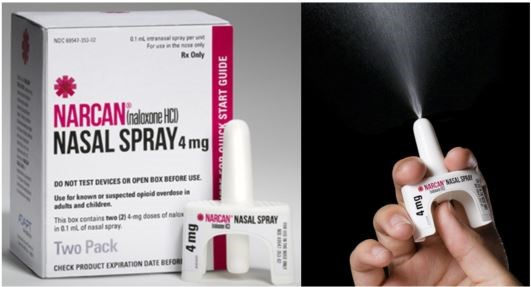
(https://www.co.marion.or.us/HLT/MH/Pages/Narcan-Distribution-Program.aspx)
Next, I’ll talk about the needle and syringe exchange program which many of you have probably heard of before. This program designates sites to collect syringes and dispose of them safely, which is important because diseases such as HIV/AIDS, hepatitis B, and hepatitis C can be spread through this mode. They also provide sterile syringes and other supplies to people. There are 11 official sites in Tennessee and 2 unofficial sites. (Tennessee Harm Reduction)
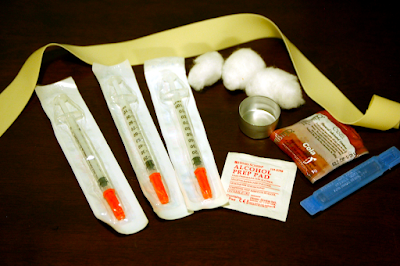 (https://en.wikipedia.org/wiki/Needle_and_syringe_programmes)
Now, we'll take a look at opioid maintenance therapy, which is where relatively safer opioids are given to patients who struggle with an opioid use disorder. Methadone and suboxone are longer-acting opiates that are taken orally (safer!). However, a patient can get dependent on both of these, and they do have some street value. There are many regulations in place for these medications to be dispensed. For example, methadone can only be dispensed from specialized clinics, and at the beginning of treatment, patients are actually required to swallow the pills while in the clinic and submit to random urine drug screens and pill counts.
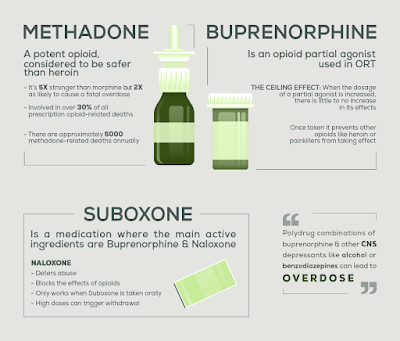
(https://www.northpointrecovery.com/blog/opioid-replacement-therapy-risks-methadone-vs-buprenorphine/)
So now that we’ve talked about these strategies, let’s examine them using the four guiding principles of ethics.
-Autonomy: Yes, we are meeting patients where they are. ("come as you are, and I’ll treat you” & “whether you are using or not, I’ll help you”)
-Beneficence: Yes. This will decrease HIV and overdose risk, doctors get informed consent from patients before prescribing anything, and it decreases the indirect harms associated with drug use.
-Non-maleficence: We could essentially cause harm--a patient could previously be addicted to heroin and now be addicted to or even overdose on methadone. However, we use the equation "total harm = average harm per use x total use" to understand the amount of harm involved. A doctor may have hurt or even led to someone's death with the prescription, but if we look at all the people who have used these opiates and survived many uses because of the prescription, it is good overall.
-Justice: Yes. These harm reduction strategies play a part in eliminating racial disparities and decreasing the amount of people who are incarcerated and houseless.
Now, let’s take this a step further. Let’s talk about two other harm-reduction strategies that are not yet accepted and widely used in the United States. The first is safe injection sites. Basically, safe injection sites provide someone who uses drugs a safe place to come in and use, and there are trained staff present to keep an eye on them. And if they observe signs of overdose, the staff has naloxone on hand and can call for medical help. There are a few of these sites in New York. Per the federal government, the possession of these drugs are illegal, so the sites make a pact with the local law enforcement and agree that these patients will not be prosecuted for possession.
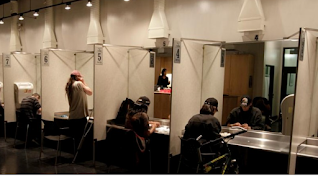
(https://capitalandmain.com/moving-the-needle-science-supports-supervised-injection-sites-why-dont-politicians-agree-1024)
Next, for patients who continue to use heroin despite being prescribed suboxone and methadone, medical-grade heroin can dispensed. There is one site in Canada that does this. What do you guys think about this?
So while the ultimate goal is abstinence, when patients are not able to abstain or are not willing to abstain, rather than ignoring their needs or using punitive measures, harm reduction allows us to meet them where they are and offer some strategies to decrease harm not only to them but also to society.
Some important things to keep in mind are:
1. Getting informed consent
2. Clearly defining the parameters within which these harm reduction strategies will be implemented to minimize risk (train doctors, understand how these treatments work, minimize risk of diversion, minimize risk of overdose)
3. For optimal effects, there may need to be changes to our laws and public opinion so they can go hand-in-hand with the harm reduction strategies we want to implement.
Sources:
Hedrich D, Alves P, Farrell M, Stöver H, Møller L, Mayet S. The effectiveness of opioid maintenance treatment in prison settings: a systematic review. Addiction. 2012 Mar;107(3):501-17. doi: 10.1111/j.1360-0443.2011.03676.x. PMID: 21955033.
Khalid, Farhan et al. “Social Stigmatization of Drug Abusers in a Developing Country: A Cross-Sectional Study.” Cureus vol. 12,9 e10661. 26 Sep. 2020, doi:10.7759/cureus.10661
Marlatt, G.Alan. “Harm Reduction: Come as You Are.” Addictive Behaviors, vol. 21, no. 6, 1996, pp. 779–788., https://doi.org/10.1016/0306-4603(96)00042-1.
Stoljar N. Disgust or Dignity? The Moral Basis of Harm Reduction. Health Care Anal. 2020 Dec;28(4):343-351. doi: 10.1007/s10728-020-00412-y. Epub 2020 Oct 24. PMID: 33098488.
Vearrier L. The value of harm reduction for injection drug use: A clinical and public health ethics analysis. Dis Mon. 2019 May;65(5):119-141. doi: 10.1016/j.disamonth.2018.12.002. Epub 2018 Dec 29. PMID: 30600096.
-bloodborne illnesses (HIV, hepatitis C)
-injection-related bacterial infections (local and systemic)
-overdose complications, including death
Indirect
-violence, homicide, property crime
-involvement in the sex trade
-public stigmatization (It is important to avoid using older, stigmatizing terms when discussing this topic: https://www.bmc.org/addiction/reducing-stigma)
-homelessness
-incarceration
While attempting to stop illegal drug use, current policies have also contributed to poverty, mass incarceration, and racial disparities. (Vearrier) Harm reduction is designed to decrease HIV transmission and overdose risk while keeping in mind these consequences.
Now, I will be talking about three types of harm reduction used in the U.S. for injection drug use. The first is OEND, or Opioid Overdose Education and Naloxone Distribution. Naloxone is a narcotic that is an antidote for opioid overdose. It is an opioid antagonist, which means that it binds to the sites that opioids usually bind to. Thus, it can reverse or block any effects of other opioids. The point of this harm reduction strategy is to educate people about overdose prevention, what overdose looks like, and what to do in the case of an overdose.
(https://www.co.marion.or.us/HLT/MH/Pages/Narcan-Distribution-Program.aspx)
Next, I’ll talk about the needle and syringe exchange program which many of you have probably heard of before. This program designates sites to collect syringes and dispose of them safely, which is important because diseases such as HIV/AIDS, hepatitis B, and hepatitis C can be spread through this mode. They also provide sterile syringes and other supplies to people. There are 11 official sites in Tennessee and 2 unofficial sites. (Tennessee Harm Reduction)
(https://en.wikipedia.org/wiki/Needle_and_syringe_programmes)Now, we'll take a look at opioid maintenance therapy, which is where relatively safer opioids are given to patients who struggle with an opioid use disorder. Methadone and suboxone are longer-acting opiates that are taken orally (safer!). However, a patient can get dependent on both of these, and they do have some street value. There are many regulations in place for these medications to be dispensed. For example, methadone can only be dispensed from specialized clinics, and at the beginning of treatment, patients are actually required to swallow the pills while in the clinic and submit to random urine drug screens and pill counts.
(https://www.northpointrecovery.com/blog/opioid-replacement-therapy-risks-methadone-vs-buprenorphine/)
So now that we’ve talked about these strategies, let’s examine them using the four guiding principles of ethics.
-Autonomy: Yes, we are meeting patients where they are. ("come as you are, and I’ll treat you” & “whether you are using or not, I’ll help you”)
-Beneficence: Yes. This will decrease HIV and overdose risk, doctors get informed consent from patients before prescribing anything, and it decreases the indirect harms associated with drug use.
-Non-maleficence: We could essentially cause harm--a patient could previously be addicted to heroin and now be addicted to or even overdose on methadone. However, we use the equation "total harm = average harm per use x total use" to understand the amount of harm involved. A doctor may have hurt or even led to someone's death with the prescription, but if we look at all the people who have used these opiates and survived many uses because of the prescription, it is good overall.
-Justice: Yes. These harm reduction strategies play a part in eliminating racial disparities and decreasing the amount of people who are incarcerated and houseless.
Now, let’s take this a step further. Let’s talk about two other harm-reduction strategies that are not yet accepted and widely used in the United States. The first is safe injection sites. Basically, safe injection sites provide someone who uses drugs a safe place to come in and use, and there are trained staff present to keep an eye on them. And if they observe signs of overdose, the staff has naloxone on hand and can call for medical help. There are a few of these sites in New York. Per the federal government, the possession of these drugs are illegal, so the sites make a pact with the local law enforcement and agree that these patients will not be prosecuted for possession.
(https://capitalandmain.com/moving-the-needle-science-supports-supervised-injection-sites-why-dont-politicians-agree-1024)
Next, for patients who continue to use heroin despite being prescribed suboxone and methadone, medical-grade heroin can dispensed. There is one site in Canada that does this. What do you guys think about this?
So while the ultimate goal is abstinence, when patients are not able to abstain or are not willing to abstain, rather than ignoring their needs or using punitive measures, harm reduction allows us to meet them where they are and offer some strategies to decrease harm not only to them but also to society.
Some important things to keep in mind are:
1. Getting informed consent
2. Clearly defining the parameters within which these harm reduction strategies will be implemented to minimize risk (train doctors, understand how these treatments work, minimize risk of diversion, minimize risk of overdose)
3. For optimal effects, there may need to be changes to our laws and public opinion so they can go hand-in-hand with the harm reduction strategies we want to implement.
Sources:
Hedrich D, Alves P, Farrell M, Stöver H, Møller L, Mayet S. The effectiveness of opioid maintenance treatment in prison settings: a systematic review. Addiction. 2012 Mar;107(3):501-17. doi: 10.1111/j.1360-0443.2011.03676.x. PMID: 21955033.
Khalid, Farhan et al. “Social Stigmatization of Drug Abusers in a Developing Country: A Cross-Sectional Study.” Cureus vol. 12,9 e10661. 26 Sep. 2020, doi:10.7759/cureus.10661
Marlatt, G.Alan. “Harm Reduction: Come as You Are.” Addictive Behaviors, vol. 21, no. 6, 1996, pp. 779–788., https://doi.org/10.1016/0306-4603(96)00042-1.
Stoljar N. Disgust or Dignity? The Moral Basis of Harm Reduction. Health Care Anal. 2020 Dec;28(4):343-351. doi: 10.1007/s10728-020-00412-y. Epub 2020 Oct 24. PMID: 33098488.
Vearrier L. The value of harm reduction for injection drug use: A clinical and public health ethics analysis. Dis Mon. 2019 May;65(5):119-141. doi: 10.1016/j.disamonth.2018.12.002. Epub 2018 Dec 29. PMID: 30600096.
Thursday, April 28, 2022
Your dog is a good
boy, but that's not necessarily because of its breed
https://www.npr.org/2022/04/28/1095390872/dog-breeds-behavior-study
Labrador retrievers
fetch, border collies herd, huskies howl: It's conventional wisdom that many
dog breeds act in certain ways because they've been bred to do so over the
course of many generations.
But a new study to
be published Friday in the journal Science finds
that though some dog behaviors are indeed associated with particular breeds,
breed plays less of a role overall than that conventional wisdom holds.
"We found things
like German shorthaired pointers were slightly more likely to point, or golden
retrievers were slightly more likely to retrieve, or huskies more likely to
howl, than the general dog population," says Kathryn Lord, a researcher at
the UMass Chan Medical School and an author of the study.
Researchers surveyed
the owners of more than 18,000 dogs and analyzed the DNA of about 2,100 animals
to see if physical traits and behaviors can be correlated with dog breeds.
Overall, the study found that about 9% of the variation in an individual dog's behavior can be explained by its breed.
Final Blog Post - Why social security running out is concerning
What is Social Security?
The United States Social Security Administration is an independent agency of the United States federal government that administers Social Security. Social Security is a social insurance program that consist of retirement, disability, and survivor benefits. Social Security was created to promote economic security for the people of the nation. It began August 14, 1935. It was a direct following after the effects of the Great Depression. The Great Depression was a very serve worldwide economic depression between 1929 to 1939. The major causes of this depression were; the stock market crash of 1929; the collapse of world trade to the Smoot-Hawley; government policies; bank failures and panics; and the collapse of the money supply. This all led to president Roosevelt signing the social security act. This social security act was a part of the "New Deal". This deal refers to a program that focuses on what historians call the "3 R's". The 3 R's refers to; Relief for the unemployed and for the poor, Recovery of the economy back to normal levels, and reform of the finical system to prevent a repeat depression. Social security works by people working paying taxes. Those funds are added to the social security system. When people retire they or any dependent gain monthly benefits depending on earnings from time when working. Social security is helpful to those with limited resources, accessibility, income, and any other situations out of people's control. The Social Security Act has become the most successful, most popular domestic programs in the nations history. Social security can affect future generations who may need to rely of these funds from the government in stations where a person had been severely injured or has become disabled. Social security is something we are all familiar with, so what happens if this goes away?

What Happens If/When Social Security Runs Out?
As mentioned previously, the money put in social security is directly from the citizen's of the United States. By the year 2030, it had been determined that there may only be two workers who pay into social security for each beneficiary. This is a result of many citizens not working, and some not wanting to work anymore. A lot of this has derived from Covid and benefits lost after. People are not wanting to work, because issues and stakes are incredibly high but pay has not been improved for certain positions. As of right now the worst-case senecio would be for social security to run out in 2034 and benefits going down by 22%. Covid has been proven to be a direct correlation to the cause of social security running out. Other factors are an aging population, more people dying than being born, and of course more money being withdrawn than money being put into social security. There are many jobs open right now, but not for good reason. Many jobs are not paying employees well amongst the issues following the pandemic. Many jobs that pay minimum wage, have increased their pay but has still not be proven helpful, because if the lost of hours and employees. This causes some too work maybe too much or too little. The main risks of social security running out are the lost of benefits, increased wage taxes, and increase retirement age. If no changes are made before the social security funds run it, there would be a reduction in the benefits that are paid out. If the only funds available in the social security is what current wages being paid in, the social security administration would be able to pay around 75% of promised benefits for this qualified. A 25% reduction in benefits will significantly hurt those who plan on retiring and relying on their social security benefits, but it will be far less damaging than the complete shut down of the program. With the potential for benefits being reduced, some retirees may want to apply for their benefits early before the fund completely runs out. This could hurt their situation more. If you start taking benefits out sooner than initially planned, they will reduce to 70% of your full-retirement age benefits. Comparing this to the 75% deduction, it is a little better to wait to keep that 5% of retiree's benefits. Increased wage taxes, could be done to avoid benefit reduction. It is possible that congress votes to increase social security taxes charged on employees. Taxes would need to increase from 6.2% to 8%. This would provided an additional nine hundred dollars in taxes paid annually for an employee making around $50,000 per year. The average income in the U.S. is around $31000. The other tax wages proposal is for anyone with an income over $400,000 would have a new wage rather than increasing for everyone. This proposal has become the most popular in recent years, and personally seems like the most logical solution to me. Raising taxes on everyone does more harm than good. Most people are barely able to afford living in the United States now, raising taxes would only make matters worst. I think people who can afford to pay higher taxes should be the ones being taxed more. A different proposal that has been mentioned is increasing the full retirement age. It is said that regardless of social security running out or not, the age of retirement is likely to increase within the next 7 years. The reasoning for this is the increased life expectancy of humans in today's time. The average life expectancy today is around 82 years old, compared to just a few years ago where it was 78 years old. It is predicted that the life expectancy of humans will only get longer with our rise of technology and medical findings. The retirement age 2 years ago was 65 years old. It is now 67. The time that people will have to work before going into full retirement will only grow. This truly sounds exhausting for us future generations.

Why This is Concerning..
While Social Security seems like it wouldn't be completely eliminated in the next 10 years, it is inevitable benefits will be reduced significantly if things do not change in the next few years. A change needs to occur to insure that our retirement plans are secure. This situation affects the elderly and future generations directly. As I mentioned earlier, the life expectancy of humans is significantly longer than pass generations. This will cause the retirement age to increase, which increases a person's time in the work force. For the younger generation who will be dealing with these issues, we would be looking at longer work time before getting that retirement and relaxation that people work towards. Social Security funds are also greatly used, and depended on by those who go through mental and physical health declines. Without this fall back money in the future, it's scary to think we may may not have anything to help us or our loved ones during these tough times. I think this is such an important topic, that needs a lot more attention that is getting. Hopefully things will begin to get better, to ensure that we and future generations have a more secure future.
More Articles About Topic:
Future Financial Status of the Social Security Program
Covid took one year off the financial life of the Social Security retirement fund
Why Is Social Security Running Out of Money?
FINAL POST
Investigating George Gey: The Physician behind HeLa Cells
Firstly, a tribute to Henrietta Lacks:
It would not be right for me to present on George Gey without first giving honor where honor is due…
Henrietta Lacks a young mother of five, ventured into The John Hopkins Hospital with complaints of vaginal bleeding. After the discovery of a large, malignant tumor on her cervix, she began radium treatments for her cervical cancer. At the time of her disease, this was the best treatment available. A sample of cells was unknowingly taken from Henrietta’s cervix and sent to Dr. George Gey, a cancer and virus researcher who had previously had no luck with other cancer cell biopsies… until he took a look at Henrietta’s cells under the microscope.

George Gey:
For 8 years, George Gey was in and out of medical school due to the lack of funds to complete his program. After finally graduating with his medical degree, he immediately began his 37-year teaching career at John Hopkins Medical School. Year after year and trial after trial, him and his lab assistant would contain cells, isolate them, and unfortunately watch them die. This was all until he met the cervical cells of Henrietta Lacks. It is reported that his lab assistant was close to giving up and at the possession of Henrietta’s cells the lab assistant did not even want to plate them because she was sure they would turn out like the rest- dead. To their surprise, these cells grew and even in the absence of a glass surface, meaning that they essentially had no space limit.

Soon, the HeLa cells were being shared with scientists all over the world, with George Gey taking some credit for the discovery. While George Gey is recorded as keeping Henrietta’s name and family out of the matter- not even sharing her identification or where the cells had originated- the discussion still lives: were his actions okay?
It is recorded that Gey never made any profit from the cells; however he claimed credit for their use in research.

-Henrietta Lacks’ family today:
In October, on the 70th anniversary of the taking of her cells, her family decided to fight back. The family members say they have not received any profit from the research and use of Lacks' cells. They say they believe the time is now to be compensated and they are aware they will have to fight as many as 100 defendants, the first being Thermo Fisher. Thermo Fisher currently sells the HeLa cells on their website.
‘"Thermo Fisher Scientific's business is to commercialize Henrietta Lacks' cells—her-living bodily tissue—without the consent of or providing compensation to Ms. Lacks" the lawsuit states. "All the while, Thermo Fisher Scientific understands—indeed, acknowledges on its own website—that this genetic material [is] stolen from Ms. Lacks."
The lawsuit is also asking the court to order Thermo Fisher Scientific to "disgorge the full amount of its net profits obtained by commercializing the HeLa cell line to the Estate of Henrietta Lacks."’The company earns close to $35 billion in revenue each year.

Henrietta’s daughter-in-law started this investigation in 1973 and made a promise to her family that she would not let the name of her mother-in-law go without mention. Since then, Henrietta’s daughter-in-law has declined in health; however, her passion and fight for justice has since encouraged her son, Ron Lacks, to also fight for justice.
Ron Lacks, Henrietta’s grandson, states the following:
“"Every time I walk into my mother's room, she gives me strength because I know I'm doing it for her. She started this in 1973. She started this, so when I walk into her room and feed her, change her, I know I'm doing this for her. When you are fighting for your family, you come off with all guns blazing, you don't stop until you succeed or they knock me down," he added.
During the October 2021 trial, WHO acknowledged the importance of reckoning with past scientific injustices, and advancing racial equity in health and science. WHO Director-General Tedros Adhanom Ghebreyesus, PhD said, “It’s also an opportunity to recognize women -- particularly women of color -- who have made incredible but often unseen contributions to medical science.”
-Similar situations:
According to Cancer Today, “Consent is still not required for much of tissue research. If a researcher takes tissues specifically for research and the “donor’s” name is attached, federal law requires informed consent. But if the tissue is taken for some other purpose—a routine biopsy or a fetal blood test—as long as the patient’s identity is removed from the sample, consent isn’t required.”
With this insert in mind, if big companies such as Thermo Fisher Scientific were required to give profit to the family of Henrietta Lacks, then would every patient who has undergone a biopsy and as a result had their cells used in research also be expectant of profit? Where is the line drawn?
-HeLa today: what has it done?
HeLa has contributed to multiple medical breakthroughs throughout the years. Some of which including the following:
1950s:
1953: Laying the groundwork for the Polio Vaccine
1956: Understanding the effects of x-rays on human cells
1956: developing cancer research methods
1960s:
1964: Going to outer space
1964: Shedding light on treatments for blood disorder
1970s:
1973: Determining how Salmonella causes infection
1980s:
1985: Making strides against cervical cancer
1985: Slowing cancer growth
1988: Advancing understanding of HIV infection
1989: Learning how cells age
1990s:
1993: Exploring how tuberculosis makes people sick
2000s:
2001: Innovating single cell imaging
2001: Understanding the infectivity of Ebola and HIV
2010s:
2010: Repurposing Thalidomide to fight cancer

Discussion questions:
Do the benefits of the HeLa cells outweigh their unfortunate come about?
How should the Lacks family be repaid?
How do we know situations like Lack’s are not happening today?
Potential exam questions:
True or False: George Gey received profit from HeLa cells.
Where were Henrietta’s cells taken from (part of body and what hospital)?
How much profit has Thermo Fisher Scientific made off of HeLa cells total?
Answers:
False.
Cervix; John Hopkins.
$35 billion annually.
Thank you for a great semester!!!
Subscribe to:
Posts (Atom)