My final blog: Part the Last.
We currently have 2 final presentations on Happiness, I figured another reflection on it could not hurt.
One says we emptily chase dollar bills, a learned or accepted method for chasing happiness.
The other that we actively chase unhappiness.
I say, we need to seek well being. The ability to be happy. Something I think the presentation chastising the chasing of dollar bills hinted at.
As both of the other presentations go FAR in depth in, many people seek happiness with minimal results. Often living only in the pursuit. The saying "the joy/happiness/fun/ect. is the journey, not the destination" seems like a fairly applicable response to the simple claim of wasted effort in the chase. For many people, that lesson is a very good start.
The very important thing about how I feel on the pursuit of happiness is this, it is not the same for everyone. For me it is merely the everyday strive to become more like the person I want to be, someone who makes others smile and helps others just because it's the right thing to do. For others the search for well being could take many forms: rejecting what we have been taught brings happiness, such as chasing dollars, or maybe getting away from the stresses of life we are subjected to through meditation be that taking a walk outside and just clearing your head or pondering deeply about things like how we might reduce suffering in the world or how we might reduce our footprint on the planet as a species. Maybe try bringing a smile to a stranger's face, you never know, it could mean the world to them and maybe someone will return the favor.
However you reflect on your own well being or choose to seek it, remember that sometimes happiness is as simple as a choice. The choice to not be bothered by the bad things that happen, but to laugh and smile and see all the good. If more people find the ability to be happy, we will be one step closer to coming together as a species.
~Radiance
Thursday, May 2, 2013

Organ donation, an economic step forward.
My final blog post part the Deux
After pondering on the presentation in class about the current state of organ donations I recalled a proposal that I agree with, that we should allow for the sale of organs.
The proposal, or at least acknowledgement of the possibility for such a market, is from the writers of the book Freakonomics and an article about the topic can be found here (http://www.freakonomics.com/2008/04/29/human-organs-for-sale-legally-in-which-country/)
There is currently a constantly overburdened waiting list, and many people die each year because they did not receive a donation in time.
Because: There is a
constant of shortage of organs and certain organ donations can be made without
causing significant harm (in this proposal, specifically kidneys.)
Iran allows the sale of organs, and does not have a transplant waiting list. I agree with
In everything there’s good and bad, the same is said for the trade of organs. So let’s look at some of the supposed ethical problems with it.
Iran allows the sale of organs, and does not have a transplant waiting list. I agree with
In everything there’s good and bad, the same is said for the trade of organs. So let’s look at some of the supposed ethical problems with it.
The first argument is the argument of “Self Autonomy,” the argument that we have the right to do with our bodies as we wish. Unlike in some of the other presentations involving this problem, this doesn't seem to be a strong argument against the sale of organs, because we can already donate organs as well as other parts of our bodies (blood, skin, sperm, etc.) If we can give them away for free, why should we be unable to be compensated for them? While eggs and sperm present your own unique problems (even though both can be sold,) blood and kidneys do not. As long as we can construct a sufficient system for their sale, there should be no qualms in selling.
Many tend to believe that there is an ethical problem in sale of one’s organs, due to the possibility that the donor is agreeing when they would not otherwise (a form of coercion.) I read in a plan proposed by a Stanford professor an argument against this. He explained that every single day we do things for payment, things we wouldn’t normally do. For example, many go to jobs that they do not find joy in simply because of the money they receive for doing so (a topic covered at length in a presentation.) Implying the invalidation of the notion that money being involved drastically changes the issue.
Erin and Harris In their
paper at the bottom of the post provide a set of policies that should remove a
few more major concerns with a market for human organs and they are
- It is limited to a particular geopolitical area, such as a state or the European Union, with only citizens or residents of that area being allowed to sell or to receive organs.
- There is a central public body responsible for making (and funding) all purchases and for allocating organs fairly in accordance with clinical criteria. Direct sales are banned.
- Prices are set at a reasonably generous level to attract people voluntarily into the market.
The idea behind the rules would be to eliminate the fear that we
would start buying organs from other countries to implant, to prevent
exploitation. They also proposed banning direct sales. They did this to try and prevent complete
economic takeover of the system where the most willing and able to pay would
get the organs, instead of who needed them most.
Another idea they prepose is limited healthcare coverage for those
providing the organ, so far as covering risks because of the surgery and loss
of organ itself. This with the
encouragement of money itself provides coverage for the risk, time, and effort
involved with giving an organ. Opposed to the current system where you must
care enough to give, and risk penalties to yourself including complications of
the surgery and supposedly some insurance companies will raise your costs
because of the possible complications down the road. These papers and proposals are all written by
economists with the acknowledgement that people need some kind of incentive to
partake in the risks involved with giving an organ, and since some of the other
ideas to reduce the shortage of organs are far more ethically complicated, propose
that money is always good incentive.
~Radiance
Erin, C. and J. Harris, 1994, “A Monopsonistic Market” in Robinson, I. (ed.) The Social Consequences of Life & Death Under High Technology Medicine, Manchester: Manchester University Press, 134–157.
~Radiance
Erin, C. and J. Harris, 1994, “A Monopsonistic Market” in Robinson, I. (ed.) The Social Consequences of Life & Death Under High Technology Medicine, Manchester: Manchester University Press, 134–157.
Wednesday, May 1, 2013
3D Printing Post 4 of 4
This is the last post in my final blog project. The first link I would like to show you in 3D printing is about printing whole structures, mainly buildings.
http://qz.com/68780/architects-are-starting-to-3d-print-houses-but-without-a-house-sized-printer/
Apparently a building company in Europe is planing on creating a building that will take 3 weeks to print out and only a day to assemble. This article lacks a lot of the specifics on the buildings size, but if you are interested in 3D printing this site has some really good picture of the process.
"Architects Are Starting to 3D Print Houses-but without a House-sized Printer." Quartz. N.p., n.d. Web. 02 May 2013.
The above article also has some really cool possibilities. A car called the URBEE 2 is in the works for a launch in two years time. This will be a 3D printed two passenger car with great fuel potential. The creators claim that it will be able to drive from San Francisco to New York on ten gallons of Bio-fuel.
I wanted to show some more of the positive potential of 3D printing in my last post and I think these two articles have some really cool new ideas. Personally having a carpenter as a father I find the idea of 3D printed buildings a bit scary, but I recognize that all people have to evolve with their society. I think that this remarkable device will be able to help lots of people in many different professions and life styles.
Works Cited
"Architects Are Starting to 3D Print Houses-but without a House-sized Printer." Quartz. N.p., n.d. Web. 02 May 2013.
"EHow | Discover the Expert in You. | Www.eHow.com." EHow. Demand Media, n.d. Web. 02 May 2013.
Let's Go Green! Wait, Why? (Final Blog (4 of 4))
It seems passive aggressive leaves just as bad a
taste in the mouth as Nazi for some. But I stand by my belief that it can be
equilibrium Earth needs. An old man (Russell Bryant, 75) at my mom’s work once ranted
to me that they didn't know what “Go Green” was back in his day. And while
there may have still been problems, he felt her generation had a different idea
on how their lives should be. “We returned bottles back to the store, wrapping
was literally recycled paper lying around, we did actual exercise that didn't require a machine, and they had refills for just about everything. New things
did not have to be bought so often. Convenience was nice”, he said, “but not
always necessary.” It that way, he told me, he believed they took a “passive
aggressive” stance on that “Go Green” thing. After that, passive aggressive
really stuck to me.
This came to my attention when I typed in
twentieth century Go Green.
Ironic? This is a little rude and biased against
technology but still supports what Russell told me.
I may use passive aggressive in a naïve way. But
I believe it works. I am not talking about the people who lecture and have loud
opinions but expect others to do the work. Go Green should be personal. That’s
the part that makes is passive aggressive. I am simply saying that we do not
all have to be inventing new energy, picketing fuel stations, or standing in
front of bull-dozers. I am saying that if we all make small changes for the
better, MY passive aggressive idea can save the world just the same.
So, I will admit that all this started with a
crush on a celebrity. But now it is so much more! It started with simple
things. I carry a Tervis instead of buying water bottles. I changed all the
light bulbs in my house to Eco-friendly ones (a few at a time to not waste the
ones I was already using). I now support three Go Green foundations and try to
create awareness via Facebook and Twitter as often as possible. Awareness is
the first step to making a cleaner America. So let’s get to steppin!
Speluncean Explorers- Rebekah Schott final blog/report
So, I just wrote a whole blog and the site kicked me out, guess I am starting over....
I wasn't exactly sure what I wanted to do my final report on until I was at work and one of my bar regulars, who is a lawyer, was talking to me about what my final report should be over. He suggested a case they used in his first year of Law School-- The Speluncean Explorers.
It reminded me of when I was in grade school. We did an exercise where the whole class was asked to imagine they were on a boat that was slowly sinking and had to get on an escape boat. They were only allowed to bring three things. We had to make a list of the three things we would take. We were told to write it down on a piece of paper in turn it in at the end of class.
Similar case and examples
The above link shows a similar scenario and some lists people wrote. My peers in class were not so mature at this age. One student wrote something a lot like this…
……………….
A gun
A bigger gun
Drugs
……………….
Either he really things he can survive with these things, or he was being funny. I am sure you could make a case for one or two of the things on his list. The next day, we came in to class and our lists were taped to the board. It was anonymous; our names had been whited out. We were asked to debate why or why not some of these items would be useful. This was one of the exercises in a series of exercises. The last exercise was one of the most realistic. We were told our boat was sinking and there was only one inflatable boat that held approximately five people. Only five people would be allowed on the boat and we had to choose who that would be. This wasn’t just to be a survival plan, we were the only people left in the world and we had the task of repopulating the whole earth. We were given a description of characteristics of each person in question. Then the task of choosing who would get to go on the boat started.
Some people thought the older individuals were out of the question. They might not make it because they were not the healthiest or most fit. Others thought the elders would be very wise and we needed at least one because of course “history does repeat itself.” Similar debates went on like this according to whether some were smart, had trades of particular interest, or could bare children. Ect. Ect.
So, you are asking where this leads.
The Speluncean Explorers is a case used very often in law and ethics. The story goes….
I wasn't exactly sure what I wanted to do my final report on until I was at work and one of my bar regulars, who is a lawyer, was talking to me about what my final report should be over. He suggested a case they used in his first year of Law School-- The Speluncean Explorers.
It reminded me of when I was in grade school. We did an exercise where the whole class was asked to imagine they were on a boat that was slowly sinking and had to get on an escape boat. They were only allowed to bring three things. We had to make a list of the three things we would take. We were told to write it down on a piece of paper in turn it in at the end of class.
The above link shows a similar scenario and some lists people wrote. My peers in class were not so mature at this age. One student wrote something a lot like this…
……………….
A gun
A bigger gun
Drugs
……………….
Either he really things he can survive with these things, or he was being funny. I am sure you could make a case for one or two of the things on his list. The next day, we came in to class and our lists were taped to the board. It was anonymous; our names had been whited out. We were asked to debate why or why not some of these items would be useful. This was one of the exercises in a series of exercises. The last exercise was one of the most realistic. We were told our boat was sinking and there was only one inflatable boat that held approximately five people. Only five people would be allowed on the boat and we had to choose who that would be. This wasn’t just to be a survival plan, we were the only people left in the world and we had the task of repopulating the whole earth. We were given a description of characteristics of each person in question. Then the task of choosing who would get to go on the boat started.
Some people thought the older individuals were out of the question. They might not make it because they were not the healthiest or most fit. Others thought the elders would be very wise and we needed at least one because of course “history does repeat itself.” Similar debates went on like this according to whether some were smart, had trades of particular interest, or could bare children. Ect. Ect.
So, you are asking where this leads.
The Speluncean Explorers is a case used very often in law and ethics. The story goes….
-Five cave explorers were caught underground after the tunnel collapsed. They learned through radio contact that the rescuers were at least ten days away, and that they could not survive that long without food. They further learned that they could survive if they were to eat one from among them. They radioed to the outside to ask whether it would be legally and/or morally permissible to kill one among them to sustain the others, but no one above ground would answer the question. One of the explorers, Whetmore, suggested that they throw dice to determine who should be eaten, and they all agree. Just before the dice were thrown, Whetmore suggested that they wait until they are closer to death before proceeding; but he was outvoted, and a die is cast on his behalf. Everyone, including Whetmore, agreed that the dice where thrown fairly. Whetmore lost. When the rescuers finally reached the explorers, they found that Whetmore had been killed and eaten. The remaining explorers were put on trial for murder under the jurisdictions statute, "Whoever shall willfully take the life of another shall be punished by death." They were found guilty and sentenced to be hanged.-
The full case can be seen @ The Case of the Speluncean Explorers
The case is now on appeal to the Supreme Court. What should the justices do?
Here is where the justices currently stand.
Chief Justice Truepenny: Would affirm the conviction and sentence. The murder statute obviously applies to the defendants' conduct, and it is not within the Court's province to ignore the statute. The executive may provide clemency. Indeed, given the facts of the case, the executive is likely to provide clemency, and the Court should formally encourage the executive to do so.
Justice Foster: Would reverse. The statute is inapplicable for two reasons. First, once the explorers were cut off from society, they returned to a state of nature, and society's laws did not apply to them. Alternatively, the purpose of the statute would not be served by applying it in this case. (Read the article for the complete argument.)
Justice Tatting: Would recuse. The statute clearly applies, but he could not live with himself if he voted to affirm because the result would be evil. Therefore, he recuses.
Justice Keen: Would affirm. It is not the judge's role to tell the executive what to do (contra Truepenny), other than to offer her opinion as a private citizen. It is also not the judge's role to determine whether the explorers' actions were "good" or "bad," or whether the statute is good or bad policy. The judge's role is to apply the statute, which very clearly applies on its own terms to this case.
Justice Handy: Would reverse. The statute clearly applies, but the judge must exercise common sense. Further, public opinion overwhelmingly supports reversal, and it is clear (contra Truepenny) that the executive will not grant clemency. Therefore, it falls to the court.
So, this is where my grade school story applies. They are very similar in asking us to choose who we are going to sacrifice. That is the only way to live. Is it moral to kill someone else so everyone else could survive? Is it ethical? And most importantly, if you were the judge, what kind of ruling would you make regarding these people’s lives? Should they receive criminal charges? Is everyone starving to death a better alternative?
….What would you do if put in the same situation?
(The Case of the Speluncean Explorers, by Lon Fuller, is fictional and created for educational purposes.)
We Fell Into A Burning Ring of Fire
Betsy's Final Presentation
I recently read an article on Forbes suggesting that we de-fund efforts to negate carbon emissions because the climate is not changing and it’s just a money pit for scientists to receive grants. I don’t think there are still any credible scientists who still argue against climate change, but it’s still a big deal, and we still need to be cutting back on Co2 or things will not be looking pretty.
If you want to read a few climate change myths, please enjoy this list (including ‘The climate’s changed before’, ‘It’s actually cooling’, ‘The scientists aren’t credible,’ etc).
Please go here to view my report.

Let's Go Green! Wait, Why? (Final Blog (3 of 4))
Today’s blog is dedicated to bringing together
some awareness!
Let’s start with personal awareness. The first link
I have just puts in perspective our own carbon footprint. I will admit, it is
biased in the fact it compares people living with electricity with those that
do not. So the accuracy is a little off but the process still makes the
audience conscious of some of the choices they make.
Next, I want to focus on activists
that are also being productive in Go Green!
These young Americans now it is
important to start at a young age and instill good ethics that will hopefully
carry throughout a person’s life. They encourage young teenagers to get
involved and remind them that small details matter.
ISF was founded by Ian Sumerhalder
to ensure that the message gets out. He has repeatedly been acknowledged as the
most eco-friendly activist in Hollywood. He is always sharing his ideas and
getting new organizations together to make a difference. Things like cleaning
beaches, hybrid cars, hydroelectric power, and a new light bulb he just put out
are just some of the actions he takes to try to save our planet.
It is nice to have the people most
of us simply enjoy looking at (TV) become real role models.
This is an interview with Ian
Sumerhalder pertaining to his talk with the president about Go Green.
My attention was first brought to
this issue by Ernesto Riley (aka Matt Davis) via twitter. The rhinos are being used to make jewelry.
This is a perfect example of why I
appreciate these kind of movements instead of spazzed out Animal activists who
go around naked with picket signs about wearing furs and skins.
 Ridiculous!
“Not that
driving electric makes for an easy cause. Critics are quick to point out the
obstacles: they often lack power and run on expensive lithium batteries that
only last for several years. Batteries need to be constantly recharged, and the
cars aren't great for long distances. "We talk about range anxiety and
plugging in, and what happens to batteries," admits producer Paine,
"but what really changes people is the experience of driving an electric
car."
Visit us at TheDailyGreen.com
Visit us at TheDailyGreen.com
Last I wanted to show entertainment
dedicated to Go Green!
Another problem we have is pesticides and hormones on the food we are eating, especially produce. Monday (4-29-13) Dr. Martin Stewart highlighted a special sex hormone that typical pests and insects secrete. Dr. Stewart explained that their is special (GREEN) research being done to use this hormone that can be synthetically derived to isolate the pests from the produce only during prime field time that allows for natural foods to go unharmed. He hinted at the fact that he, himself, has been keeping up with the research quite closely. It is nice to know that even major university professors find the need for a "greener tomorrow."
3D Printing Post 3 of 4
The next topic in 3D printing that I would like to discuss is organ and tissue duplication. The below link gives some information about progress in printing live liver cells.
http://qz.com/78877/how-soon-will-we-be-able-to-3-d-print-entire-human-organs-sooner-than-you-think/
This article begins by asking the question, why do we focus so much on the negative possibilities of 3D printing? I think that this is a very good point; many people find out you can make a gun or bomb with a 3D printer and that is all they will remember about them.
The positive possibilities of 3D printing are clear, when one considers medical science. This San Diego based company has created live liver cells that functioned for upwards of 135 hours. This period of time is obviously not particularly useful to someone who needs a new liver, but if they can create cells that live 135 hours one can only hope that cells that live 40-50 years may be soon to come. Other companies and institutions are also working on biological aspects of 3D printing. Scientists at Oxford are apparently close to combining stem cells and 3D printing, which would open up that particular brand of science to many more possibilities.
One other interesting fact I found in this article is that some meat companies have been working on replicating bovine cells to produce 3D printed beef. I personally would not like to be the first person to test this artificial meat, but if you are concerned about animal cruelty then meat that was never killed could be coming soon to a store near you. Also, as I have expressed in the past, I am concerned about starvation problems for future generations. If we can print meat and plantation in the future, then maybe farm lands will become unnecessary.
Works Cited
"Coming Soon to a 3D Printer near You: Human Tissue and Organs." Quartz. N.p., n.d. Web. 01 May 2013.
The Pursuit of Unhappiness - The Chaos of Human Nature. Blog Post pt 2
Given that the nature of the human is inherently chaotic and indeterminate insofar as it pursues "happiness" but without any real understanding of what real happiness might actually be, or what might really make one happy, and that it would then be quite fair to model such human pursuits with chaotic attractors based off of Lorenz equations (pictured below) it gives rise to the question : where does the idea of happiness even come from, and why is our entire society structured around its pursuit?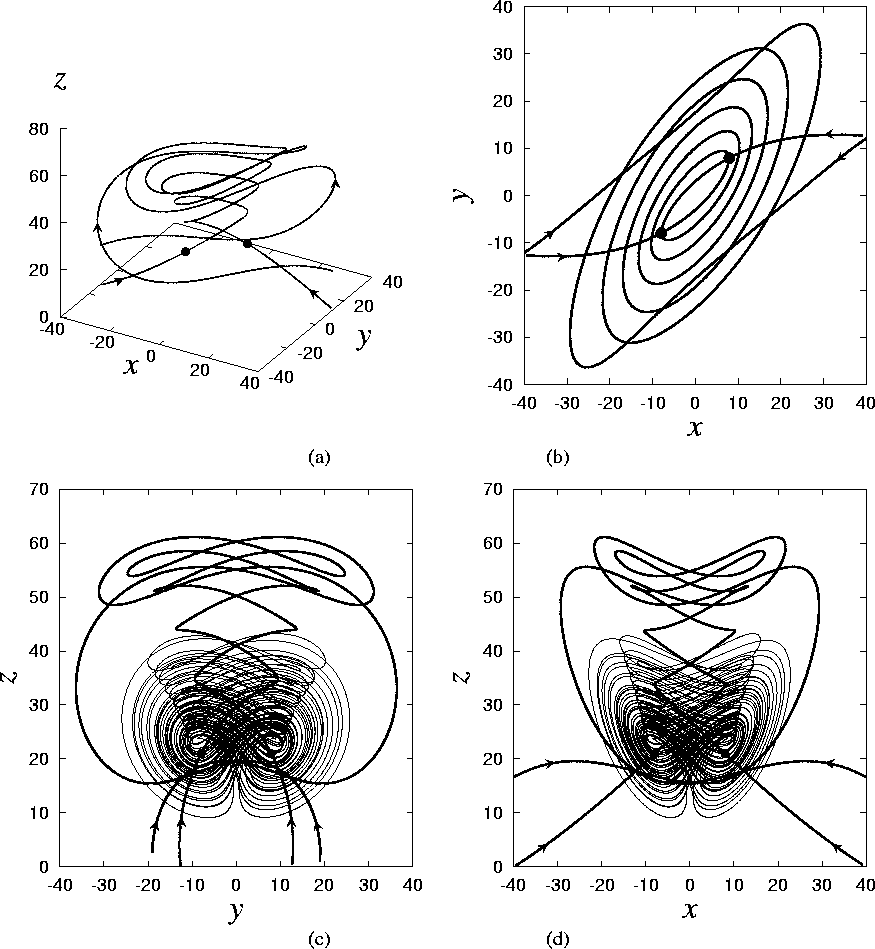
This is cause for great uncertainty because nowhere in recorded history was there any meeting of the minds that decided "let's just let everybody think that they can really achieve happiness, put this imaginary carrot on the end of a stick, and then let the entire world chase after it." Many Marxist critics of capitalism may have this view, but frankly, there's no evidence of this, and such a conspiracy would probably not go unsung, nor would it have such a lasting tenure in our present day life. It is far less ridiculous to take a structural functionalist approach to this phenomenon, in which we can see social structures evolving out of the demand to satisfy demands, and the demands to satisfy demands to satisfy demands ad infinitum. By social structures I mean anything in society that is greater than a single person. Corporations, religious organizations, political affiliations, academic institutions, and even laws - both formal and informal.
Structural Functionalism states that these structures evolve in a sort of Darwinian process in their respective environments, as if they were very complex and organic things - because they really are. Structures are things of abstraction, rather than concrete and tangible, but they are organic nonetheless because without little organic things (us) to make them up, they would fade into obscurity, and for those reasons their behaviors greatly mirror the behaviors of biologically living things.
These structures constitute the "Big Other" I was referring to. Jacques Lacan theorizes this in his developmental psychology, and the trope of the Other has been mirrored since. You might be more familiar with this concept if you were to imagine a scenario where you enter your favorite retail store and notice that "THEY REMODELED!" or "They changed the menu!" Many of you may even remember as a child asking your parents, "who is this They?" It's nobody in particular. It's a collective variable that constitutes the powers at be that are outside of your control - that dictate the social environment that you exist within and unconsciously force you to adapt to. If you live in a society of sufficient size, there will always be a Big Other.
But the big other is made up of people - people who are also very likely trying to be happy - to find something meaningful to do with their very brief lives that they can reflect upon before it's over and feel warm and fuzzy about. People who, like you, necessarily are also going to have appetites that can easily be confused with real happiness before that appetite is satisfied. This is where the structures are permitted to evolve in a way that can perpetuate this confusion on a much larger scale. Consider advertisements and marketing that seem so very certain that the thing that you really need to make yourself happier is a brand new car, or perhaps just spending a week in Vegas to have some fun - or a new fellowship to join that really knows what you need in your life to be happy.
It's also easy to buy into the error that what you really want is to "achieve happiness" because you are a being with appetites. Satisfying your appetites makes you satisfied, but it probably doesn't grant you "happiness." The Declaration of Independence famously states that all men are created equal, and are endowed by their creator with certain inalienable rights to Life, Liberty, and the Pursuit of Happiness - in fact the entire concept of liberalism rests on that very notion, but could it ever actually be attained?
Certainly there might be a few hands that may raise that would attest to the fact that they actually have achieved happiness at this point. I would like to call these hands into question. Have you really achieved happiness, or have you simply rejected the seemingly Platonic idea of happiness that I seem to be conceptualizing? Is it really the case that happiness was never such a transcendent thing at all, and what we really need is to lower our expectations - because the world isn't fair anyway? Consider Thassa, from Richard Powers's Generosity, and her blissful outlook of the world. Isn't she happy? I would very much like to ask how many would be willing to go through the gauntlet of circumstances that would bring one to Thassa's level of enlightenment. Furthermore, simply accepting that we'll never grasp a Platonic sense of happiness and settle for less is a cop-out. Settling for less is inimical to the human drive for achievement, and has measurable psychological ramifications, because satisfaction and real happiness are entirely different entities. Regardless of whether or not we are happy, we still have a responsibility to do better, because not doing so is incredibly boring.
In toto, we are chaotic things as much as we are recombinant and reflective upon ourselves. This constantly shifts our course of thought and thereby shifts the thoughts of the structures that we constitute. It forces society to evolve and revolve around the chimera of its own imagination, and it's usually pretty depressing - or at the very least mostly ironic. We don't need to ditch the idea of happiness entirely, nor do we need to "realize" it and show that "You can't have steak, just be happy with your spam instead." The alternative I offer is to recognize that the idea of happiness exists, although fleeting or unattainable - and really to stay curious, stay busy, stay chaotic, stay human, and stay unsettled.
Final Presentation
My presentation will cover issues surrounding the new "High Quality Research Act" supported by Rep. Lamar Smith.
The Pursuit of Unhappiness, and the Chaos of Human Nature- Blog Post
(apologies for lack of notification. I've been unable to determine what it is that I actually wanted. This actually follows the theme of this post, and was in part my Eureka moment.)
My thesis is that it is really a popluar but false trope that we want to be happy, and pursue happiness. Since the Presocratics, it has been generally understood that "the good life" in some respect must incorporate happiness. I really don't think this is necessary, and as caustic as the proposition might sound, bear with me. I'll explain my reasoning.
Consider childhood. I'm sure all of you have seen or remember the instance in which a child drops its favorite plaything without a moment's hesitation. This behavior echoes into our adult lives with fundamental similarities, but ever evolving complexity. You may take on new hobbies, for example in an attempt to better fill your time, or read books too occupy and enrich your thoughts, but we never allow ourselves to happily settle into a rut. We are more comfortable seeking happiness than we are in finally acquiring it.
"But Andrew, you fool!" you might be tempted to protest, "Does this not mean that we are still attempting to pursue a deeper happiness that
we have simply not holistically been able to apprehend due to our inability to transcend our own desires?" It's a seemingly fair and common objection I've come to expect, but it falls short on at least three counts. The first is the very fact of dual consciousness - the power of the unconscious mind(s) at play and the almost total inability of the conscious mind to direct their course outside of hypnotic trance phenomena and hypnotic suggestion. Have you ever been in the predicament of wanting something that you are aware is inimical to your best interests? A highly crude and oversimplified example of this concept is alcoholism or drug addiction.
The second reason is that the transcendence from one set of desires to a higher order of desires isn't actually transcendence at all, it is merely substitution. This can even be applied to the understanding of new mathematical theories and higher order concepts which reduces that "aha!" moment to a measurable pleasure blip in the brain. It follows from the previous two that the third is the obvious empirical concern of knowing what "the thing that I'm sure will make me happy" is like. This is the "grass is much greener on the other side" concept. If you will permit the metaphor, It follows because we know we're not transcending to a neighborhood where the grass is objectively understood to be greener, but really just hopping a fence into a different yard. With fistfuls of new grass to examine and appreciate, within minutes we may ask ourselves if this new grass was really ever greener, or if we even wanted green grass in the first place.
The ways in which humans pursue their appetites in a vain attempt to acquire happiness can be mirrored in parallel to Chaotic Attractors seen in chaos theory. In these models, a point exists on a graph that is orbitted by the curved (for this model let's say circular, or elliptical) figures, like a shark circling its prey, but somehow magnetically repelled from reaching the point where the attractor lies on an otherwise empty area in the center.
More curiously is the introduction of multiple attractors that allow for indeterminably random skipping of orbits from one attractor to another.
We can observe this behavior in the real world by watching weather patterns, or the behavior of electrons within electron clouds, where indeterminacy plays a very real role. It is evident that if this indeterminacy is so prevalent in virtually every aspect of nature, both big and small - at least in some way, it must also be worth evaluating if it is present in humans. To put the matter blunty - because I'm pretty sure that it is. The objects of our desire are not unlike chaotic attractors, and our paths of pursuit for our appetites orbit them, and jump to different attractors indeterminably in the process. We are either destined to never reach them, or if we perhaps do - we find ourselves automatically hungering for something else.
My next post will focus on how this affects our culture and how the idea of happiness can be manipulated to take advantage of your appetites. Anti-Lacanians will hate me for this, because we're going to talk about the Big Other.
Final Report/Blog- Best friends.
By: Cassie Warren
And you SHALL seek me, and FIND me, when you shall search for me with all your heart. Jeremiah 29:13
Thanks for reading.
Cassie
If this is the subject of choice, I think the best
thing I can talk about is my life experience with ethics. I grew up in a very
structured house, yet with very little structure. I have a sister about five
years older than I, and when we were growing up I always wanted to be just like
her. I remember I wanted to do everything like her, even dress like her, but my
Mother told me she was a horrible person that lied all the time. I was told she
was like the devil and not to speak with her. I lived in the same house as my
sister yet I remember very little of her growing up. I think a lot of that was
because our Mother would lock her in the back room of the house. One day I
missed her, so I went up to the door and knocked on it very quietly so I would
not get into trouble….“Shanon” I said, “Cassie go away, you know you are not
supposed to be talking to me” she replied in a quiet voice. I never understood
why my parents loved me and hated my sister.
I knew my Mother had a weight problem, but only
because, like a lot of parents, she would complain about her weight infront of
me. She bought a gym membership when I was about 10, and while she was working
out I would go into the nursery and play with the other children. I was
homeschooled, and never allowed out of the house except in the front yard and
where my Mother could see me. Because of my isolation, I never knew I was also
overweight. One day at the gym nursery, a little boy who was about eight years
old called called me fat. Getting called fat made a huge impression on me- I
was embarrassed and ashamed. I remembered something however, that my Mother
once told me “if you ever want to lose weight, just don’t eat as much”.So I
tried it! I began to eat less, and saw that I was losing weight. So I ate less
and less, until I was eating nothing. I had a problem, and went into a deep
depression. One day when I overheard my work-aholic Father inquiring my Mother
as to why I was not eating anything but a few bites a day for months at a time,
she said, “oh, she will eat again once she has lost as much weight as she
wants.” I did not understand how someone would willingly allow another to
suffer.
When I was twelve, my Mother started to give me
about three pills to take every day. I hated taking pills but my Mother made
me. When I asked her what they were for, she said “just take them.”I started my
period and it was very heavy. She later gave me the bottle of pills and trusted
me to keep taking them every day. I read the bottle and it said“GroBust”. In
shock that my Mother would be giving me a “sexual pill”, I read the back of the
bottle and it said “must be eighteen years or older”. I was very mad.
I stopped taking the pills that day; even though I was very scared my Mother would find out (I pretended I was still taking them). My period went away within 2 months.
I stopped taking the pills that day; even though I was very scared my Mother would find out (I pretended I was still taking them). My period went away within 2 months.
I was always a happy child on the outside; No one
ever knew me as anything but happy. They always said I was very shy and sweet.
I always smiled because someone once told me to smile… they said“smile at
everyone you see, because they will smile back-and you will make their day
happy!” I thought I was making other people happy, and that made me feel good
even though I had not known it for myself and was very alone. When I was
twelve, my Grandmother took us to a revival! The pastor talked about God and
Jesus. I already knew about them though, because my Mother talked about them
and took me to church on a regular basis. This day however, the pastor asked us
to give up: give up our wills and dreams and to give our every moves to Jesus.
I said ok. I was at my ropes end, I didn’t know anyone who really loved me, and
if this pastor was correct, and God really loved me, I would give up everything
for Him.
And you SHALL seek me, and FIND me, when you shall search for me with all your heart. Jeremiah 29:13
Fracking
Today I'm going to discuss Hydraulic Fracturing (fracking, fracing, fraccing). There are some benefits to this process, well water drilling, waste disposal, but their are many environmental and health risks. Below are some videos that demonstrate a major issue, burning tap water. That is, it ignites, FIRE WATER! I'll mention some things from a movie called Gasland that was an Oscar nominated documentary in 2011 (easily accessible on Netflix streaming). There are some errors in the film it seems (NYTimes, Debunking Gasland) but it does raise very interesting questions that aren't fully discussed, if at all, even by critics of the film; the director, Josh Fox, issued his own rebuttal to the energy industries rebuttal. I did t post that because it's very much the same arguments found in his movie, simply extensions.
http://youtu.be/U01EK76Sy4A
http://youtu.be/4LBjSXWQRV8
http://youtu.be/VEQMA0zwMM4
Anyway, much like my discussion on mental issues, don't expect a PowerPoint. Instead, I'll talk for a minute and then we can discuss.
-Tim
http://youtu.be/U01EK76Sy4A
http://youtu.be/4LBjSXWQRV8
http://youtu.be/VEQMA0zwMM4
Anyway, much like my discussion on mental issues, don't expect a PowerPoint. Instead, I'll talk for a minute and then we can discuss.
-Tim
Final Pt. 1 An ellaboration on the implications and ethics of Designer babies.
We discussed earlier in the semester the ethics of being able to pick and choose the DNA your baby will have before it is even a zygote. Just like Glenn Mcgee said in Case 19, the young are fascinated by the possibilities it presents, at least I very much am.
While the vast public would likely see this and begin debating about choosing the eye color, height, skin tone, ect. of their child. Either making them in some image or ensuring they bare common/desired family traits, I however see an issue of a far more grand nature here. One we did in fact touch on.
The ability and desire to change human physiology.
Why stop at hair color, when we could change our dietary limitations. As Dr. Oliver suggested, why not change our digestive system to include the ability to break down cellulose and allow us easier access to vegetarian lifestyles. Again, why stop there, why not take a page from this newly discovered gem (http://www.newscientist.com/article/dn16124-solarpowered-sea-slug-harnesses-stolen-plant-genes.html) and just start bluring the line between plant and animal by giving us the ability to photosynthesize and reduce our intake needs dramatically.
We could theoretically continue this path and reduce our eco-footprint and constant input needs to near (if not) zero. This would allow us to possibly save this world we currently call home, and drastically improve our abilities to find, reach, and inhabit new planets.
In our capacity to improve our own biological efficiency, not only do I think it is ethically acceptable, rather I think we are morally obligated to at least try. We have done a pretty good job messing up our home, to the point we may have already sealed the planets fate as one day becoming uninhabitable. If there is a hope that we could make a dramatic enough change that we may be able to repair the damage we have done, we ought to try and do so.
Of course I would also suggest a few other changes while we are seeking efficiency and survivability, a better ability to deal with radiation would be nice (allowing for easier space travel) as well as a bit of Starfish-esk regeneration so that non-vital injuries are less of a nuisance.
I also would like to suggest that we may be biologically obligated to try and improve ourselves through our own tampering. It is not hard to imagine that if we achieved changing ourselves so dramatically using these techniques that we may have to reclassify ourselves, as Homo sapiens may no longer be appropriate/applicable. If so, and if such changes increase our ability to survive, then we will have (more or less) artificially evolved. Being that one of the simplest "purposes" of life is to survive and create more life, at least from a purely biological standpoint, should we not strive for that? To ensure our own survival by making ourselves more efficient, or at least giving ourselves more genetic diversity, as would be the bare minimum outcome of allowing such engineering of DNA to occur.
I will admit, with me the ability to change ourselves would be a slippery slope...more like a slide. If we could, why not? I bet it would be one heck of a ride, and hopefully not too many bumps.
~Radiance
Subscribe to:
Posts (Atom)