Up@dawn 2.0

Sunday, April 19, 2015

Time travel?

Did anyone happen to catch the rebroadcast of "This American Life" this weekend? It included a hilarious (or maybe pitiful) segment featuring older people responding to the prospect of time travel.

539:

The Leap
Transcript

ORIGINALLY AIRED 11.07.2014
Note: This American Life is produced for the ear and designed to be heard, not read. We strongly encourage you to listen to the audio, which includes emotion and emphasis that's not on the page. Transcripts are generated using a combination of speech recognition software and human transcribers, and may contain errors. Please check the corresponding audio before quoting in print.
Clearly, we needed to talk to some seniors. And so, like Al Pacino in a geriatric version of cruising, we set out at night, to a park, looking for old people.

Jonathan Goldstein

Oh, we've got these guys, here.

Sean Cole

Oh, which guys?

Jonathan Goldstein

These guys, right here.

Sean Cole

We found this Mutt and Jeff type pair of elderly guys sitting on a bench.

Jonathan Goldstein

We make them answer for their elderly brethren and sisteren. Is it true what the survey says? Are they not interested in time travel?

Elderly Man 1

No. I've divested myself from all fantasy.

Elderly Man 2

The only thing I believe up there is the UFOs.

Sean Cole

Seems consistent with the research. Sort of.

Elderly Man 1

Why would I believe in a fantasy like that? Why are you even interviewing me and putting that supposition to me? It's a waste of your time. It's a waste of valuable time--

Sean Cole

Because it's--

Elderly Man 1

--on the radio. This is all fantasy. Why are you even bringing that question?

Sean Cole

Did you always feel that way, or--

Elderly Man 1

The world is coming to and end. Why are you wasting my time?

Sean Cole

I mean, but don't you like to indulge in--

Jonathan Goldstein

But after a mere 8 and 1/2 minutes of cross examination, it turned out these two were just as ready to climb into a time machine as a person half their age.

Jonathan Goldstein

You don't just want to go back in time to like--

Elderly Man 1

What reason would-- the only way would--

Elderly Man 2

I would like it.

Elderly Man 1

The only reason I would want to go back in time is to be young, so I could have orgasm. Have you ever heard of the PTO movement?

Sean Cole

No.

Elderly Man 1

The Peace Through Orgasm movement.

Sean Cole

I have not heard of that.

Elderly Man 1

Well, now you've heard of it.

Jonathan Goldstein

So wait, you were saying that you would like to go back?

Elderly Man 2

Oh, sure I would. I would like to go into the future. Now let's talk about the UFOs. This is documented in the library. In 1947--

Jonathan Goldstein

But going back to time travel though, do you ever dream about going back in time? Do you wish you could?

Elderly Man 2

I don't dream it, but I would like to. Maybe see the dinosaurs.

Jonathan Goldstein

You want to see the dinosaurs, why?

Elderly Man 2

It'd be nice. Well, just to see how they are. I'd have to be equipped with some sort of a laser something. You never know.

Jonathan Goldstein

It was beginning to seem as though when you scratched the surface, even those opposed to time travel might soften their position and find some reason to go back. Perhaps this is the limitation of a cold, by-the-numbers survey. Scratching surfaces is exactly what Pew cannot do.

Jonathan Goldstein

Thank you very much. It's good to meet you.

Elderly Man 2

You believe in UFOs, don't you?

Jonathan Goldstein

I think I do, yeah.

Elderly Man 2

Good.

Elderly Man 1

And that's another form of insanity. You're a rube.

Sean Cole

So we went looking for senior citizens who truly have zero interest in time travel, like the Pew study found, so we could ask them why. Which is how we ended up at a senior center in Brooklyn.

Jonathan Goldstein

There was maybe a couple dozen people sitting around in the cafeteria after breakfast, watching Let's Make a Deal on a big-screen TV. The director of the Center turned the sound down and told Sean to introduce himself.

Sean Cole

Hi, sorry to bother you guys. My name's Sean Cole, and I'm a radio producer--

Jonathan Goldstein

Not so much the radio professional when you're being stared at by a room full of silent seniors who hate you for getting their game show muted.

Sean Cole

Meanwhile, Johnny just stood there, helping not at all.

Jonathan Goldstein

And because you weren't making any sense at all, the director, Rosemary Bland, had to step in.

Rosemary Bland

OK. So he's just going to be talking to you all about time travel, whether you enjoy time travel, or whether you do time travel, or whether you don't do time travel. OK?

Elderly Woman 1

OK.

Elderly Woman 2

OK.

Sean Cole

Of course, those were not our questions, nor anything like them.

Jonathan Goldstein

Nevertheless, we made our way from table to table.

Elderly Woman 3

Well, I'm not interested in time travel.

Elderly Woman 4

No, I'm not interested in that. I think going backwards is not helping us.

Elderly Man 3

When I was younger, but not now.

Elderly Woman 5

If it's going to cost them money, that's another no-no. [LAUGHS] You've gotta remember, you've got retirees. You know? [LAUGHS]

Elderly Woman 6

People that have Alzheimer's, they go back in time.

Sean Cole

People that have Alzheimer's?

Elderly Woman 6

Yeah. They go back in time. We don't have that yet.

Elderly Woman 7

Going up there to the moon, you know, exploring. They're probably already up there with time travel.

Jonathan Goldstein

Fun fact-- when talking with seniors about time travel, they sometimes throw the question into a big, science-fiction food processor with space travel. But the Pew finding did bear out. Most people at the senior center were pretty dismissive of the idea, some more emphatically than others.

Wallace Nottage

Hell, no. [LAUGHS]

Jonathan Goldstein

Why not?

Wallace Nottage

Why?

Sean Cole

This is Wallace Nottage, a stately 86-year-old-- it was his birthday actually-- with a cane, and he was wearing a colorful fez on his head. We were called over to talk to him by two women who said, he'd probably have a lot to say to you. And he did. We sat with him for about 20 minutes, until finally, he gave us what felt like the most plausible reason why old people wouldn't want to go back in time.

Wallace Nottage

It's not so much that you're at peace with the way things are. It's that you've come to the realization that ain't much going to change.

Jonathan Goldstein

Maybe the thing that much older people understand isn't that time travel is frivolous. It's that it's pointless. When you have half a century of past behind you or more, and you look at those decades in one swath, you realize that even if you fix one thing, something else will go wrong.

Friday, April 17, 2015

Suggestions?

If any of you have ideas for how to improve future renditions of our course, the format, etc., please pass those along.

One thing I think we've learned this semester, about our course format: it really is crucial that everyone keep a detailed daily log to document all scoring, and that we appoint a daily scorekeeper to monitor those logs. We were going to do that, I'm not sure why we didn't. Maybe we need to appoint a "commissioner" to do it, rather than rotate that admittedly-uncomfortable task. Maybe I just need to be the commissioner. We really shouldn't end up with such an incommensurable disparity in numbers between groups. (And rest assured, I'll adjust it when reporting grades.)

Another possible change: a runs-cap of (say) 5 per player, per class.

Any thoughts? 

Thursday, April 16, 2015

Anti-Aging and Its Potential Effects

http://www.theatlantic.com/features/archive/2014/09/what-happens-when-we-all-live-to-100/379338/

Here's an article illustrating what could happen if the max age of the human species continues to rise.  It also delves into the anti-aging research that is currently going on.

People Who Feel They Have A Purpose In Life Live Longer

"We know that happiness and social connection can have positive benefits on health. Now research suggests that having a sense of purpose or direction in life may also be beneficial."

http://www.npr.org/blogs/health/2014/07/28/334447274/people-who-feel-they-have-a-purpose-in-life-live-longer

AG 5

FQ1: After two years of the Chase Memorial Nursing Home study, prescriptions required per resident fell to ____ that of the control nursing home.
FQ2: After two years of the Chase Memorial Nursing Home study, the total drug costs fell to just ______ of the comparison facility.
FQ3: After two years of the Chase Memorial Nursing Home study, deaths fell ______.

DQ2: Why do you think these values in the FQ 1, 2, and 3 are what they are?
DQ1: Compare and contrast treatment and care.

Keys to long life: Longevity study unearths surprising answers

http://phys.org/news/2011-03-keys-life-longevity-unearths.html

8 Inspirational Older People

http://www.oddee.com/item_96618.aspx

But what came first... the chicken or the egg?

http://www.helpingyoucare.com/answersforcare%E2%84%A2/wellness-healthy-living-for-seniors-caregivers/healthy-aging-stories-of-inspiring-seniors

Good stories by some inspiring elderly...

http://articles.chicagotribune.com/2013-11-13/news/ct-met-schmich-1113-20131113_1_stories-emails-tribune

6 inspiring old people!

http://www.rd.com/slideshows/6-inspiring-stories-youre-never-too-old-to-dream/

Anti-vax mom changes her tune as all 7 of her children come down with whooping cough

http://www.washingtonpost.com/news/to-your-health/wp/2015/04/14/anti-vax-mom-changes-her-tune-when-all-7-of-her-children-come-down-with-whooping-cough/

Wednesday, April 15, 2015

Laura Carstensen on Aging Happily

Laura Carstensen (from Atul Gawande's Chapter 4):


People are living longer and societies are getting grayer. You hear about it all the time. You read about it in your newspapers. You hear about it on your television sets. Sometimes I'm concerned that we hear about it so much that we've come to accept longer lives with a kind of a complacency, even ease. But make no mistake, longer lives can and, I believe, willimprove quality of life at all ages.
Now to put this in perspective, let me just zoom out for a minute. More years were added to average life expectancy in the 20th century than all years added across all prior millennia of human evolution combined. In the blink of an eye, we nearly doubled the length of time that we're living. So if you ever feel like you don't have this aging thing quite pegged, don't kick yourself. It's brand new.
And because fertility rates fell across that very same period that life expectancy was going up, that pyramid that has always represented the distribution of age in the population, with many young ones at the bottom winnowed to a tiny peak of older people who make it and survive to old age is being reshaped into a rectangle... (continues)

1:45

Tuesday, April 14, 2015

Group 1 run totals

Awad: 35

Erin: 24

Greg 44

Lauren: 30

Ramsey: 30

Aimee: 35

Rory: 30

An uplifting news story regarding assisted living, since these conversations can be a bit deflating at times.

http://www.npr.org/2014/11/21/365433685/if-we-left-they-wouldnt-have-nobody?utm_source=facebook.com&utm_medium=social&utm_campaign=npr&utm_term=nprnews&utm_content=2046


Laura Carstensen:

Older people are happier

TEDxWomen 2011 · 11:38 · Filmed Dec 2011 
Subtitles available in 30 languages 


http://www.ted.com/talks/laura_carstensen_older_people_are_happier?language=en
Being Mortal ch 4.
Fact questions
Who came up with the concept of assisted living ? (87)

What was the real reason for assisted living facility? (87)

Who is Laura Carstensen? (94)
Discussion question

Do believe that assisted living is a good alternative  to helping older individual maintain their independence?

How do our perception about life change as we age?

Downside of American Healthcare?????

Sarah received a bachelors degree in Philosophy-Neuroscience-Psychology. 
Are her sentiments reasonable


http://www.vox.com/authors/sarah-kliff

16 of the top 30 most advanced hospitals are in the USA! We are less than 5% of the worlds population and we have over 50% of the best hospitals????

http://www.topmastersinhealthcare.com/30-most-technologically-advanced-hospitals-in-the-world/

More pros and cons... Still want socialized healthcare?

http://healthcare.procon.org/

Socialized Medicine - Pros and Cons

http://healthresearchfunding.org/socialized-medicine-pros-cons/

Monday, April 13, 2015

Winterton Curtis, a wise old owl

I hope you guys are racking your heads for memories of wise old people who had a positive influence in your lives, to brighten our Aging discussions. I thought of one: my first landlord, Winterton Curtis. He was a distinguished zoologist, one of the "Scopes 7" called to Dayton, Tennessee in July 1925 as an expert witness for the defense of John Scopes in the infamous "Monkey Trial". They weren't allowed to testify, but his written impressions were fascinating. I met him when he visited our home, when I was an impressionable little boy. He pulled dollars out of my ear. 

Late in his life he penned and published a series of recollections in the newspaper, recounting his experiences as a Damned Yankee (he was a native of Maine and Massachusetts) in Little Dixie (which is how Columbia MO still thought of itself in those days).

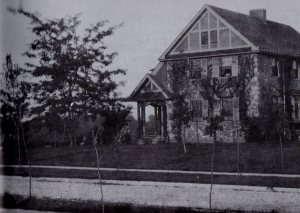
The house at 210 Westmount in Columbia was my first “brick and mortal” abode. I coulda done a lot worse. Dr. Curtis:210 Westmount

It is a thing to make life worthwhile to have lived so long in a home that one planned and built in part with his own hands on a street freshly cut from a cornfield, to have planted the trees and watched their growth until they arch the street, and above all to have lived in a university community.
I think the best life in America is to be had in university and college towns such as Columbia.
Some other wise elder statesmen I've looked to for inspiration and example: Vandy Profs John Lachs and the late John Compton, the late Tennessean publisher and 1st amendment champion John Seigenthaler, and of course my late father James C. Oliver.

Friday, April 10, 2015

Stewart Udall

After challenging us all to think of examples of people who flourished in the later years of long and constructive lives, I thought first of the late Stewart Udall (1920-2010). His "letter to my grandchildren"* is a priceless model of the kind of wisdom only years can bring. He did a moving interview with Bob Edwards not long before his death. Quite a legacy.

*"Go well, do well, my children! Support all endeavors that promise a better life for the inhabitants of our planet. Cherish sunsets, wild creations, and wild places. Have a love affair with the wonder and beauty of the earth!"

Inspiring Centenarians

Wesley Ernest Brown was born June 22, 1907 and is a U.S. District Court judge who, as of 2010, is the oldest federal judge still hearing cases... (continues)

http://rarelyknown.org/2010/11/28/7-amazing-people-over-100-years-old/

Life lessons from a nonagenerian

...He's looking forward to his 100th birthday next May, which he hopes to spend with his family... "I feel pretty good about getting older. I may be 99, but I am still learning and experiencing new things everyday. You never stop learning. Age is not just a number, it's a badge of all my life experiences." 
The most important thing he's learned? "Family is precious. Family is the most influential element of your life from the moment you're born until the moment you die. Your family shapes who you are as a person." Beautiful.
His full list of 25 life lessons:

  1. Always maintain a good sense of humor.
  2. Never be too good to start at the bottom.
  3. Exercise every single day, even when you don't feel like it.
  4. Don't spend more money than you make.
  5. Drink orange juice every day. 
(continues)
http://www.huffingtonpost.com/2014/12/05/life-lessons-99-year-old-grandpa-_n_6276034.html

Thursday, April 9, 2015

Quiz  Being Mortal chapter 3

1. Who said "Old age is a continuous series of losses"? (55)

2. What was the name of the place Alice move to?(60)

3. Who said " If I die tomorrow, I've had a damn good life...? (67)

4. What was the real reason for creating a nursing home?  (71)

Discussion
 What can we do to help old people still keep their independence?

Quiz Apr 9

1. Who called old age a "massacre"? 55

2. What happened to Bella that severed her connection to Felix? 56
OR, What move restored a sense of control to Felix and Bella? 58

3. What is a "continuum of care" community? 60

4. What happened in 1935 to introduce greater security in the lives of ordinary Americans? 63

5. Who was Harry Truman? (Not Harry S...) 66

6.  What was the original rationale for nursing homes, if not to help old people face dependency and manage their lives more effectively? 71

BONUS: AG says the goal that matters most to older people is what? 77

DQ:
1. "We do not like to think about" losing our independence in old age, and so we tend not to prepare for it. What kinds of preparations would you advise, for yourself and your patients?

2. What impairment associated with aging do you think would be hardest to cope with, or create the most difficulties for continued quality of life?

3. "It means something when you can move in and see all your things in their own places..." (60) What kinds of"things" can you not bear to imagine parting with, ever? The silver in your kitchen drawer, for instance? Shouldn't we all make an effort to simplify our material lives as we age?

4. Given the historical prevalence "poorhouses" (and their persistence in much of the world), should modern old age homes - even at their worst - be perceived as "frightening, desolate, odious" etc.? It could be worse, after all. Is this an insensitive thing to say?

5. Is it reasonable of old people to expect a lot more of life's last chapter than mere safety? (Friendship, purpose, freedom...) Can an institution ever really be a home? 

6. Will you be a "feisty" old person? (75)

Being Mortal By Gawande Chapter 3

FQ: When used by the Bureau of Health Insurance, what does "substantial compliance" mean?
FQ: How was the name "nursing" home coined?
FQ: Who described nursing homes, along with military training camps, orphanages, and mental hospitals, as "total institutions"?


DQ: In the chapter the author says: "The systems we've devised were almost always designed to solve some other problem." Is this true? What other systems could fall in this category?
DQ: How could we redesign nursing homes to be more suitable for elderly individuals?

A piece by Gawande called "The Cost Conundrum" that appeared in The New Yorker (2009)

http://www.newyorker.com/magazine/2009/06/01/the-cost-conundrum

Dependence April 9, 2015

"I'm eighty years old and at eighty, I have the right to make up my mind and do what I want to do." (AG 66)
DQ:  At what point should an elderly person's right to make up their mind be taken away?  Is it right for family members to forcibly place their elderly family members into a nursing home to keep them safe?

Here's a funny video that relates to our discussion.  Elderly people should have their rights to do what they want... like the right to party.
http://fox8.com/2015/04/09/video-residents-at-westlake-assisted-living-facility-fight-for-their-right-to-party/

French Healthcare - Carte Vitale

http://www.slate.com/articles/business/dispatches_from_the_welfare_state/2014/01/french_socialized_medicine_vs_u_s_health_care_having_a_baby_in_paris_is.2.html

Wednesday, April 8, 2015


How do we heal medicine? 

Atul Gawande

http://www.ted.com/talks/atul_gawande_how_do_we_heal_medicine?language=en

Group Discussion for Tue Apr 08,15

6. "Doctors don't like taking care of the elderly." (36) How do you feel about that? Is this an attitude medical training should challenge and try to eradicate? How?

On Tuesday, we discussed the question above and many people explained why that quote even exists. The students stated there is not enough of an emphasis on geriatrics in medical school. The reason for this is that if the demand for classes are low, there cannot be a course available. The interest for geriatrics is not high enough because students find that people under the age considered a "senior citizen" much more fascinating to study and observe as those "younger" people grow from birth. Pediatricians are more popular than geriatricians. A student spoke up to say that the quality of the care should not be based on interest. For example, a nurse or doctor goes into the business knowing he or she will be caring for people of all ages; therefore, they should not be shocked or troubled by their patients based on age.

Dr. Oliver suggested a type of pro bono care for the elderly who unable to find or afford a doctor willing to give special interest to the elderly. A student remarked, "The care would be horrible, though. They would feel forced to do it." That is key because it makes sense to say that doctors forced by rotation to do work nobody is interested in may give less-than-optimal care. The class continued to discuss other ways to address the problem that doctors think the elderly are a burden and that the elderly also believe they are a burden. By this, I mean that the elderly want the ability to take care of themselves, and they feel guilty that the people they once took care of are now doing the work.

Tuesday, April 7, 2015

Group 1 - Out side Discussion Summary


We continued the geriatric doctor discussion and concluded that many fields of practice within the medical sciences deal in large with geriatrics. There are only a few fields, pediatrics, obstetrics etc. where you do not deal with the aged.  
Even Fewer Geriatricians in Training

By PAULA SPAN

JANUARY 9, 2013

http://mobile.nytimes.com/blogs/newoldage/2013/01/09/even-fewer-geriatricians-in-training/

Procedure helps endometriosis patient suffering severe pain

I thought this was quite interesting: You shouldn't always take symptoms so lightly

Discussion question
Do you think that the advancement in medicine has also prolong patient suffering?
Being Mortal  ch. 2

In a sense, the advances of modern medicine have given  us two revolutions : what are they? ( 29)


Podcast: The Long Tail, the Lottery and “Being Mortal”

March 2, 2015, 12:39 pm ET by Patrice Taddonio

http://www.pbs.org/wgbh/pages/frontline/health-science-technology/being-mortal/podcast-the-long-tail-the-lottery-and-being-mortal/

"“Nothing is more threatening to who you think you are than a patient whose problems you can’t solve,” Gawande says.

Socialized Medicine - Topic for my presentation.

http://www.cato.org/publications/commentary/hard-lesson-about-socialized-medicine

Peripatetic Discussion 4/2/2015

Mason, Wesley, Graham and I walked over to the Science Building and then to the Walnut grove next to Peck Hall.  As we were walking, we discussed whether or not an elderly person should have his or her driver's license taken away.  We talked about how it would take away the person's independence, but we also agreed how it would be a necessary decision if the older person was a danger to other motorists and pedestrians.  We devised a hypothetical process of where once a person reaches the age of 70, they must take a driving test every few years to maintain their license.  Overall, we think that an elderly person should maintain their right to drive, but if they are a danger to those around them, then they should give up that independence.

On informing a patient of a terminal illness...

I think this issue is best broached on a very patient-dependent basis. Some patients may be more sensitive to such language, while others may appreciate the blunt truth. This goes back to something I believe cannot be taught in healthcare, and that is the ability of a physician to quickly gauge what type of communication that patient would prefer (in a way, the "politics" of healthcare).

Thursday, April 2, 2015

FQ: Elderly of the industrial did not ______ economically and were not ________ to be left on their own.

DQ: If you were a doctor, would you tell the patient he or she is dying? If so, how?

How Doctors Tell Patients They're Dying

"Don't use euphemisms," said Grodin, who teaches his students to say "died" and never "passed away" in situations of emergency room traumas. "You have to use the words 'terminal illness' and explain it's quite serious."

http://abcnews.go.com/Health/MindMoodNews/story?id=4402744

Being Mortal: The Independent Self 4/2/2015

FQ:  Veneration of elders has been replaced with veneration of what in modern times? (AG 22)

DQ:  To what point should the elderly maintain independence?  At what point is it acceptable to take away the driver's license?

Here is a relevant article explaining how to care for elderly family members.  It also explains how to talk about the issue with them and maintain their independence.

http://www.state.gov/m/dghr/flo/c23133.htm


Quiz and DQ Questions - 4/02/2015

FQ's

1) What would have been Sitaram Gewande's fait had he been in the USA?
2) Which country was the first on Earth to have over 100 million elderly people?
3) How have aging-related demographics changed over the past 200 years?

DQ

1) Do we treat the elderly in the United States with the respect they deserve?


Cultural issues surrounding aging...

https://www.boundless.com/psychology/textbooks/boundless-psychology-textbook/human-development-14/adulthood-74/aging-how-culture-and-society-impact-the-elderly-293-12828/

Technology and the Aging population... Not always a bad thing????

Interesting thought regarding technology and the aging population. http://www.ejhi.net/ojs/index.php/ejhi/article/view/23

Looking after the aged!

Do you agree with Atul Gawande's father, should we have to take care of our parents?

http://www.debate.org/opinions/should-adults-be-responsible-for-their-elderly-parents-care

Obama claims that the Affordable Care Act was a major Reason in preventing 50,000 patient deaths


http://www.washingtonpost.com/blogs/fact-checker/wp/2015/04/01/obamas-claim-the-affordable-care-act-was-a-major-reason-in-preventing-50000-patient-deaths/

Click the link if you want to learn more about Obama's claim and what statistics made his claim plausible

"Largely relying on more than 30,000 medical records, the study looked at how many fewer patient-related problems had taken place in hospitals—the study calculated 1.3 million fewer incidents over three years–and then used that to determine how many lives might have been saved. In general, the researchers used mortality estimates from other research."

AG 1 Questions

FQs

1. What are one of the eight activities of Daily Living?(p. 15)
Answer: use toilet, eat, dress, bathe, groom, get out of bed, get out of chair and walk

2. What are one the eight independent activities of Daily Living?(p. 15)
Answer: prepare your own food, maintain your housekeeping, do your laundry, manage your medications, make phone calls, travel on your own, and handle your finances

3.What is age heaping?(pg 18)
Answer: Time where people lied about their age to appear more elder-like

4. Modernization demoted what?(p. 21)

DQs

1. Is it a greater benefit to stay close to family or be completely independent on your own as you age?