Up@dawn 2.0

Thursday, February 12, 2015

Next

(I'm having some strange formatting issues with our sticky note "Next" announcements section, so today's announcements are reproduced here.)
 
PHIL 3345, Bioethics - Spring 2015, 4:20-5:45 pm, BAS S113.
Th 12 - The Ethics of Enhancement (AP 1)
F 13 - (fyi) Vanderbilt Colloquium: D. Micah Hester (U of Arkansas School for Medical Sciences), "Functional Death: Are You Dead When We Say You Are Dead?"Fri, February 13, 3:00pm – 5:30pm, 201 Alumni Hall, Vanderbilt
T 17 - Bionic Athletes (AP 2)
Some have expressed a preference for general class discussion over group discussion, which we've inadvertently been doing anyway. I'm happy to defer to the will of the majority on this, on a class-by-class basis. Let's just play it by ear. On those occasions when we don't have separate group discussions, please continue to appoint group authors who'll post their take on the class discussion. And everyone else, please reply to those posts with comments, FQs, DQs, & links.

Exam #1, to be drawn from our daily quiz questions, is Feb.26. Let's begin collaborating on a study guide (we can't finish it 'til near the end of the month but we can start it now): each group, plan to select ten of those quiz questions (along with relevant page references), then copy-&-paste them into an author post labelled "Exam 1 Questions, Grp.__". Once all three groups have done that (supplemented by my contribution if necessary), we'll copy-&-paste them all into a post labelled "Exam 1 Study Guide".
 
It's time to make definite plans for the midterm group report presentations, which begin on Feb.26 (which is also the date for Exam #1). Split into reporting groups of 3, 4, or 5. Each group member is to focus on a different aspect of the topic, and to post a summary of his/her contribution before
the reporting date.
 
Scroll down for previous announcements.

Wednesday, February 11, 2015

Peripatetic Discussion 2/10/15

During our walking discussion we visited two locations.  The discussion began with the justice of resource distribution.  Our first stop was the library.  Someone suggested that we talk about the scenarios from the book.  We began discussing how to split a cake between people at a birthday party.  The first solution was that the people should distribute the cake by having everyone communicate and come to a consensus; the second solution was that the people should just split it equally.
After that short discussion, we headed to the Student Union.  There we switched to the boat scenario.  We all agreed to get rid of the elderly woman since she had lived enough years and couldn't really aid in the current situation.  We then came to an agreement that the mentally handicapped man, who was possibly a molester, should row until complete exhaustion or death.  We thought his supposed molesting tendencies warranted punishment.  We all agreed that the mother and child should survive the experience.  It was also discussed that we should force the older overweight gentleman with heart problems to row until possible death.  We also dabbled in the possibility of cannibalism on the boat.  We then threw around the idea that the rowers should end up getting more resources due to their high energy demands.  The others would just have to conserve their energy by not moving.  We came to the conclusion that in order to survive the scenario, some people had to die. In the end, we discussed how we would feel guilty about our actions if we were to survive the boat scenario.

Genetic Enhancement

Almost everyone has probably heard of this move before, but if you haven't, it's an interesting one to watch some time and is very relevant to this topic: Gattaca. It grapples with the question of how genetic engineering will affect daily life, and follows a man who is born without genetic enhancement living in a society rife with it.

Genetic engineering may be possible far off in the future, but I'm not sure if it should be pursued for humans.  It is done in many crop species already.  One problem with those plants is that they are nearly identical in genetic code, which leads to them being susceptible to disease.  If large swaths of people decided to get muscle, memory, and height enhancements, they could open themselves to the same types of vulnerabilities.  Another problem is that genes interact in myriad and sometimes confounding ways.  They may be simple to control in model organisms, but a recent study on the human genome found that over 400 genes contribute to height in some way.  To attempt to change those genes could be to sacrifice many people in the attempt of progress, since one single change in genetic code can mean the difference between life and death; how many would have to suffer to find the right combination of over 400 genes so a person could be slightly taller? It may be possible one day, but I certainly won't be signing up for any genetic engineering trials. 

John Oliver on marketing to docs

Thanks for the link, Awad. I always enjoy Cousin John's perspective.

"Being Mortal" on Frontline

The latest ABC "Frontline" program features Atul Gawande's Being Mortal. Watch it here.

THE LATEST

What Matters Most to You in the End?

We want to hear from you: What would you do if your time became short?

A Link Across Generations

The prolonged dying process of his own father was one of the catalysts for Dr. Atul Gawande to better understand end-of-life care.

Why Is It So Hard for Doctors to Talk to Patients About Death?

When a young mother was terminally ill, Dr. Atul Gawande offered advice to give her family hope. In “Being Mortal,” he says he now regrets it.

How Should Doctors Help Terminally Ill Patients Prepare for Death?

“You don’t have to spend much time with the elderly or those with terminal illness to see, over and over and over again, how medicine fails the people it is supposed to help,” says renowned surgeon and author Dr. Atul Gawande.

Tuesday, February 10, 2015

Rethinking the unthinkable
Engineering the Climate, it's an interesting concept

http://www.theguardian.com/science/political-science/2015/feb/10/rethinking-the-unthinkable

Doctors turning away unvaccinated children
(I believe this is the most relevant to discussions as of late)

http://www.latimes.com/science/la-me-vaccination-policy-20150210-story.html


2/10/15 Class Quiz

1. Social Justice calls for us to compel people to act for the good of all through control and persuasion. T/F (BB 142)
Answer: True

2. Name one of the four factors that is a cause of an individual's health and longevity? (BB 162)
Answer: Biological endowment and needs, individual behaviors, physical environment and social conditions.

3. What is preventive medicine? (BB 138)
Answer: a field that devises measures to prevent and control disease

BB ch 6 fact questions and discussion questions
FQ:
1.What are the two types of justice discussed in the beginning of the chapter ? ( 138)
2. What is preventive medicine? (138)
3.What is the difference between equitable treatment and equal treatment? (143)
4.Who are heartsink patients? (149)
5. What does QALYs stand for? ( 151)
6.Name one of the principles for just health care ? (155)

 DQ:
1. Is it possible to have equal opportunity to healthcare in the US and maybe global health care system?


Monday, February 9, 2015

Living cancer

Treating cancer is a race against time.
"It's one of those really challenging things for me as a physician. "I took an oath not to harm. And I worry about that in the back of my head, because it's a new drug. And we don't even know what dose to start him with."
[npr - listen]

Every once in a while, there's an experimental drug that's so promising it makes the race even more urgent. Patients and their families plead with pharmaceutical companies to get it before the Food and Drug Administration's approval.

The demand has been particularly high for a new class of drugs that harnesses the immune system to fight cancer.
Find other stories in the Living Cancer series at WNYC.org.
Find other stories in the Living Cancer series at WNYC.org. WNYC 
    
Kathy Liu first heard about immunotherapy for cancer two years ago at a conference focused on the rare renal cancer her 10-year-old son, Joey, was fighting. Liu had her son's tumors analyzed, and he seemed like a promising candidate for immunotherapy.

"That's why I'm so desperate, contacting the drug companies," she explained. "I told them I understand the policy, I understand the regulation and I understand all the risks, but my child just has no time to wait."

Clinical trials were underway for several of the new immunotherapy drugs, but there were no trials available for children.

Pharmaceutical companies rarely offer clinical trials of new cancer drugs for children. Several pediatric cancer specialists said that's because of a lack of financial incentives for the drug companies, as well as the complexity of organizing trials for so few people, given the rarity of childhood cancer.

Only 1 in 285 children will be diagnosed with cancer before the age of 20, yet cancer is the second-leading cause of death for people in that age group.
Joey in July 2013, after his diagnosis.i
Joey in July 2013, after his diagnosis.
 
By last fall, Joey's cancer had metastasized. After surgery, chemo, radiation and numerous drugs that turned out to be effective for only a month or two, the family had exhausted all available treatments.
The family's doctors advised Liu to "go home" with Joey to enjoy the rest of their time together.

"We can't just go home," she said. "For us, that means giving up. If that happened to me maybe I would make the decision we just go home, but it's my child. I can't just like do nothing and go home. I have to try everything."

Last spring with the help of a friend, Liu petitioned several pharmaceutical companies to gain access to one of a handful of immunotherapy drugs in development. The petition quickly received over 17,000 signatures, but was ineffective. And even if she could have gotten one of the drugs, their doctor, Dr. Joanne Lagmay, an oncologist at Shands Children's Hospital in Gainesville, Fla., was reluctant to give it to a child.

"It's one of those really challenging things for me as a physician," Lagmay said. "I took an oath not to harm. And I worry about that in the back of my head, because it's a new drug. And we don't even know what dose to start him with..."

(continues)

RFID

Thinking about cognitive/memory enhancement, I'm reminded of the RFID (Radio Frequency Identification) chip. It's not such an outlandish extrapolation, is it, going from this


to this...


to "The Entire History of You"? ["...uncomfortably close to our reality, giving us a glimpse of a world populated with technology we understand that’s driving extreme behavior we nonetheless fully recognize within ourselves." AV Club]


Well, maybe it is. Apparently there's been a lot of Internet scare-mongering about RFID being "the mark of the beast," "the Antichrist's technology" etc. Let's not get carried away.

On the other hand, enhancement lends itself to all kinds of fanciful speculation about a rapidly-transformative and frightening future. My favorite fictional treatment (and it's all pretty much still in the realm of fiction, isn't it?) is Richard Powers' novel Generosity: An Enhancement. It imagines a familiar world unhinged by the promise of (and desperate demand for) genetically-enhanced happiness. It's a world no longer sated by the old pre-enhanced pursuit, a world where enough (as Bill McKibben so presciently put it, before turning to saving the environment) is never Enough.

But more on that later. "Justice" calls.

Friday, February 6, 2015

A bioethicist tackles David Brooks's anti-secularism

A bioethicist weighs in (along with other philosophers), responding to the latest David Brooks column in the New York Times. Her reference to John Rawls foreshadows our next class on Tuesday, on the justice of bioethics:
How presumptuous of David Brooks to instruct us “secularists” on how to live the moral life. We have to build our own moral philosophies? Nonsense. I learned mine from my atheistic parents and from teachers throughout my education (not to mention Aristotle, Kant, Mill and the many other moral philosophers I studied).
We have to reflect on spiritual matters? No, I reflect on the injustices in this world, why so many children in the United States go hungry, and why centuries of violence continue to persist in the name of religion.
In place of the religious spiritual life, we atheists may be enraptured by a Beethoven symphony, moved by the poetry of Elizabeth Barrett Browning, enchanted by a Rembrandt portrait. We have to build our own Sabbaths? No, thanks; I’ll spend my secular weekends at the Metropolitan Museum of Art, attending a New York Philharmonic concert or rereading “A Theory of Justice,” by John Rawls.
RUTH MACKLIN
Bronx

The writer is a professor of bioethics in the department of epidemiology and population health at the Albert Einstein College of Medicine.
==
UPDATE: An interestingly oblique, if  self-serving, non-follow-up by Brooks in his subsequent column:
If you read the online versions of newspaper columns you can click over to the reader comments, which are often critical, vituperative and insulting. I’ve found that I can only deal with these comments by following the adage, “Love your enemy.”
It’s too psychologically damaging to read these comments as evaluations of my intelligence, morals or professional skill. But if I read them with the (possibly delusional) attitude that these are treasured friends bringing me lovely gifts of perspective, then my eye slides over the insults and I can usually learn something. The key is to get the question of my self-worth out of the way — which is actually possible unless the insulter is really creative.
It’s not only newspaper columnists who face this kind of problem. Everybody who is on the Internet is subject to insult, trolling, hating and cruelty. Most of these online assaults are dominance plays. They are attempts by the insulter to assert his or her own superior status through displays of gratuitous cruelty toward a target.
The natural but worst way to respond is to enter into the logic of this status contest. If he puffs himself up, you puff yourself up. But if you do this you put yourself and your own status at center stage. You enter a cycle of keyboard vengeance. You end up with a painfully distended ego, forever in danger, needing to assert itself, and sensitive to slights.
Clearly, the best way to respond is to step out of the game. It’s to get out of the status competition. Enmity is a nasty frame of mind. Pride is painful. The person who can quiet the self can see the world clearly, can learn the subject and master the situation...
Stepping out of the troll-game is one thing, refusing to engage serious and fair-minded criticism is something else. The ever-pressing deadline of the next column is, I suppose, an excuse.


Thursday, February 5, 2015

More links that I personally found very interesting.

Should biobank consent be more specific?

http://www.futurity.org/biobank-consent-ethics-848912/

Clinical Testing

Failed Trial in Africa Raises Questions About How to Test H.I.V. Drugs

http://www.nytimes.com/2015/02/05/health/failed-trial-in-africa-raises-questions-about-how-to-test-hiv-drugs.html

I thought this went along with today's research topic in class. How we conduct research can have a major impact on the outcome of clinical trials.

Can Your Patients Afford the Medications you prescribe?

http://www.aafp.org/fpm/2006/0400/p67.html

I thought this would be an interesting read from a doctor's perspective on writing prescriptions.

Just in case Anyone want to Find Out What Followed the Case of the Pregnant Woman on Life Support

http://www.cnn.com/2014/01/26/health/texas-pregnant-brain-dead-woman/

This case definitely gives you something to think about.

Wednesday, February 4, 2015

Doc-assisted suicide

Of interest, in light of our discussion on Tuesday, this from the NYTimes:
A group of doctors and terminally ill patients are asking New York courts to declare that doctor-assisted suicide is legal and not covered by the state’s prohibition on helping people take their own lives.
Under longtime interpretations of state law, a doctor who helps a terminally ill patient die by providing a fatal dose of medication can be prosecuted under the manslaughter statute, which covers anyone who “intentionally causes or aids another person to commit suicide.”
The lawsuit, to be filed Wednesday in State Supreme Court in Manhattan, contends that the law was intended to prevent someone from, for instance, helping a lovesick teenager commit suicide, but not to stop a doctor from helping a mentally competent, terminally ill patient die...
continues...
==
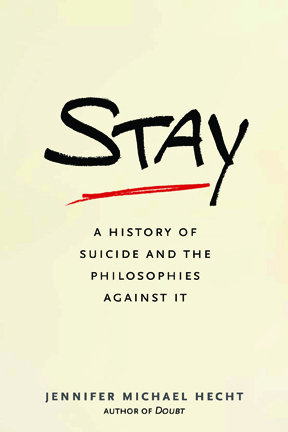
A wonderful recent book makes the ethical case against suicidestay_cover.jpg
And,

"What's in those supplements?"

Measles: Perilous but Preventable Amid a rare U.S. outbreak, some reminders about the need and safety of vaccinations for all.

A measles vaccination in Miami. Parents and prospective Republican candidates have been drawn into debates over the vaccine.

Measles Outbreak Proves Delicate Issue to G.O.P. Field The national debate on measles and immunization poses a challenge for Republican presidential hopefuls, who must reconcile modern science with the skepticism of their core conservative voters 

Has the Measles Outbreak Changed Your Views on Vaccination? Describe Your Experience 
New York Times journalists would like to hear from parents, particularly those in California and Arizona, who have chosen not to vaccinate their children against measles and other diseases...

And,

Check out the new "Vaccination links" sidebar in the right margin.

Discussion for 03 Feb 15: Euthanasia

For the group discussion on 02 Feb 15 we discussed euthanasia and who gets to decide whether we live or not. This is what was discussed:

1) We (humanity as a whole) have no second thoughts to whether we should euthanize our pets while we have debates over ourselves. Why is this? It is possible that we think that "My dog has lived a good life. It is time for her to go." On the other hand, we think about other humans as "They could still live a good decade longer." This is only one of the answers.

2)There are exceptions. An example includes a woman in a coma but she is also pregnant. Her family wants to cut off the life support but the doctors refuse because she is carrying a 12-week old baby. Some argue for the woman and some argue for the baby and they take it to court. One classmate mentioned that the woman is not feeling any pain if she is in a vegetative state so there is nothing cruel about keeping her alive until the baby is born.

3)Last but not least, a classmate posited the question is really "Which carries more worth: personal choice and autonomy over one's own body or the value of a human life?" This question is very difficult to answer and a classmate ended our discussion by saying that "At the end of the day, it is "his" body. Not his family nor anyone else's."

Tuesday, February 3, 2015

An Interesting Read After Today's Discussion on Euthanasia of Pets

Posted a couple of weeks ago in Scientific American. I think it's worth a read if the topic interests you.

http://www.scientificamerican.com/article/how-science-can-inform-ethics-and-champion-sentient-beings/?utm_source=twitterfeed&utm_medium=twitter


Quiz 2/3/15

1. What is the difference between (normal) medical care and palliative care? (BB 104)
Answer: medical care focuses on cure and diagnosis and palliative care focuses on the comfort of terminal patients.

2. What are the three types of valid consent? (BB 83)
Answer: Competent, Informed and Voluntary

3. What type of cells are valued in regenerative medicine? (BB 99)
Answers: pluripotent stem cells

4. What code was drawn up after World War II and states "The health of my patient will be my first consideration."? (BB 80)
Answer: The Geneva Code of Medical Ethics

5. How can you obtain stem cells? (BB 99)
Answer: embryo, fetus and adults
BB ch 4 Facts questions and Discussion questions

FQ:
1.Valid consent has three key features, what are they? (P.83)
2.What is one of the cornerstones of health care ethics? (P.86)
3. What is PGD? (P. 96)
4. What are one of the major concerns with dealing with mental illness?(P.101)
5. What is palliative care ? (P.103)
6.What is a cadaver?(P.109)

DQ:
1.Do you believe a person should have the right to decide when to die? What are your views on euthanasia?
3. Should we allow designer babies?

Evolution vs intelligent design...?

Does this pose a problem for the medical field?
Given that the 2015 mcat format has more evolution in it than the old one, do you think that these stats could be changed in time? Do they even need to be? Here's the link.

http://www.evolutionnews.org/2005/05/poll_60_percent_of_doctors_reject_darwin000937.html

Nonmedical use of amphetamines... Fair, or unfair?

Given the rampant use of amphetamines in college and particularly medical school, is this something that should be addressed more aggressively? Here is a link to a simple article on this topic.

http://www.pharmacy.ca.gov/consumers/college_nonmedical_rx_drugs.pdf

2 Relevant DQ's

DQ1: Is there a correct "ratio" of decision-making power between healthcare practitioner and patient, or does that "ratio" vary from patient to patient? When is medical paternalism the right approach (if ever), and when is it the wrong approach?
DQ2: Why is euthanasia of animals legal and generally accepted, while human euthanasia is highly controversial? Are the reasons for this valid?

Sunday, February 1, 2015

1/29 Group 2 Discussion

Our group talked about the importance of feminism not just in medicine, but why its important to have equality between men, women and any other groups out there. Equality is very important to create equal and fair opportunities and treatment to everyone in society. More specifically in medicine, the feminist approach could give us doctors who show concern for a patient's situation mentally, physically and emotional. Physical health is not the only concern a doctor should be nudging to fix, as it is the entire health of a patient that matters. We also discussed the idea of gender roles possibly not disappearing from society as a whole. Sometimes double standards for the sexes won't go away, even when you're trying not to use them.

1/29 Quiz

1. (BB 50) (T/F) The four key concepts in feminist bioethics are marginalization, embodiment, empowerment, and relational autonomy.
A: T

2. (BB 49)Gender discrimination is most severe in which types of countries?
A: Low- and Middle-class Countries

3. (BB 63) What were the five religions discussed by the author?
A: Christianity, Judaism, Islam, Hinduism, and Buddhism

(I did not have a picture to go on this time, so if I got any of the questions wrong just let me know in the comments and I will correct my mistake.)

1/29 Peripatetic Group

Our discussion focused mainly on the differences between the traditional and feminist points of view in bioethics, or focusing mainly on the individual versus the community at large.  Since vaccines have become a hot topic in the news, we talked about the idea that vaccines are an individual decision but that they impact the whole society, so that people must take the safety of others into consideration when making any type of decision.  The system of vaccines has been set up so that herd immunity is able to protect everyone, even those few who cannot get vaccinated.  However, with more people who are not incapable of being vaccinated choosing not to get vaccinated, the risk for spread and possible mutation occurs, which puts us all at risk.  The outbreak in Disneyland is a good example of this, as the high population of unvaccinated people in California gives the measles virus a reservoir of people to infect and thrive in, so that others can be infected later and the disease can be spread further, possibly circumventing the vaccine. The conversation then turned to the differences between moderate and radical feminism, and what would happen if extreme feminists ever took over the world.

For news on the Disneyland debacle:
http://mashable.com/2015/01/31/measles-outbreak-spreads/

Saturday, January 31, 2015

Authors?

As of Saturday afternoon we still have no author summaries posted. I was afraid that might happen, if we didn't make sure to do it before leaving the classroom on Thursday.

So, we'll resume that practice on Tuesday. Meanwhile, the three designated group authors PLUS our peripatetic discussion groups all need to post summaries of their discussions. Everyone else can post their comments, FQs, DQs, & links here in the interim.

jpo

Thursday, January 29, 2015

Quiz Jan.29

Bioethics today is about the ways our vision of issues and outcomes may be occluded, blurred, or otherwise compromised by our respective points of view or perspectives. Of course this is not unique to bioethics, all human comprehension is subject to bias by the attenuation of culture, gender, religion, ideology, experience, the absence of experience, greed, egoism, and on our list could go. It is in our nature to see what we've seen, to see what we want to see, to see through a glass darkly. Without corrected vision the people perish.

Our native tendency to frame experience incorrectly, conformable to our own pre-vision and hence occlusive of other ways of seeing and clinically intervening, is a constant challenge to the fair-minded ethicist. Bioethical philosophers across the perspectival spectrum presume to prescribe corrective frames, but inattention to the varieties of sight is a constant hazard. Here's a link to a good little essay on the subject, from esteemed bioethicist Arthur Caplan: "When Religion Trumps Medicine."

We should play with this metaphor. As a lifetime wearer of framed corrective lenses, I can attest to the temporary excitement of a new prescription, or even just a stylish new frame to house the old set of lenses. The trick is always to find frames that hold up through every season of wear, that don't grow tiresome, and that justify the expense of change. (My wife returned from Costco one day reporting that the same frames she'd found at the Eye Doc's were $100s cheaper there.) Sometimes new lenses in the old frame suffice, sometimes you just need a new look.

So, some of the perspectives we'll try to focus and reframe today: attitudes and assumptions around HIV/AIDS, especially as occluded by miseducation; violence as a public health issue; "feminist critiques" of contingently-drawn, historically-conditioned categories of masculinity and femininity, locked into patriarchal institutions and practices that discriminate against women; misogyny; marginalization; advocacy; embodiment; empowerment; relational autonomy; metaphysical dualism; care; furor therapeuticus; female genital mutilation; "Asian bioethics";  Plato's Euthyphro;  Abraham & Isaac;  Buddhism; and more.


How do you get that "new look"? I always like to suggest trying the John Rawls Original Position/Veil of Ignorance frames. Some of us can wear them.

One more indulgence, before the quiz: I enjoyed our impromptu discussion of House last time. Maybe some of us can find a few good YouTube moments, illustrative of what we were saying about how some practitioners seem driven less by the patient's best care than by their own egoism. But, getting the diagnosis and treatment right regardless of motive and ego still seems the most important thing. Doesn't it?


1. Chapter 3 begins by asking if our bioethical perspective ("vision") is skewed by _____... (a) cultural assumptions, (b) gender bias, (c) religious faith, (d) all of the above (BB 48)

2. What's the leading global cause of death among women of reproductive age? (49)

3. (T/F) The "feminist critique" says bioethics has been dominated by culturally masculine thinking. (50)

4. What ethical perspective did Nel Noddings (supported by Carol Gilligan's research) describe as the "feminine approach"? (55)

5. What's a furor therapeuticus? (56)

6. Does Campbell consider the outlawing of female genital mutilation culturally insensitive? (58)

BONUS QUESTIONS:

What role do feminist bioethicists see themselves as performing, with respect to the victims of gender discrimination? What perspective do they wish to "re-assert"? and what classic (Cartesian) metaphysical/philosophical perspective do they oppose? (51-2)

What's allegedly distinctive about "Asian bioethics"? (59)


DQs:
How do you think your own attitudes and assumptions about gender, religion, etc. influence your Bioethical perspective?

What do Plato's Euthyphro and the Biblical story of Abraham & Isaac suggest to you about the place of religion in addressing biotethical issues? (61-2)

What is Buddhism's bioethical relevance? (69)

BB chapter 3 quiz questions and discussion questions

Quiz questions
1. What is the "heart" of bioethics? (P.50)
2.What is one of the key concepts in the feminist bioethics literature?(p.51)
3. The WHO reported that women's natural advantages in health and longevity have been eroded by___________and_____________ polices. (P.51)
4.What does  ethnical relativism mean? (P. 57)
5.What are the five major religion discussed in the
Chapter? (63)
6. What religion is the most influential in the development of modern culture? (P. 73)

Discussion Questions?
1.How does religion and culture influence bioethics?  Is it a positive or negative influence?
2. How important is the feminist approach to bioethics?

Wednesday, January 28, 2015

Group 2 discussion 1/27

Similar to group 3, our group discussed what would we do in the mayor's situation. About half of the group talked about killing the two guerillas IF it was definite that the colonel would not kill the eighty people. We thought that Fox news would be the first to announce the murders that the mayor committed because he is a political figure. Also, killing the guerillas wouldn't really set the eighty people free. They would be enslaved for life. This is where the other half of the group came in. We thought that there isn't any certainty in whether or not the colonel would do what he said. A better thought to the other half was to take an act of defiance against the colonel. Dying trying to protect the people is better than letting them get enslaved. Basically, pull a super hero maneuver or in more humane terms, possibly pull what Denzel Washington did when he starred in the recent movie The Equalizer. If the mayor could pull killing the colonel and his army, he would be a hero to his people, and he will have shown that their lives mean a lot to them. Even if he were to die trying, he would still show the people in his town that he cared for them. The people would most likely be enslaved and if they are, after witnessing the mayor's example of defiance, they would have the courage to plan their own act of defiance against the colonel and their men. It would then be similar in context to the history of the American Revolution or the Haitian Revolution.

Tuesday, January 27, 2015

Group 3 Discussion 1/27

Our group focused on the mayor's dilemma, and what each group member would do when presented with the choice of death or murder.  Many said that they would attempt to kill the colonel with the weapon.  One person said that they would kill a citizen to try to confuse the soldiers.  The discussion then turned to why a gun was chosen and how the soldiers should have allowed the use of a sword, or pistol, or bat, or some other weapon.  Class ended amidst this very interesting discussion.

How would you react to this dilemma?
Is there a universally "right" course of action?

Today’s Quiz

1. (BB 20) Jeremy Bentham devised the:
A. George Town Mantra
B. Greatest Happiness Principle
C. Deontological Theory

2. (BB 26) What is the Golden Rule?
A: Do to others what you would want them to do to you.

3. (BB 32) What is Aristotle’s contribution to ethics called?
A. Virtue Ethics

4. (BB24) A reaction of distaste based solely on emotion and unexamined prejudice is the Yuk Factor

5. (BB 25) What are Immanuel Kant’s 2 imperatives?
A: Hypothetical and Categorical

6. (BB 43) True or false: the four Bioethics principles are Autonomy, Maleficence, Beneficence, and Justice.
A: False (Non-Maleficence)

Class quiz questions 01/27/2014

1. Jeremy Bentham devised the (BB 20):
a. Georgetown Mantra
b. Greatest Happiness Principle
c. Deontological Theory

2. What is the Golden Rule? (BB26)

3. What is Aristotle's contribution to virtue ethics? (BB 32)

4. A reaction of distaste or disapproval base solely on emotion and unexamined prejudice is? (BB 24)

5. Immanuel Kant had two imperatives. What are they? (BB 25-26)

6. True or False. The Four Bioethics principles are Autonomy, Maleficence, Beneficence, and Justice. (BB 43-46)

Quiz Jan.27

BB2-

1. (T/F) In the Mayor's Dilemma, one of the possible actions considered is to set an example of defiance.

2. Which theory has been dominant in bioethics and often used by many health professionals?

3. In deontological theory, what is the difference between hypothetical and categorical imperatives?

4. What ethical principle (and whose), 
in the name of rational consistency, absolute dutifulness, and mutual respect, "requires unconditional obedience and overrides our preferences and desires" with respect to things like lying, for example?

5.  What would Kant say about Tuskegee, or about the murderer "at our door"?

6. What more do we want from a moral theory than Kant gives us?

7. What is the distinctive question in virtue ethics?

8. What Greek philosopher was one of the earliest exponents of virtue ethics?


9. Paraphrase the Harm Principle. Who was its author?

10. Name one of the Four Principles in Beauchamp and Childress's theories on bio
medical ethics?


DQs:

Monday, January 26, 2015

BB Chapter 2 Discussion and Fact Questions

Fact Questions

1. What is consequentialism?
2. What is the best form of consequentialism?
3. What does the Greatest Happiness Principle say? Who made it?
4. The _________ of _________ is also a feature of all medicine and health.
5. What are the problems with consequentialism?
6. What is the deontological theory?
7. Immanuel Kant had two imperatives. What are they?
8. What is virtue ethics?
9. What is communitarianism?
10. What is libertarianism?
11. What are the components of the Georgetown Mantra? Who made it?


Discussion Questions

1. What exactly is justice in medicine?
2. If moral rules such as the Golden Rule or "never tell a lie" only applies to some situations, is it really okay to tell younger generations about these rules?
4. Is it a necessity to have good reason and emotion to be quite virtuous? What if you're missing one or both?
5. Should paternalism be eliminated from healthcare?

Thursday, January 22, 2015

Author posts

Group 1 - In regard to medical tourism, the group thinks that governments should not establish regulations. Also, patients should be able to access treatment as long as they are willing to take responsibility and risks.
When it comes to medical tourists, should government regulate medical tourism?

Group 2 -With regards to the relationship between doctors and patients, where does the primary responsibility lie in maintaining health? Who is more responsible for providing a solution to health problems (the doctor or patient)?

Who is primarily responsible for educating the general population on what constitutes a healthy lifestyle? Should the general population educate itself, or does such education require the input of healthcare professionals (such as medical doctors or potentially other mid-level practitioners)?
Author: James Hayes
Group 3 - What implications could plastic surgery supply to personal medicalization? Are we slowly forming a new form of biological evolution? Such as with cosmetic surgery, are people changing themselves for psychological reasons over medical ones?
Author Cassandra Taylor


When it comes to medical tourists, how far is too far? Is it acceptable to seek a doctor who will agree to a personal diagnosis over the diagnosis of a practitioner?

Fact Question and Discussion Question BB Chapter 1

Chapter 1

FQ: What are some historical atrocities that happened to peak the creation of Bioethics?

DQ 1: The first chapter introduced the revealing of the human genome project and privacy. Is predicting a person's genetic disease invading privacy? Even if the parents consented to genetic testing?

DQ 2: If doctors and patients are like salesmen and customers, is the customer always right?

Monday, January 12, 2015

Introductions

We begin, as in all my classes, with an invitation: tell us who you are, and why you're here. We'll introduce ourselves in class and here. I'll start.

I'm the prof for this course, PHIL 3345, Bioethics. I hold degrees from the University of Missouri and Vanderbilt, and I'm here because the ethics of life and death is at the very heart of what philosophy, defined as the love of (and quest for) wisdom, is supposed to be about. I'm still here in middle Tennessee, after relocating for Grad School, because it's the place where I met my wife and decided to call home. No regrets.

Enough about me (unless you're curious for just a bit more).

Who are you? Why are you here? (Bear in mind, as you reply, that this is an open site. There's nothing preventing the world from reading what we post here, except of course the world's own distraction.)

America's Bitter Pill

Steven Brill's new book may worth a look in Bioethics this semester, along with last night's 60 Minutes segment.


Thursday, January 8, 2015

Bioethics needs philosophy

It is the JME's 40th anniversary and my 20th anniversary working in the field. I reflect on the nature of bioethics and medical ethics. I argue that both bioethics and medical ethics together have, in many ways, failed as fields. My diagnosis is that better philosophy is needed. I give some examples of the importance of philosophy to bioethics. I focus mostly on the failure of ethics in research and organ transplantation, although I also consider genetic selection, enhancement, cloning, futility, disability and other topics. I do not consider any topic comprehensively or systematically or address the many reasonable objections to my arguments. Rather, I seek to illustrate why philosophical analysis and argument remain as important as ever to progress in bioethics and medical ethics. Julian Savalescu

Coercion, discrimination and why medical ethics needs philosophy, better philosophy

Objecting to genetic selection and cloning, Leon Kass writes,A third objection, centered around issues of freedom and coercion… comes closer to the mark. … [T]here are always dangers of despotism within families, as parents already work their wills on their children with insufficient regard to a child's independence or real needs. Even partial control over genotype—say, to take a relatively innocent example, musician parents selecting a child with genes for perfect pitch—would add to existing social instruments of parental control and its risks of despotic rule. This is indeed one of the central arguments against human cloning: the charge of genetic despotism of one generation over the next.1
This objection from ‘coercion’ is the objection that Michael Sandel gives to genetic selection, which he calls ‘hyper-parenting’.2 In a similar vein, Jürgen Habermas argues that germline enhancements would represent a threat to the enhanced child's freedom because the parent's choice of enhancements would not only imply their endorsement of particular goods, but also communicate to their child that they expect her to pursue those goods.3 These expectations, Habermas suggests, may serve to hinder the child's freedom to do what she wants, when her desires do not align with her parent's expectations.4
The paradigm case of coercion could be said to be when a robber stops you and says, ‘Your money or your life’. Coercion involves the restriction of freedom (reduction of options), which causes that person to do what she does not want to do. Coercion is wrong when it harms a person or fails to respect that person's autonomy. That is a conceptual analysis of coercion.
Even professionals working in bioethics (which includes medical ethics), including Leon Kass, misuse this term. Embryos cannot be coerced since they are not persons and lack freedom of will. But more importantly, future people cannot be coerced by the act of genetic selection or cloning. Imagine that IVF produces two embryos, Anne and Bob. The parents choose Bob because that embryo has perfect pitch (or is a clone). Later in life, can Bob complain that his parents coerced or limited his freedom by selecting him on the basis of having perfect pitch (or being a clone)? No—he owes his very existence (all his options and freedom) to their act of selection. Without assisted reproduction and selection (or cloning), he would not have existed. It is metaphysical fact that those who owe their existence to a reproductive act cannot be coerced by that act. Even more broadly, they cannot be harmed by that act unless it makes their existence so bad that their lives are not worth living.
Failure to appreciate this metaphysical fact about identity-determining reproductive acts infects legislation and policy...
==
  1. Professor Julian Savulescu, Faculty of Philosophy, Oxford Uehiro Centre for Practical Ethics, Suite 8, Littlegate House, Oxford OX1 1PT, UK; julian.savulescu@philosophy.ox.ac.uk

Monday, January 5, 2015

"Doctor, Shut Up and Listen"

...communication failure (rather than a provider’s lack of technical skill) was at the root of over 70 percent of serious adverse health outcomes in hospitals.
A doctor’s ability to explain, listen and empathize has a profound impact on a patient’s care. Yet, as one survey found, two out of every three patients are discharged from the hospital without even knowing their diagnosis. Another study discovered that in over 60 percent of cases, patients misunderstood directions after a visit to their doctor’s office. And on average, physicians wait just 18 seconds before interrupting patients’ narratives of their symptoms. Evidently, we have a long way to go...
(continues)

Tuesday, December 16, 2014

Why Do Doctors Fail?

One of our upcoming authors in Bioethics next semester, Atul Gawande (Being Mortal), has joined distinguished company - Bertrand Russell, Arnold Toynbee, Robert Oppenheimer, and J.K. Galbreath et al - with his Reith Lectures, commencing with "Why Do Doctors Fail?"

Surgeon and writer Atul Gawande explores the nature of fallibility and suggests that preventing avoidable mistakes is a key challenge for the future of medicine.
Through the story of a life-threatening condition which affected his own baby son, Dr. Gawande suggests that the medical profession needs to understand how best to deploy the enormous arsenal of knowledge which it has acquired. And his challenge for global health is to address the inequalities in access to resources and expertise both within and between countries.
This first of four lectures was recorded before an audience at the John F Kennedy Presidential Library and Museum in Dr. Gawande's home town of Boston in Massachusetts. The other lectures are recorded in London, Edinburgh and Delhi.
Previous Reith Lectures

NY Review of Books (@nybooks)
Marcia Angell on getting old, and on choosing when to die j.mp/1wbDL6v


Our bodies age. As members of the kingdom of animals, we inherit a biology that grows less efficient with time. Glitches and injuries accumulate. Our youthful form is lost, and our aged one is gained.
By dint of fear of change, the innate sexual attractiveness of younger bodies, and massive exploitation of both by marketing forces, we feel embarrassed and deprived as our bodies slowly deteriorate.
Not all cultures view aging so negatively. So the bias could be overcome. But how?
  1. Don’t take aging personally. After all, aging happens to everyone, from the beginning of life until its end. And like they say, Growing old beats the alternative! Every person who has ever lived beyond early adulthood has grappled with the changes the years impose. Granted, some people age more slowly than others, but every one of us looks and feels older as time passes. You are not alone.
  2. See aging as Natural. We live in an era when ‘organic,’ ‘all-natural,’ ‘non-GMO,’ ‘cage-free,’ and other eco-marketing catchphrases are used to sell products. Moderns want the growth and harvesting of foodstuffs to proceed naturally. Well, aging is no less aligned with Nature than vegetables cultivated without pesticides; why not embrace growing older the way we embrace organic foods?
  3. Appreciate the gifts of aging. As we grow older, we grow wiser. This isn’t folk mythology; it’s fact. We learn from experience. We find more acceptance in our hearts. We assess our strengths and weakness with more humility and self-compassion. We begin to view circumstances in shades of gray rather than black-and-white. Youthful hunger wanes until we find ourselves valuing what matters over the long run above what feels pleasant in the short run. We care less about personal goals and more about collective ones. To my mind, at least, the gain of gentleness, nuance, and altruism more than compensate for the lessening of passion and militance.
  4. Embrace the big picture. If you listed the names of all 108 billion people who have ever lived, at the rate of one per second, it would take 3,400 years. And the entire human saga has unfolded over just the last 0.005% of the time since life began on this planet. Does it make sense to feel affronted by a body’s aging when so many people (and countless other lifeforms) have endured the same fate, and when the span of even the longest human life barely measures as a single tick on the cosmic clock? Each of us is a unique product of history, but we delude ourselves if we believe our own lives more important than those of all the others. If we identify with Life as it has grown on this planet for billions of years, rather than our personal speck of biology, we gain freedom from the constrictions of daily concerns. We feel opened to a larger world, a larger sense of Self, and the great, beautiful mystery that is Living.
  5. Nurture a sense of humor. It helps to take aging less seriously. Early in 2014 I underwent major surgery. Postoperatively, I was horrified to see how the abdominal muscles I’d been strengthening for years ended up looking scarred and distorted. It helped lessen the sense of grief when I joked about losing my ‘last bastion of sexiness.’ The use of humor has a long history of helping the aged feel less burdened by wrinkles, sags, dribbles, creaks, and farts. Join the fun!
http://blogs.psychcentral.com/childhood-adversity/2014/12/4-ways-to-embrace-aging/
==
Being Mortal, which was published in October, is ostensibly about the struggle to cope with the constraints imposed by flesh-and-bone biology—and the failure of medical science to acknowledge that any ability to push back is finite. Gawande's ultimate message, that death in America is not often enough discussed, and that patients suffer at the hands of well-meaning doctors because of it, has been generally celebrated, though not for breaking particularly new ground. His is the basic message for which the late surgeon Sherwin Nuland's How We Diewon a National Book Award 20 years ago; and it's the message of another book released last week, The Conversation, by another Harvard physician, Angelo Volandes. It's a message that has grown extremely loud inside of the health-professional echo chamber, but is somehow still only faintly reverberating into broader culture. 
"I think too many people don't know what's going on behind those closed doors in hospitals," Volandes told me. "But if they did, they'd be outraged. So many people are getting—not costly care—I'm talking about unwanted care..." (continues)